
Free on-site gate assessment - hinges, posts, and your LiftMaster or Nice gate operator checked before anything is quoted
The assessment is free and the quote is the invoice.
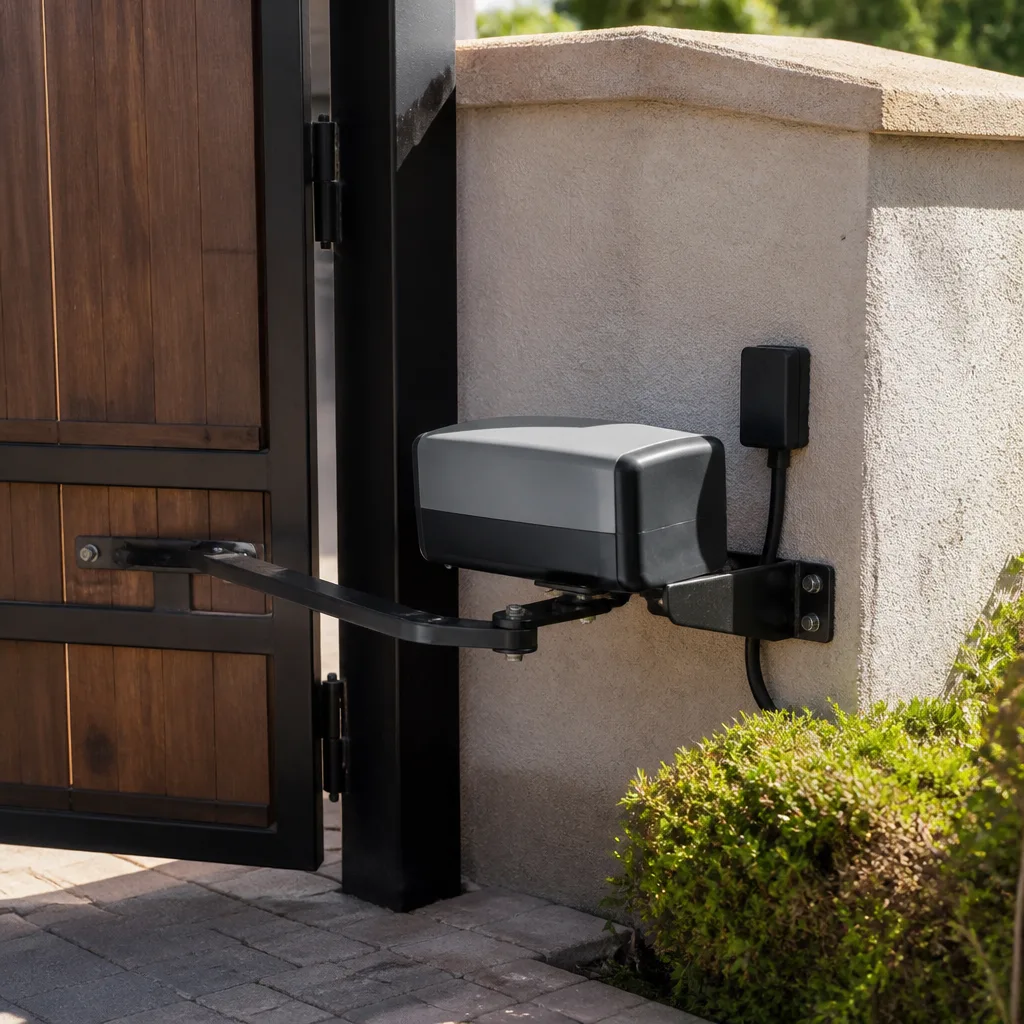
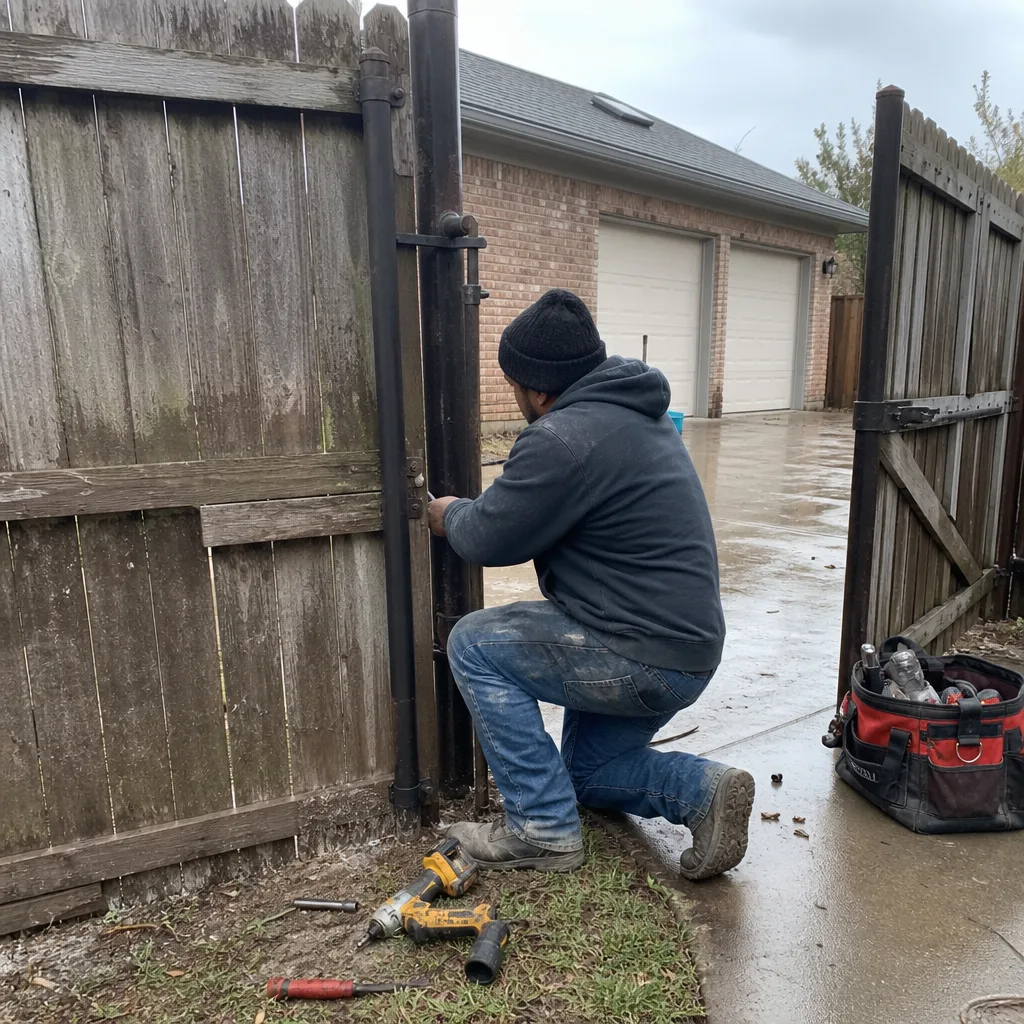 Before
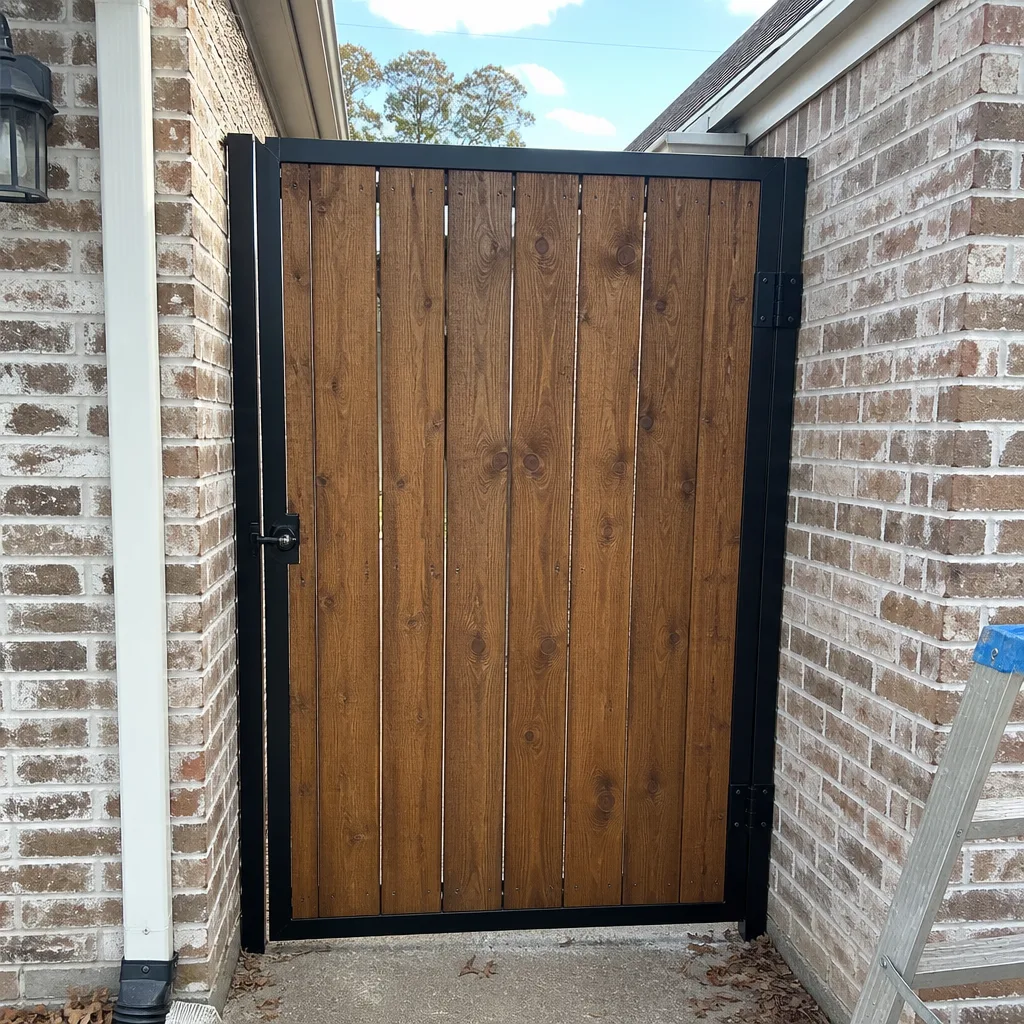 After
After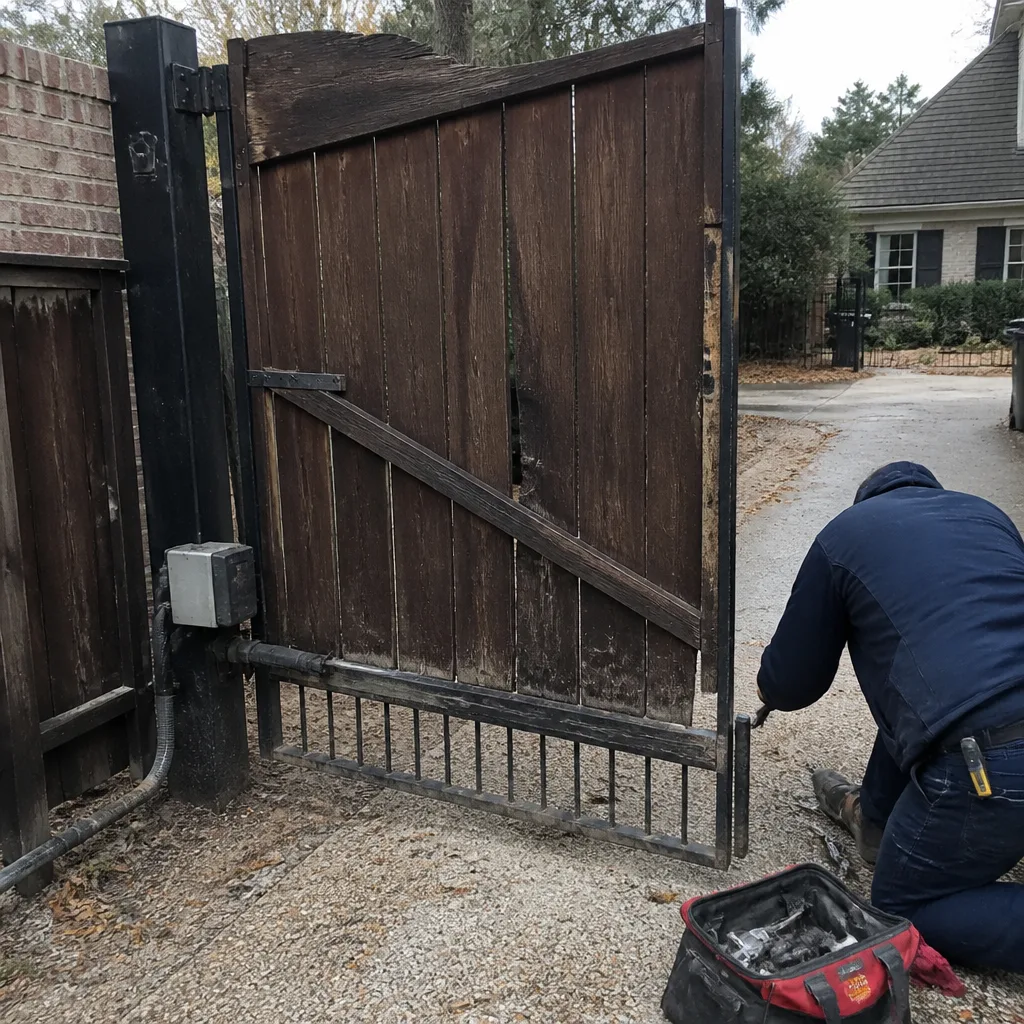 Before
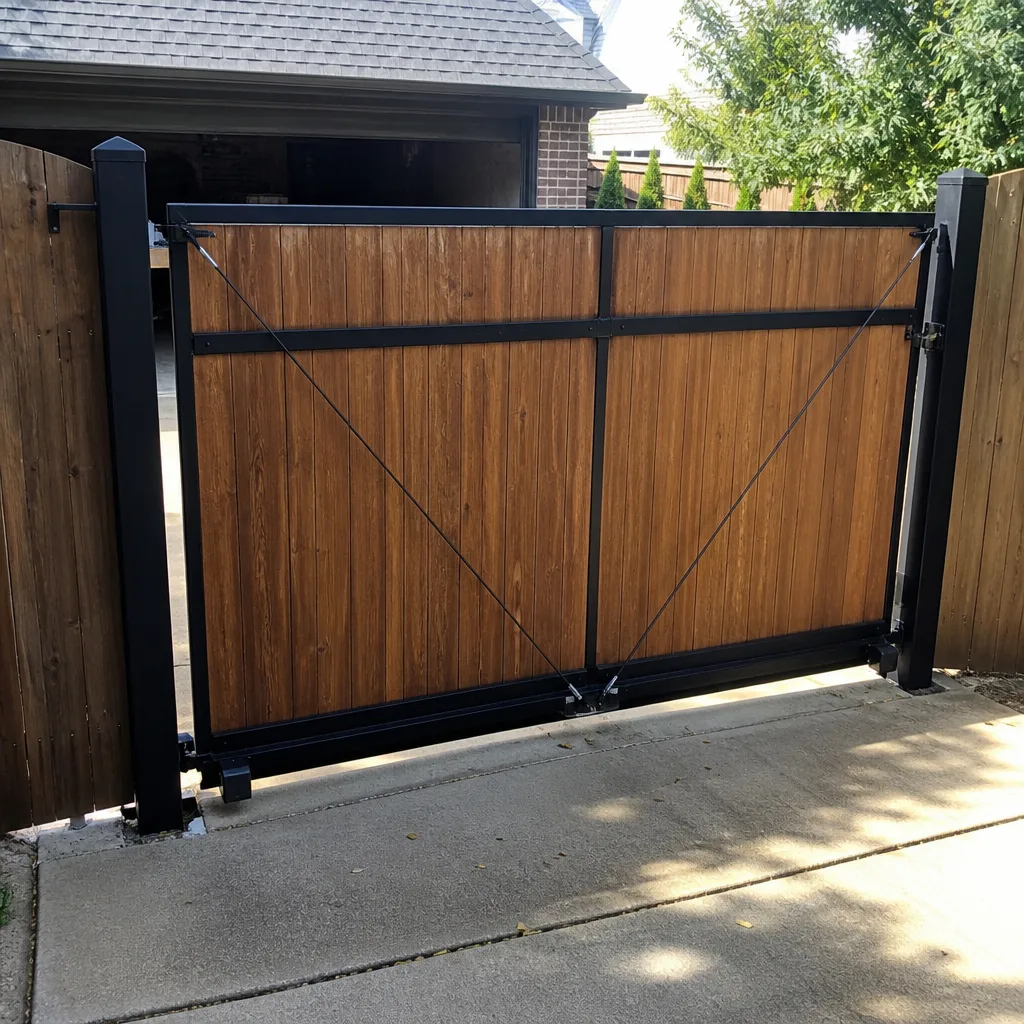 After
After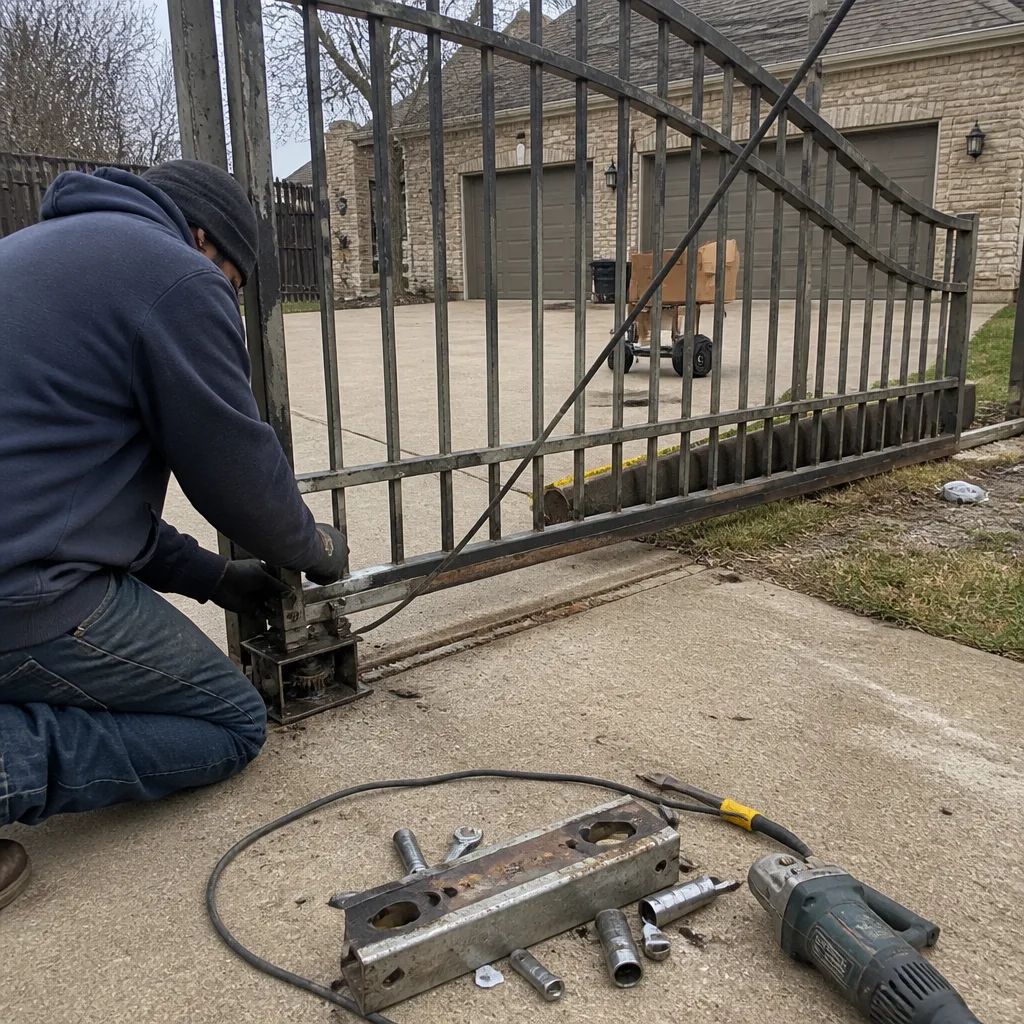 Before
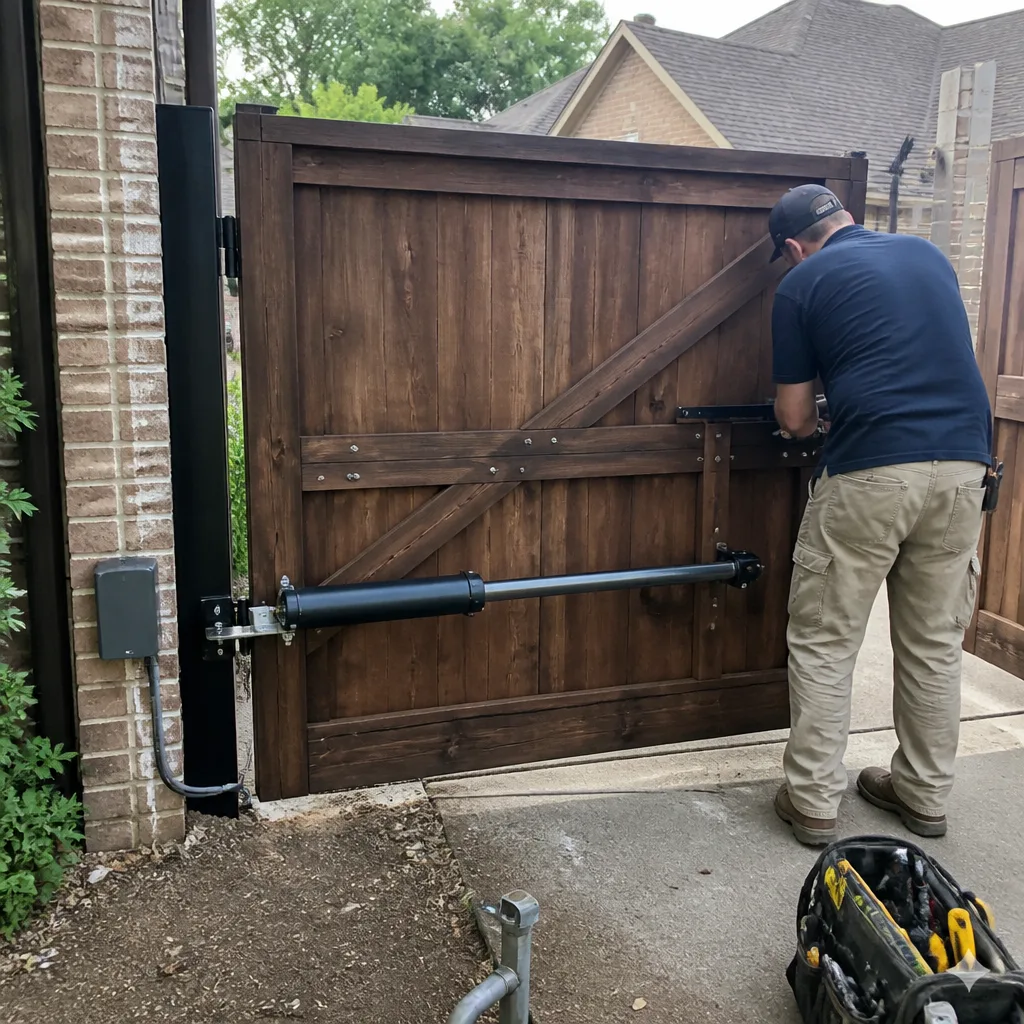 After
AfterMighty Mule Welding & Fabrication: The McKinney Owner’s Guide
We stock, fabricate, and install Mighty Mule-compatible brackets, hinge assemblies, and weld-on mounting hardware for gates across McKinney, with most installed repairs running $180-$475 depending on the part and the condition of the gate itself. If your Mighty Mule opener is still running but the metal it mounts to has failed, we can usually have you fixed the same day we arrive. The way most owners discover this problem is simple: the opener motor hums or cycles, but the gate sags, drags, or doesn’t budge the way it used to, because the steel underneath has finally given out.
We’re an independent service provider, not affiliated with Mighty Mule, but we’ve been repairing their openers and the steel they sit on for decades. Here’s what McKinney homeowners need to know when the weld fails before the motor does.
Which Mighty Mule Models This Applies To
The welding and fabrication work we do applies to the full Mighty Mule lineup, but the specifics depend on which generation you own. The older MM260, MM360, MM371, and MM571 series from the 2000s used a heavier steel mounting post and through-bolted brackets. The current MM136, MM260, MM372, MM572, and the Mighty Mule Smart series all use a lighter gauge bracket system that relies on the gate’s top rail and pickets for stability. That’s fine when the gate is square and solid. It’s trouble when the gate has twenty years of Texas sun and Collin County clay working against it.
Here’s the compatibility gotcha worth knowing: the mounting bracket hole pattern changed between the older MM500 series and the current models. An old bracket will not simply bolt onto a new opener arm, and a new bracket often sits too low on an older gate frame without a spacer plate. If you’re not sure what you have, look at the opener arm itself. Mighty Mule prints the model number on a small sticker near the motor housing. If the sticker is gone, measure the distance between the two mounting bolts on the gate bracket. Older units ran 3-1/8 inch centers; newer ones run 2-3/4 inch. It’s a small difference that causes a lot of frustration.
For the replacement part itself, we offer both OEM Mighty Mule brackets and our own fabricated equivalents. The honest truth is that for most residential gates, a properly welded and powder-coated aftermarket bracket made from 3/16-inch steel will outlast the factory part by five years or more. The factory bracket is stamped and bent. Ours is cut, fixtured, and welded. We’ll show you both options and quote the difference before any work begins.
Signs Your Mighty Mule Welding & Fabrication Is Failing
- The gate sags away from the opener arm. This is the most common failure we see in McKinney, and it usually means the top hinge or the bracket mounting plate has stretched or the weld has started to tear. The opener keeps pushing, but the gate has moved out of alignment.
- The opener arm slaps or knocks at the end of its travel. When the bracket loosens or the weld cracks, the arm has play it was never designed to handle. That knocking is the bracket working against the bolt holes under load.
- The gate binds halfway through its swing. A failing weld or a bent bracket puts the gate out of plane with the opener. The motor strains, the circuit board heats up, and eventually the opener will fault out entirely. We replace a lot of boards that died because a $40 bracket was ignored for too long.
- Visible rust lines or hairline cracks near the welds or bolt holes. North Texas humidity and the freeze-thaw cycles we get every winter accelerate metal fatigue at stress points. Once you can see the crack, the part is done. It will not heal.
- The gate still opens halfway, then reverses or stops. This often reads like an opener problem, but the cause is usually mechanical. A bent or torn bracket trips the obstruction sensor. The opener thinks something is in the way, but the obstruction is the broken hardware it’s bolted to.
If any of these sound familiar, the fix is usually straightforward, and it’s almost always less expensive than replacing the opener. But the longer it goes, the more collateral damage it does to the motor, the board, and the hinge line.
Replacement Cost & What’s Included
In McKinney, expect to pay $180-$475 for most Mighty Mule bracket and weld repairs, including the part and the labor to install it. A simple bracket swap with no welding runs on the lower end of that range. A custom-fabricated hinge assembly or a full gate frame repair, where we’re cutting out rusted sections and welding in new steel, runs toward the upper end. If the gate needs to be pulled, re-squared, and re-hung because the frame itself has twisted, the cost will go higher, and we’ll tell you that in writing before we touch it.
Every quote includes the parts cost, the labor, and any consumables like welding gas and grinding discs. We don’t pad the bill with shop fees or truck charges. The price we quote is the price you pay, and we settle it before a single bolt is turned. All of our welding and fabrication work is covered by our 90-Day Done Right Promise. If something we welded or bolted on isn’t right, we come back and fix it. No paperwork, no arguing.
DIY or Call Us?
Here’s the honest split. There are a few things a homeowner can safely check on their own: visible cracks, loose bolts, a bracket that’s shifted out of position. You can tighten hardware, and you can note where the gate binds. What you should not do is attempt to weld a bracket or re-hang a sagging gate yourself unless you have real welding experience and the right equipment. A gate that weighs 300 to 600 pounds under spring tension is not forgiving. A failed weld on a load-bearing hinge can drop that gate on a person, a vehicle, or a child. We’ve seen it. Mighty Mule openers also run on 12V or 24V DC, so the electrical side is low risk, but the mechanical side carries real danger if the gate is out of balance or under tension.
If the bracket is broken or the weld is torn, call us at (430) 226-4507. We’ll come out, look at what failed, and tell you honestly whether it needs a bracket, a weld, or something else entirely. Estimates are free.
FAQs
In North Texas, expect 8 to 12 years from the factory galvanized bracket and 15 or more from a fabricated steel replacement, depending on sun exposure, gate weight, and how often the gate cycles. Collin County’s humidity and our winter freeze-thaw cycles shorten that lifespan compared to drier climates. If your gate faces west with no shade, subtract a few years. Call (430) 226-4507 and we’ll inspect yours at no charge.
Sometimes, if the metal around the tear is still sound and the bracket is otherwise straight. We’ll often weld a cracked bracket as a temporary fix while we order the correct replacement, but a cracked bracket is a sign the metal is fatigued. A weld alone rarely buys more than a year. For a permanent fix, we recommend replacing the part and addressing whatever caused the stress in the first place. Call us for an honest assessment and a written quote.
Most Mighty Mule bracket replacements and weld repairs are done in a single visit of two to three hours. If we need to fabricate a custom part, we typically have it cut and welded within 48 hours, and we’ll schedule the install at a time that works for you. We’ll always tell you the timeline before we start.
Yes. Our trucks carry common Mighty Mule brackets, hinge plates, and the steel stock we need to fabricate replacements on site for most residential gates in McKinney. For less common parts, we source OEM or fabricate within two business days. Beyond Mighty Mule, we also stock parts for LiftMaster, Ghost Controls, and DoorKing openers. Call (430) 226-4507 and we’ll confirm what’s on the truck before we roll.
Written by Victor Salinas, Owner, Ironworks Gate Co. at Ironworks Gate Co., serving McKinney and nearby areas.