
Last updated August 25, 2026
Free on-site gate assessment - hinges, posts, and your LiftMaster or Nice gate operator checked before anything is quoted
The assessment is free and the quote is the invoice.
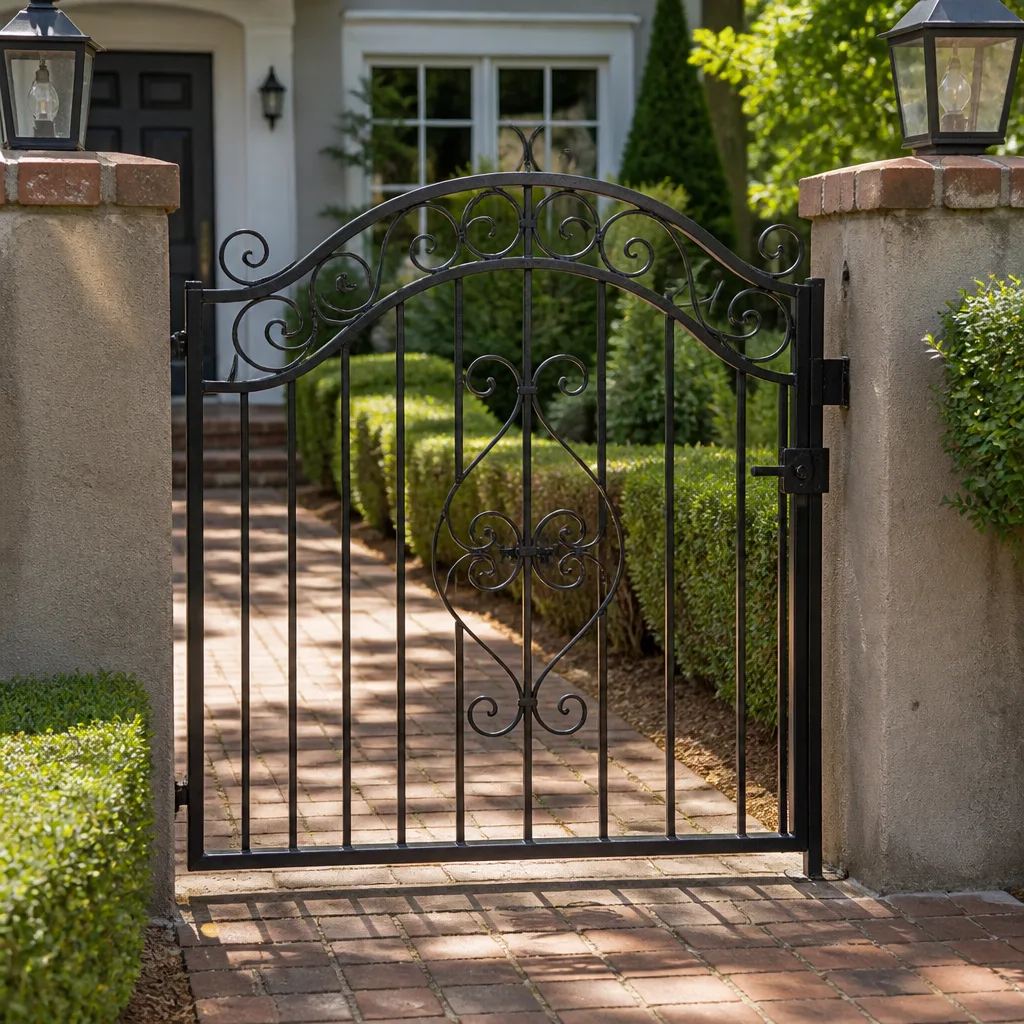
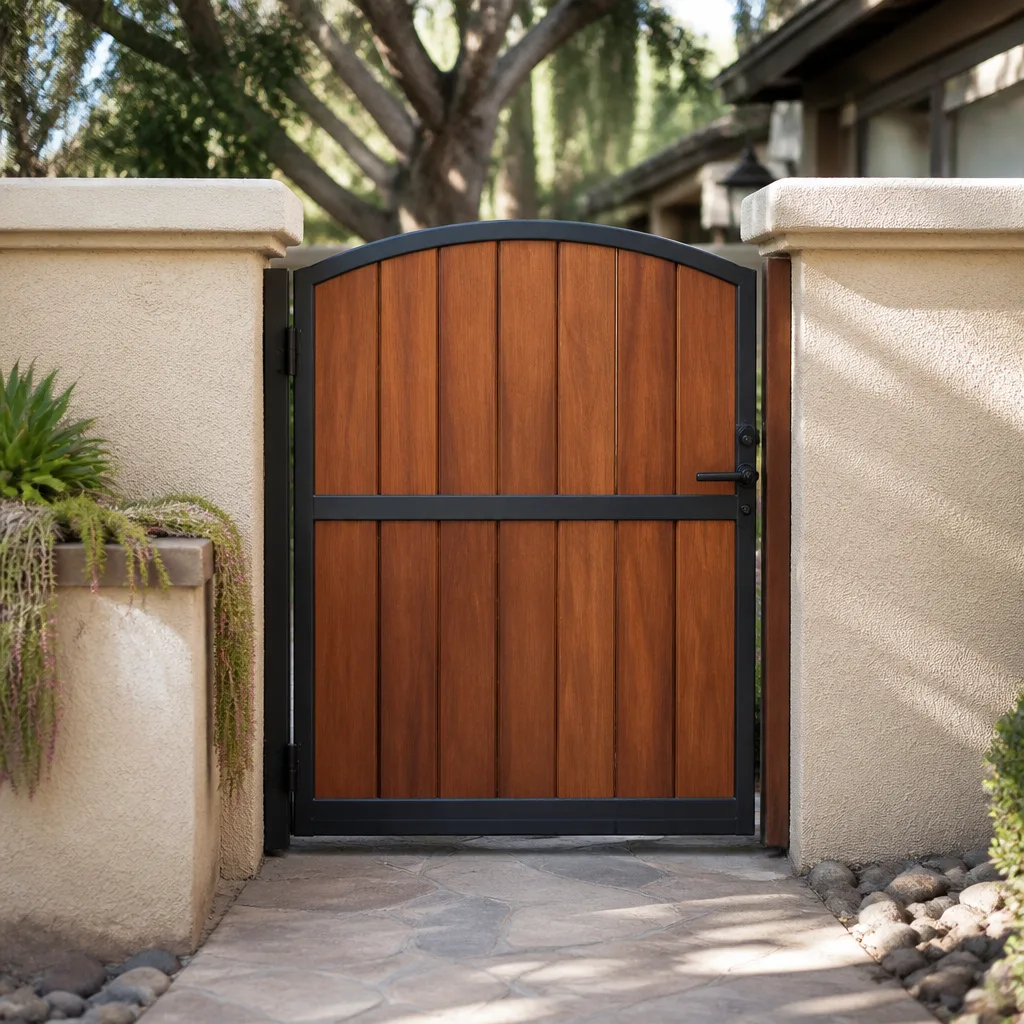
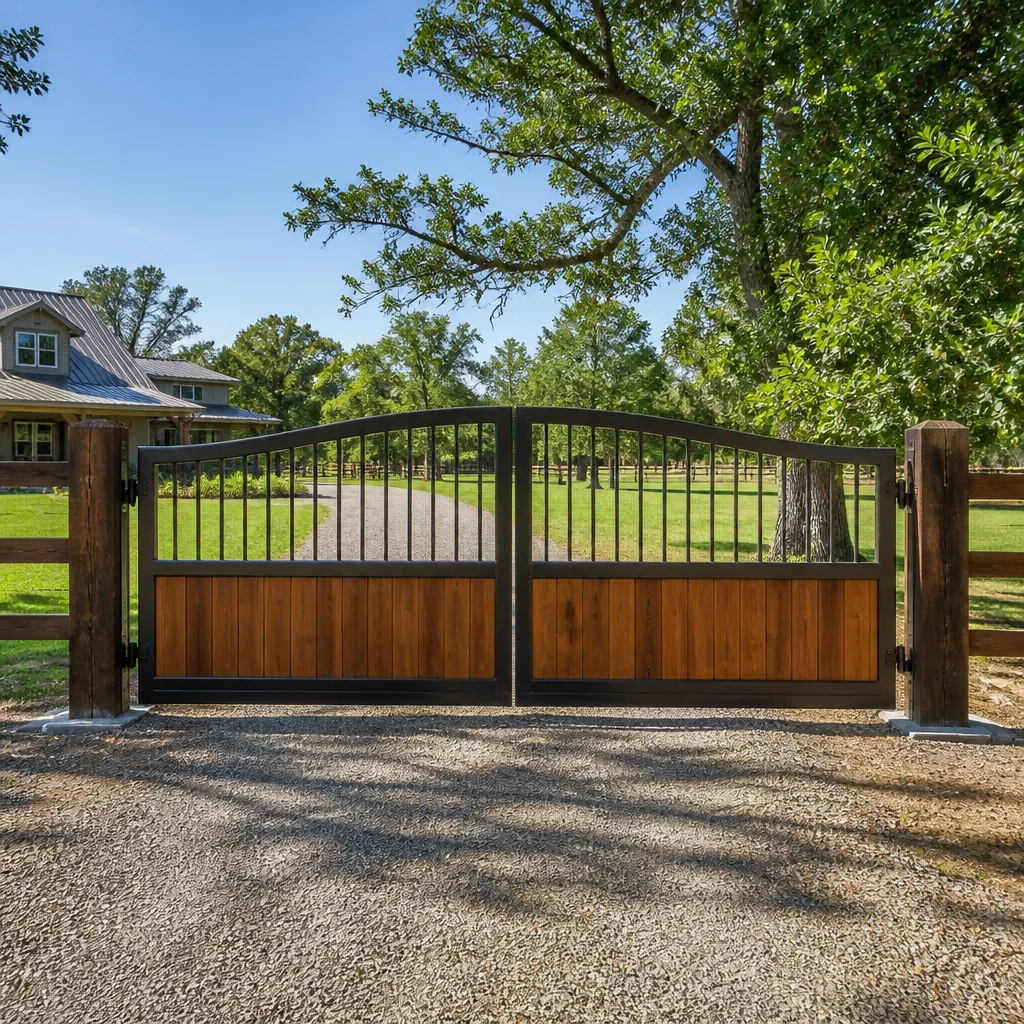
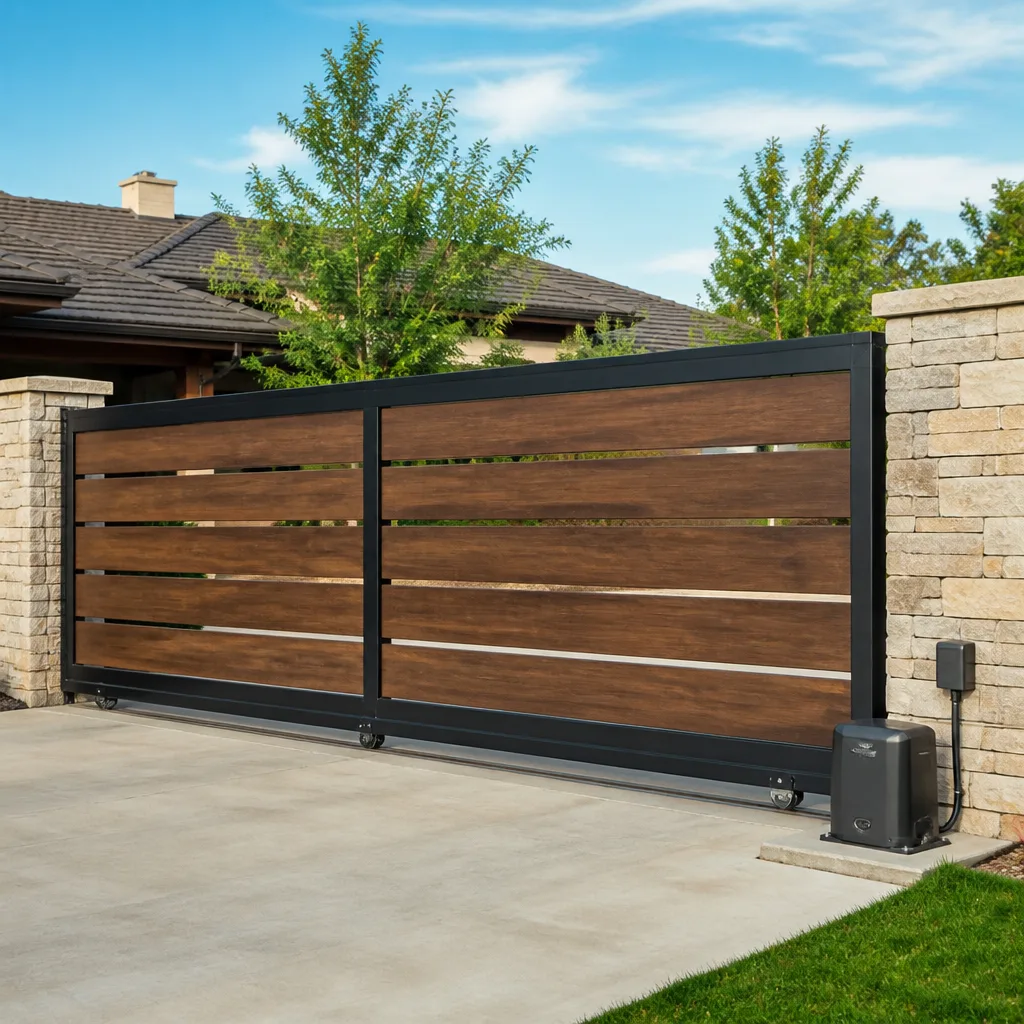
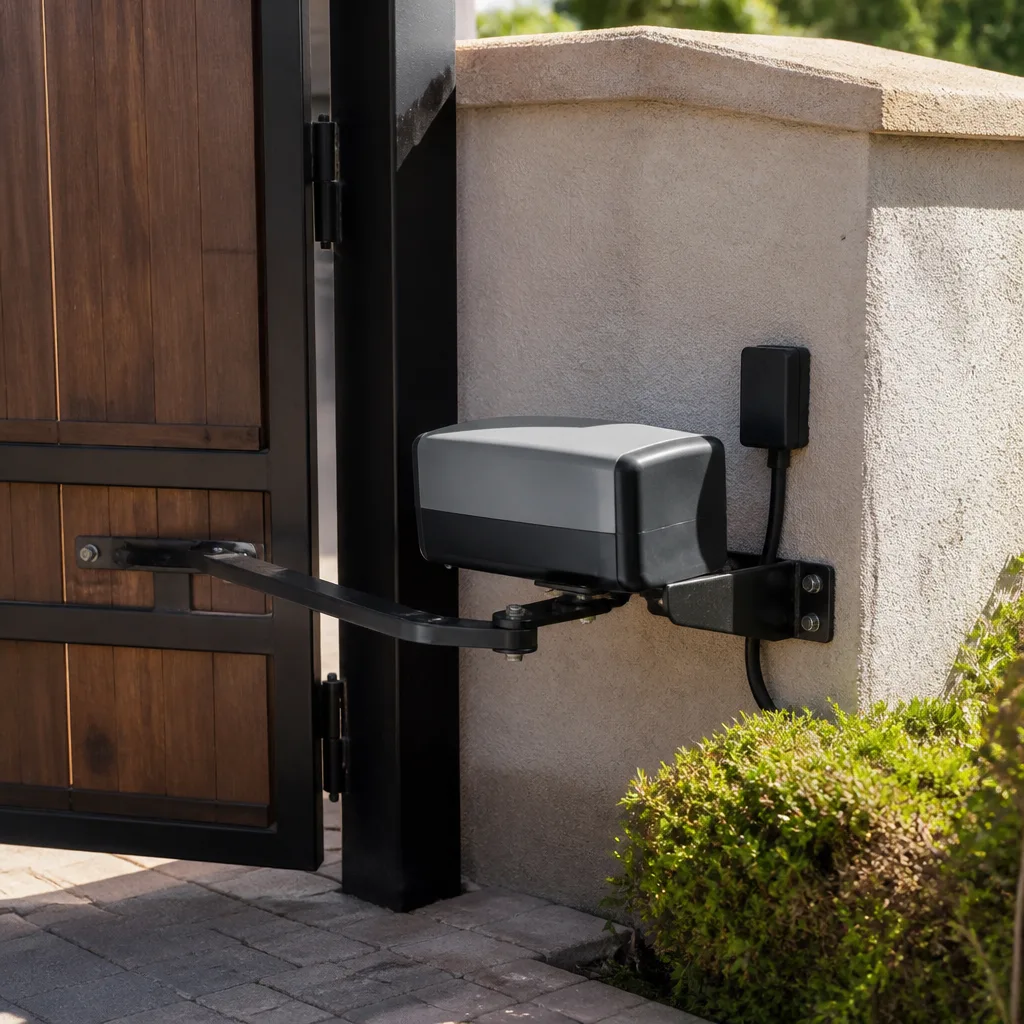
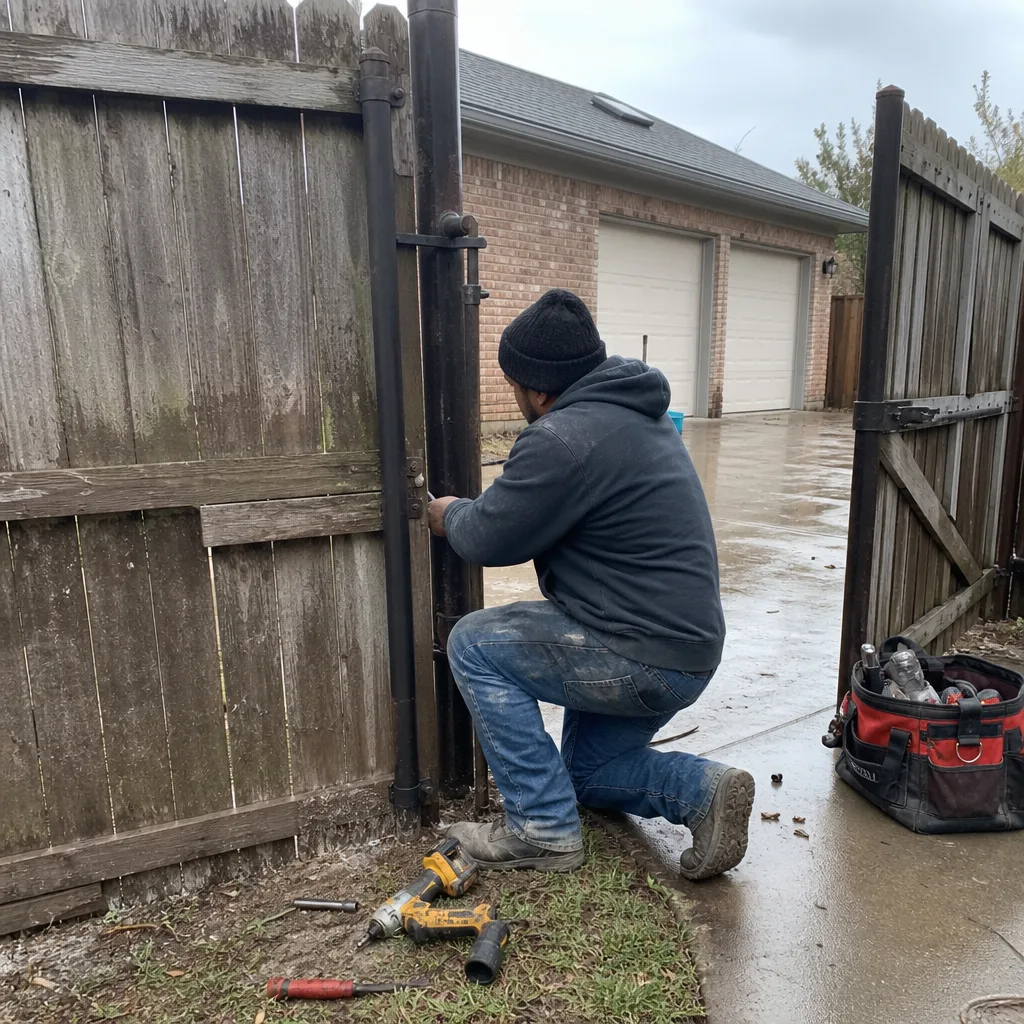 Before
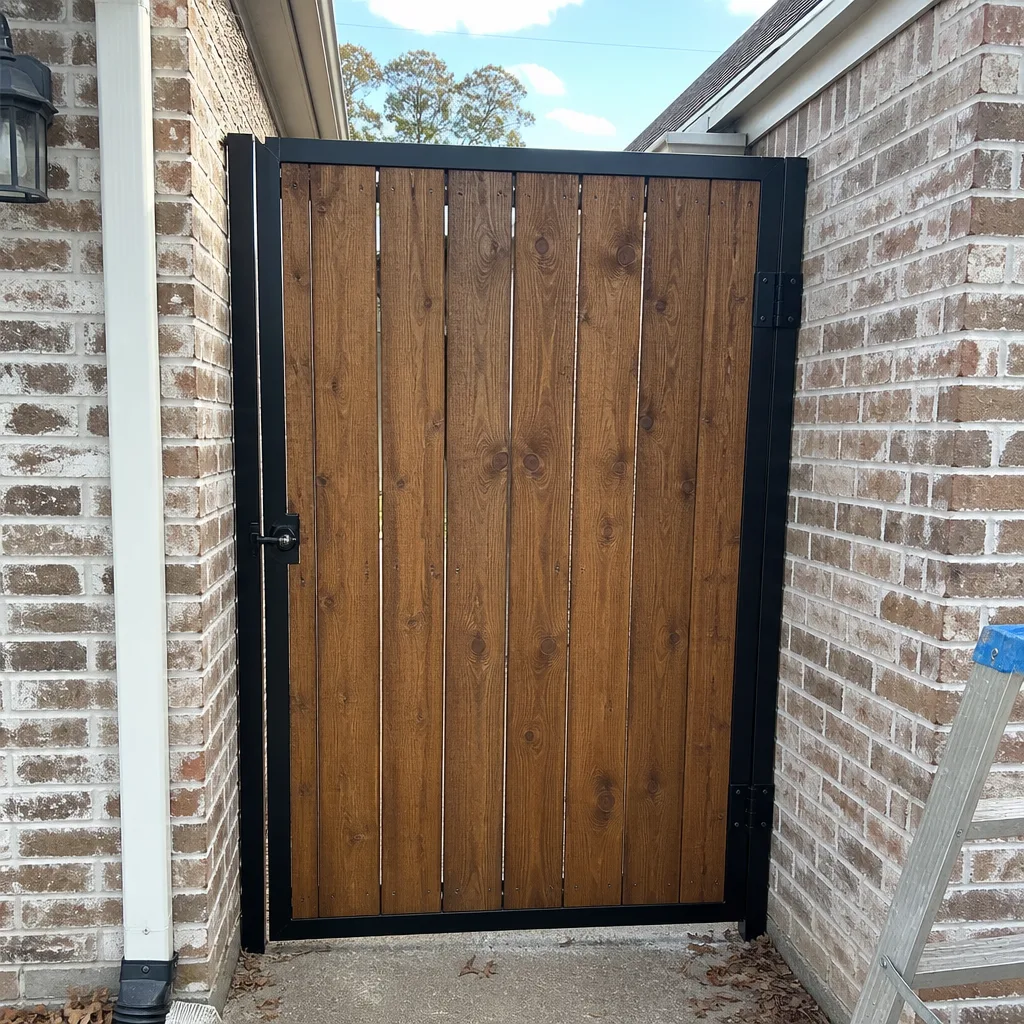 After
After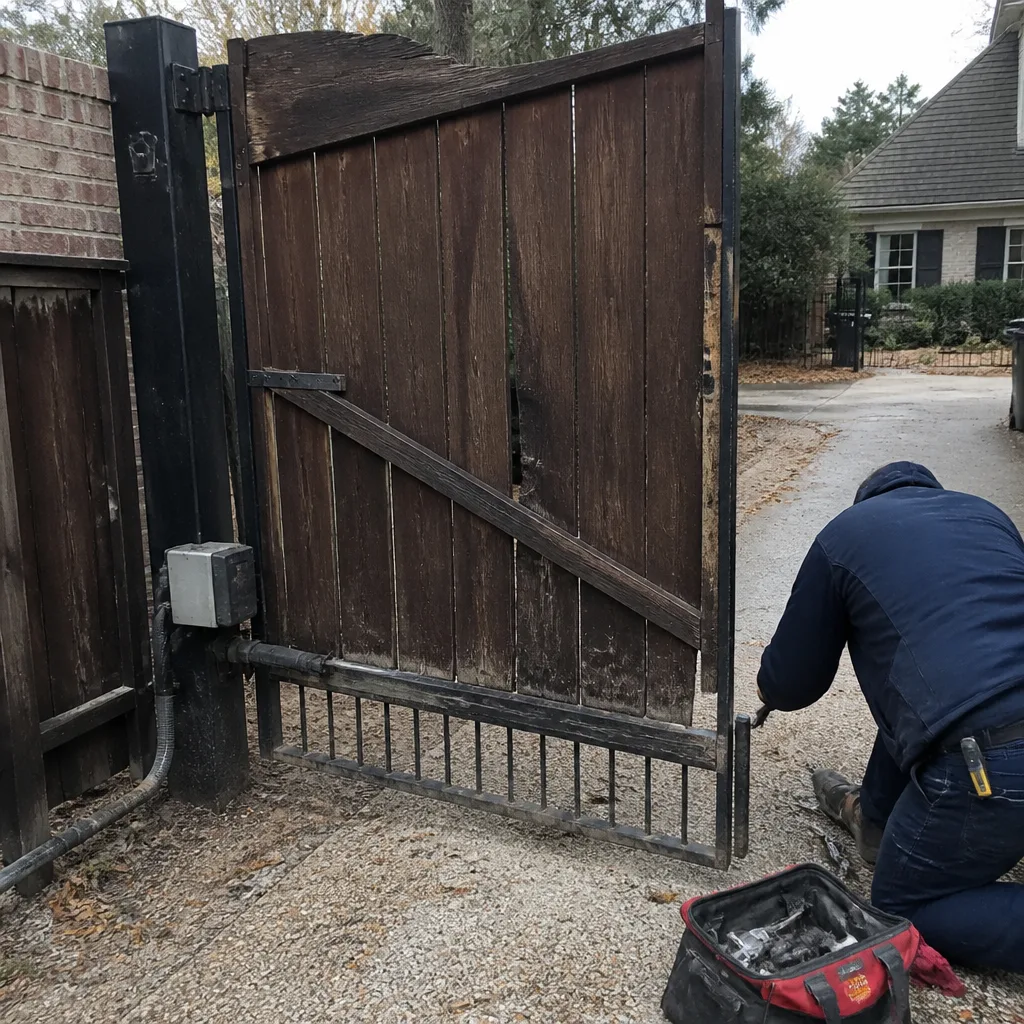 Before
 After
After Before
 After
AfterGate Repair Warning Signs: A McKinney Homeowner’s Reference Guide
A gate that still opens and closes can be hiding problems that will cost three times more to fix six months from now. In our 42 years of working on driveway gates across McKinney, we’ve learned that most gate failures announce themselves weeks or even months in advance, through small changes in sound, speed, and movement that homeowners write off as normal wear. This guide walks you through the warning signs that actually matter, what they mean for your gate, and which ones need attention this week versus which can wait until spring.
Quick Answer
The most common gate repair warning signs in McKinney include grinding or squealing noises from the opener, a gate that moves slower than it did last season, sagging at the latch end, rust at weld points, and a remote that works intermittently. Any of these signals means the gate is telling you something, and catching it early typically turns a $150 hinge adjustment into a $1,800 full gate rebuild. On the fence about whether a symptom is serious? Call us at (430) 226-4507 and we’ll talk you through what you’re seeing, free of charge.
Table of Contents
- What Normal Gate Noise Sounds Like (And What It Doesn’t)
- Why a Slow Gate Is a Warning, Not an Annoyance
- Sagging, Leaning, and Gates That No Longer Latch
- Rust and Weld Fatigue: The McKinney Climate Factor
- Remote and Keypad Problems That Point to Bigger Issues
- Safety Edges, Photo Eyes, and Auto-Reverse Malfunctions
- Power and Wiring Issues That Mimic Mechanical Failure
- Age Milestones: What to Expect at 5, 10, and 15 Years
What Normal Gate Noise Sounds Like (And What It Doesn’t)
A healthy gate opener makes a steady hum while the gate is moving, then goes quiet. That’s it. Any sound beyond that steady hum is the gate telling you something specific, and the type of sound tells you what’s wrong. In our experience across McKinney neighborhoods from Stonebridge Ranch to Craig Ranch, most homeowners wait until the noise becomes impossible to ignore before calling, by which point a simple fix has become a component replacement.
Here’s what the most common gate noises mean:
- Grinding or metal-on-metal scraping: This almost always means a bearing or roller has worn through its lubrication or failed entirely. On a sliding gate, it’s usually the track rollers or the guide wheels. On a swing gate, it’s usually the hinge bearings at the post. Left alone, the grinding wears the metal itself, and you end up replacing the hinge assembly instead of the bearing.
- Squealing or high-pitched whining: Typically the opener’s drive belt or chain tension is off, or the opener’s internal gears are running dry. With LiftMaster and Mighty Mule units especially, a squeal that only happens in cold weather often points to a belt that’s too tight.
- Thumping or banging during startup: This one is specific and serious. It usually means the gate’s weight has shifted slightly and the opener is fighting the initial inertia. The thump is the opener arm or the chain taking up slack under load. It will get worse, and it will eventually strip the drive gear.
- Clicking that repeats without movement: The opener is trying to move the gate and cannot. It’s either a capacitor failure in the opener, a seized bearing, or a physical obstruction you cannot see, like a wheel that’s come off its track.
One McKinney-specific note: our clay soil shifts seasonally. A gate that was silent all summer may start making noise in late summer or early fall as the ground dries and contracts, changing the geometry of the posts by a fraction of a degree. That fraction is enough to change how the gate loads against its hinges and how the opener engages. If your gate sounds different in August than it did in March, it’s worth having someone look at the post alignment before the problem becomes permanent.
Why a Slow Gate Is a Warning, Not an Annoyance
Gates do not gradually slow down as a normal part of aging. If your gate takes noticeably longer to open or close than it did a year ago, something has changed in the system, and that something is usually wearing out under load. The most common causes we diagnose on slow gates in McKinney are a dying capacitor in the opener, low hydraulic fluid in a FAAC or BFT operator, or increasing friction at the hinge points.
Think of it this way: the opener was sized for the gate when the gate was hung. The gate hasn’t gotten heavier. What’s changed is the amount of resistance the opener has to overcome. That extra resistance is friction, and friction is a bill being written in real time. Every cycle the gate runs while grinding against a failing bearing is a cycle that’s wearing down the opener’s motor, gears, and transformer. By the time the gate stops moving entirely, you’re often looking at both a mechanical repair and an opener replacement.
Here’s a simple test you can do at home without any tools:
- Stand where you can watch the gate through its full travel.
- Time the opening cycle with your phone. A single gate should open in 12 to 18 seconds. A double gate or a heavier estate gate may take 18 to 25 seconds.
- Time it again three days later and compare. If the time is creeping upward across a week or two, the system is telling you something.
- Listen for hesitation. A gate that starts, pauses a fraction of a second, then continues is usually fighting a capacitor or a shaft bearing that’s about to fail.
One more thing: if the gate moves slower in the morning and faster in the afternoon, or slower after rain, that points to either a power supply issue or moisture getting into the hinge bearings. Both are fixable, but both get more expensive the longer they’re ignored.
Sagging, Leaning, and Gates That No Longer Latch
The single most common structural issue we repair on McKinney estate gates is sag at the latch end. It shows up as a gate that used to close flush against the latch post but now hangs a half inch low, or a gate that needs to be lifted slightly to get it to latch. This is not cosmetic, and it’s not something to live with. A sagging gate is a gate that’s slowly destroying its own hinges and its own opener.
The fix, at its core, is re-hanging the gate and truing the posts. In cases where the gate is steel and the weld points have stretched or cracked, we weld in gussets or replace the hinge barrels. On a wooden gate, the problem is usually the post itself, softened by moisture at ground level and leaning under the weight. On an aluminum gate, it’s usually the hinge brackets that have bent. The repair varies by material, but the warning sign is the same: the gate doesn’t sit square anymore.
Here’s the number that matters: an opener running with proper balance pulls roughly its rated current. The same opener running against a gate that’s sagging a half inch pulls measurably more current on every cycle, because it’s lifting as well as pulling. That extra current is heat, and heat is what kills opener motors and control boards. In our experience, most opener failures on McKinney gates are secondary failures, meaning the opener died because it was forced to compensate for a mechanical problem that was ignored for too long.
If your gate needs a shove to close, or you can see daylight between the latch and the receiver at the top or bottom of the seam, do not wait. The repair needed right now is smaller than the repair needed six months from now.
Rust and Weld Fatigue: The McKinney Climate Factor
McKinney’s climate is hard on gates in ways that dry-climate homeowners never think about. We get real humidity through late spring and summer, then a hard dry stretch, then winter freezes that open and close micro-fractures in paint and powder coat. Any exposed steel at a cut edge, a weld joint, or a bolt hole will take on moisture, and in North Texas, that moisture carries the salts and minerals that accelerate oxidation. Rust on a gate is not a surface problem. It’s a structural clock.
Here’s what to look for, and where:
- Weld joints at the hinge stile: This is the highest-stress point on any swing gate, and the first place rust appears. Rust at a weld looks like brown staining bleeding out from under the paint, often with a faint crack line running along the weld bead.
- Bottom rail on tube-frame gates: Water sits in the bottom rail whenever it rains, and if the weep holes are plugged with debris or painted over, the rail rusts from the inside out. By the time you see rust staining, the tube may already be thin enough to flex under pressure.
- Gate-to-opener attachment plates: Steel plate against steel tube with a bolt through it is a corrosion sandwich. The paint wears off under vibration, and you get rust under the plate that you can’t see until the plate is removed.
- Post caps and decorative finials: These hold water and rust at the weld line where the cap meets the post. On ornamental steel gates, this is where we see the most rust-related failure per square inch.
Rust repair on a gate that’s caught early is a wire-wheel, prime, and paint job, with any pitted steel welded and ground smooth. Rust that’s allowed to progress through a weld means cutting out the old joint and re-welding, often with new material spliced in. The cost difference is meaningful, and the safety difference matters too: a weld that’s 30 percent compromised is a gate that can come off its hinges under the right gust of wind.
Remote and Keypad Problems That Point to Bigger Issues
When a remote stops working, most homeowners assume the remote is the problem. In roughly half the service calls we run in McKinney for remote failures, the remote is fine and the receiver or the opener’s control board is the actual source of the trouble. Replacing the remote without checking the receiver simply moves the problem down the road a few weeks.
Here’s how to read what your gate is doing:
- Remote works from one side of the gate but not the other: This is almost always a receiver antenna issue, not a remote issue. The receiver’s antenna may be shortened, corroded, or tucked behind a metal box that blocks signal from that direction. If your remote works from the street but not from the driveway, the antenna is the likely culprit.
- Remote works sometimes but not others: Intermittent operation points to a weak battery in the remote, a receiver board that’s overheating, or a low-voltage condition at the opener. On LiftMaster units from the last decade, a receiver that works when the opener is cool and fails when the opener has run several cycles in a day is usually a thermal issue on the board.
- Keypad works but remote doesn’t: The keypad and the remote often use different receiver channels. If one works and the other doesn’t, the receiver is likely fine and the remote needs to be re-linked or replaced. On Mighty Mule and Ghost Controls setups, the keypad often connects through a separate input entirely, not the wireless receiver.
- Multiple remotes fail at the same time: This is not a coincidence. When three remotes die on the same afternoon, the problem is the receiver board. We see this often enough after lightning storms in the McKinney area that it’s the first thing we check when a homeowner says “all my remotes stopped at once.”
Gate remotes and keypads are surprisingly durable, and most will outlast the vehicle they live in. When one quits, check the battery first, then check behavior before replacing the remote. And if you’re unsure, a quick call is free.
Safety Edges, Photo Eyes, and Auto-Reverse Malfunctions
A gate opener of any brand made in the last twenty years has two forms of entrapment protection: a safety edge or pressure sensor that reverses the gate when it hits something solid, and photo eyes or a similar non-contact sensor that detects an obstruction in the gate’s path. These are not optional convenience features. They’re the difference between a gate that stops and a gate that keeps pushing, and on a heavy estate gate in a McKinney neighborhood with kids, dogs, and delivery trucks, they matter every single day.
Warning signs that these systems are failing:
- The gate reverses when nothing is in the way: The safety edge may be pinched, cracked, or wet inside its rubber housing. We see this on McKinney gates after heavy rain, when moisture gets into a worn safety edge and triggers false reversals every few cycles.
- The gate does not reverse when it meets resistance: This is the dangerous one. A gate that keeps pushing against a trash can, a bicycle, or a small child is a gate with a failed or disconnected safety edge. Do not operate the gate again until it’s been checked. A gate opener with the entrapment protection bypassed is one wiring mistake away from a serious accident.
- Photo eyes that blink or show an error light: Many LiftMaster, FAAC, and BFT openers have a diagnostic light on the control board or the photo eye itself. A blinking pattern translates to an error code, and most point to misalignment, a dirty lens, or a wiring fault. Misalignment is the most common, and it’s usually caused by a post that has shifted slightly with McKinney’s clay soil movement.
- The gate stops and stays open on its own: If the auto-close function is enabled and the gate stops holding at the open position, the photo eyes may be reading an obstruction that isn’t there, or the board may have lost its auto-close timing. On some BFT models, a failing capacitor produces exactly this symptom before it produces any other.
If your gate’s safety devices are misbehaving, treat it as urgent. Not because the gate will necessarily break, but because a gate that doesn’t reverse on contact is a gate that can hurt someone. That’s the one repair nobody in McKinney should put off until next month.
Power and Wiring Issues That Mimic Mechanical Failure
Before you assume your gate’s motor is dead, check the things that feed it power. In McKinney, where lightning storms roll through in spring and fall, and where underground wiring ages in shifting clay soil, electrical issues are the root cause of many gate “failures” that get misdiagnosed as mechanical. Here’s what we’ve learned from four decades of service calls that turned out to be electrical:
- A gate that worked yesterday and is dead today: Check the breaker first. Then check the GFCI outlet if the opener is plugged into one. Underground low-voltage runs and even direct-burial 120V runs can trip GFCI protection in wet weather, and the fix is a reset, not a new motor.
- A gate that runs fine with the keypad but not the remote, or vice versa: That’s not a power problem, it’s a control board or receiver issue. The board is getting power; the input source is not communicating with it. Different problem, different fix.
- A gate that moves erratically, stops halfway, or reverses direction on its own: On 120V openers, a loose neutral or a corroded splice can cause exactly this. The opener is receiving fluctuating voltage and its control board is misreading the gate’s position. We’ve found corroded wire nuts in underground junction boxes in McKinney neighborhoods where the wire was originally installed 25 years ago.
- A solar-powered opener that fails on cloudy weeks: In McKinney’s tree-covered neighborhoods like Tucker Hill, solar panels on gate openers don’t get enough light in winter. A Mighty Mule or Ghost Controls solar setup that works fine in July may fail in January after three overcast days. The fix is often a larger panel or a hardwired feed, not a new opener.
One rule of thumb that has served our McKinney customers well: if the gate’s behavior is inconsistent, it’s electrical. Mechanical problems are usually consistent. A bearing that’s failing makes the same noise every cycle. A capacitor that’s dying makes the gate slow every cycle. But a gate that works perfectly in the morning and fails at noon, or works after rain and not before, is almost always a power or control signal issue.
Age Milestones: What to Expect at 5, 10, and 15 Years
Gates and gate openers age on different schedules, and knowing which component is on which clock helps you plan for repairs before they become emergencies. Here’s a milestone map based on what we’ve seen across thousands of McKinney gates:
Years 1 to 5: A properly installed gate and opener should need almost nothing beyond seasonal cleaning and the occasional battery in a remote. What we see in this window is usually installer error: hinges that weren’t greased at installation, wires that weren’t protected from weather, posts set in soil that wasn’t compacted. If your gate needs serious work in the first five years, call the original installer, and if they’re gone, call someone who will stand behind their work in writing.
Years 5 to 10: This is when openers start showing their age first. Capacitors weaken, drive belts stretch, gear boxes on chain-driven units wear, and control boards develop cold solder joints. On a gate of this age with the original opener, we typically recommend a service call to inspect the opener internals before it fails, because the parts are still available and the repair is a fraction of replacement cost. Gate hardware at this age usually just needs lubrication and tightening.
Years 10 to 15: The gate itself is now a teenager, and on steel gates in McKinney’s climate, that means rust at the weld points and bottom rails is likely. Hinge barrels are wearing, and the opener should probably be evaluated for replacement even if it still works. A gate that’s reached this age with original paint has usually lost enough coating to need stripping and refinishing, not just touch-up.
Years 15 and beyond: Anything still moving at 15 years is a credit to the original installation. But the components are individually approaching failure, and the most cost-effective path is often a rebuild rather than a series of repairs: new hinges, new opener, rewired controls, and a full refinish. A 40-year-old gate rebuilt this way can easily serve another 20 years, provided the structure itself is still sound.
Victor Salinas has seen McKinney gates that were built better than anything sold today, and gates that were never built to last at all. The difference isn’t always visible in the purchase price, it’s visible in the failure pattern at year seven versus year seventeen.
Common Mistakes to Avoid
- Greasing a squeaking gate with WD-40. WD-40 is a solvent, not a lubricant. It temporarily quiets the squeak by thinning the remaining grease and washing it out. The noise comes back louder because now there’s less lubrication than before. Use a proper lithium or silicone grease on the hinge pins and bearing surfaces.
- Replacing the remote before checking the receiver. If two or more remotes stop working at the same time, or if a new remote doesn’t fix the issue, the receiver board is the real problem. We replace far fewer remotes than homeowners expect once the receiver is checked.
- Ignoring a gate that’s a little slow. A slow gate is a failing gate, not a quirky gate. The longer it runs under excessive load, the more components it damages. Slow movement is the cheapest possible time to fix whatever’s causing it.
- Propping a gate open with a bungee cord. We’ve seen this more times than we can count in McKinney. A gate held open with a strap is a gate that’s still trying to close itself, which means the opener is running against the strap, overheating, and stripping gears. If the gate won’t stay open, disconnect the opener and latch the gate open properly.
- Leaving the auto-close function enabled when the gate drifts. A gate that drifts shut on its own has a leveling problem, and an auto-close timer on top of a drifting gate means the gate will close on whoever is standing in its path. Disable auto-close until the gate is re-leveled.
- Painting over rust without treating it first. Paint seals moisture in, it doesn’t seal it out. Rust needs to be mechanically removed or converted before painting, or the gate will be rusting again within a season, under a fresh coat of paint that makes it harder to see.
- Waiting until the gate stops working to call anyone. In our experience, the average McKinney homeowner waits three to four weeks after first noticing a problem before calling. In that window, a $120 hinge replacement becomes a $900 hinge rebuild with possible post repair. The earlier the call, the smaller the invoice.
When to Call a Professional
Some gate work is genuinely safe to handle yourself: changing remote batteries, clearing leaves from the track, adjusting a misaligned photo eye. The things on this page, mostly, are not. Hinges under tension, openers with live wiring, safety edges that won’t reverse, sagging gates, rust at weld points, cracked welds, and any opener diagnostics are best left to someone who works on them every day, not every ten years. Gate hardware is heavy, under load, and often under spring tension, and a gate that comes off its hinges can do serious damage to a person. If you’re seeing any of the warning signs in this guide and you’re not sure what to do next, call us.
Ironworks Gate Co. offers free estimates in McKinney. Call (430) 226-4507 and a live person will answer, day or night, and help you figure out whether it’s an emergency, a next-week repair, or something that can wait until your spring tune-up. We’ll tell you straight, even when the answer is that you don’t need us yet.
Frequently Asked Questions
A gate opener that’s going bad usually shows it first through slower operation, a grinding or whining sound during travel, or intermittent failure to respond to remotes and keypads. Any of these symptoms alone is worth a service call; two or more together means the opener is in active failure and should be inspected before it stops entirely. Call (430) 226-4507 and we’ll help you figure out whether you’re looking at a repair or a replacement before you spend anything.
Intermittent gate operation is almost always an electrical issue, not a mechanical one. The most common causes we find on McKinney gates are a failing capacitor in the opener, a corroded wire splice in an underground junction, or a receiver board that’s overheating. Mechanical problems are consistent, so when the gate works in the morning and not in the afternoon, think electrical.
Most gate repairs in McKinney fall between $150 and $500 for things like hinge fixes, sensor adjustments, and opener component replacements, while full gate rebuilds and opener replacements run higher depending on the gate’s size and the opener’s brand. Every job we do at Ironworks Gate Co. is quoted and agreed before any work starts, so the price on the quote is the price on the invoice. We also offer $50 off any repair over $250 and a free second opinion on any written estimate you’ve received from another company.
Most sagging gates can be fixed, and the fix is usually re-hanging the gate, truing the posts, and replacing or rebuilding the hinges. Replacement only becomes necessary when the gate’s frame has rusted through or the weld points have failed in enough places that the structure itself is no longer sound. We’ll tell you which path makes sense for your gate and your budget before any work is authorized.
We service and repair nine major gate-automation brands, including LiftMaster, FAAC, BFT, and Mighty Mule, and we carry common parts for most of them on the truck. Most jobs are completed in a single visit because we arrive prepared for the opener you actually have, not the opener we’re hoping you have.
A noisy gate is not automatically dangerous, but the conditions that cause the noise often are, especially grinding at the hinges or thumping during startup, both of which indicate that the gate is under stress. The safety concern is real: a gate that comes off its hinges or an opener that fails mid-cycle can injure someone. If the noise is new or getting louder, have it looked at before it becomes something worse.
The Bottom Line
Your gate talks to you. It talks through the noises it makes, the way it moves, the way it sits against the latch, and the way it responds to commands. None of the warning signs in this guide are subtle, and none of them are normal. A gate that’s grinding, sagging, slowing, or ignoring its remotes is a gate that’s asking for help, and in McKinney’s climate, that request doesn’t expire, it compounds. The fix that costs $200 this month costs $1,400 next year. The best time to call is today. The second-best time is the day you first noticed something off. Call Ironworks Gate Co. at (430) 226-4507 and we’ll come take a look, tell you what’s actually wrong, and quote the job before we touch a single bolt. Done right, and backed in writing.
Written by Victor Salinas, Owner at Ironworks Gate Co. home, serving McKinney since 2013.