
Last updated August 25, 2026
Free on-site gate assessment - hinges, posts, and your LiftMaster or Nice gate operator checked before anything is quoted
The assessment is free and the quote is the invoice.
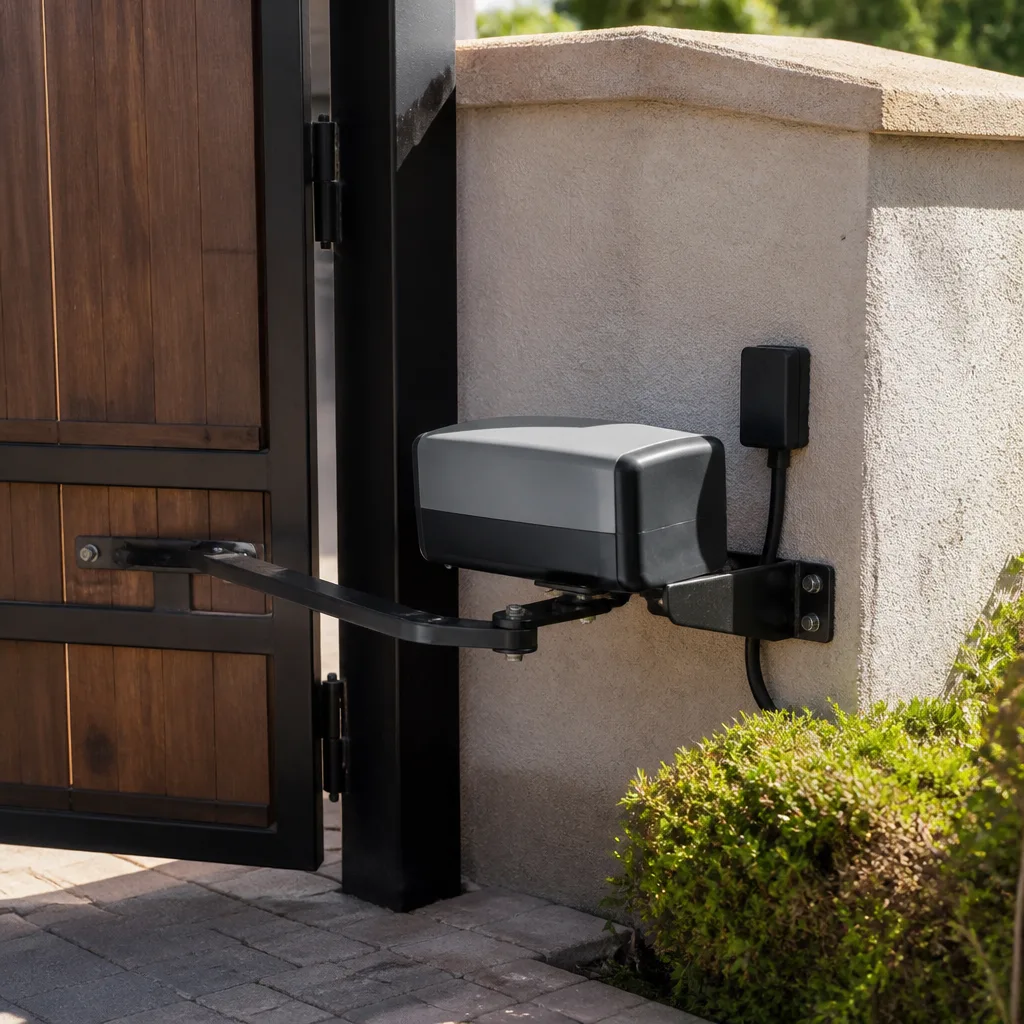
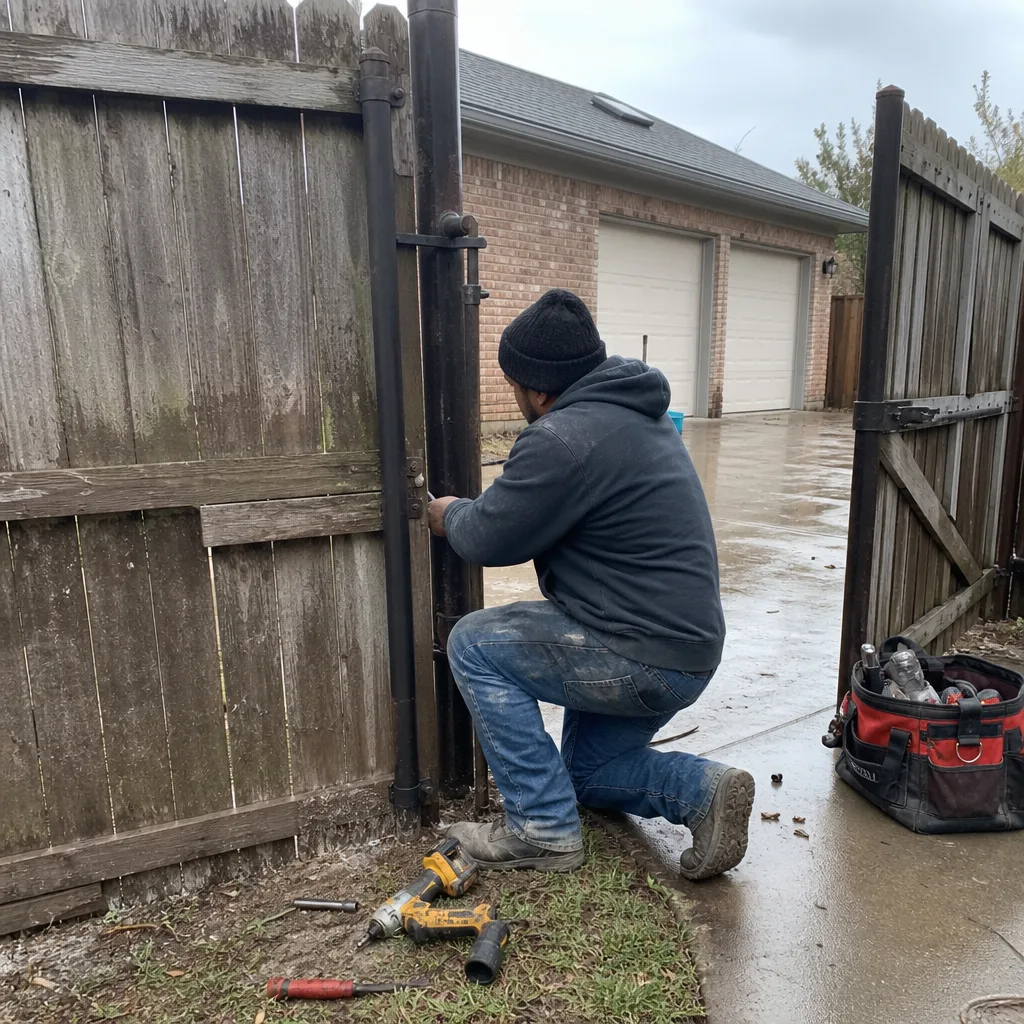 Before
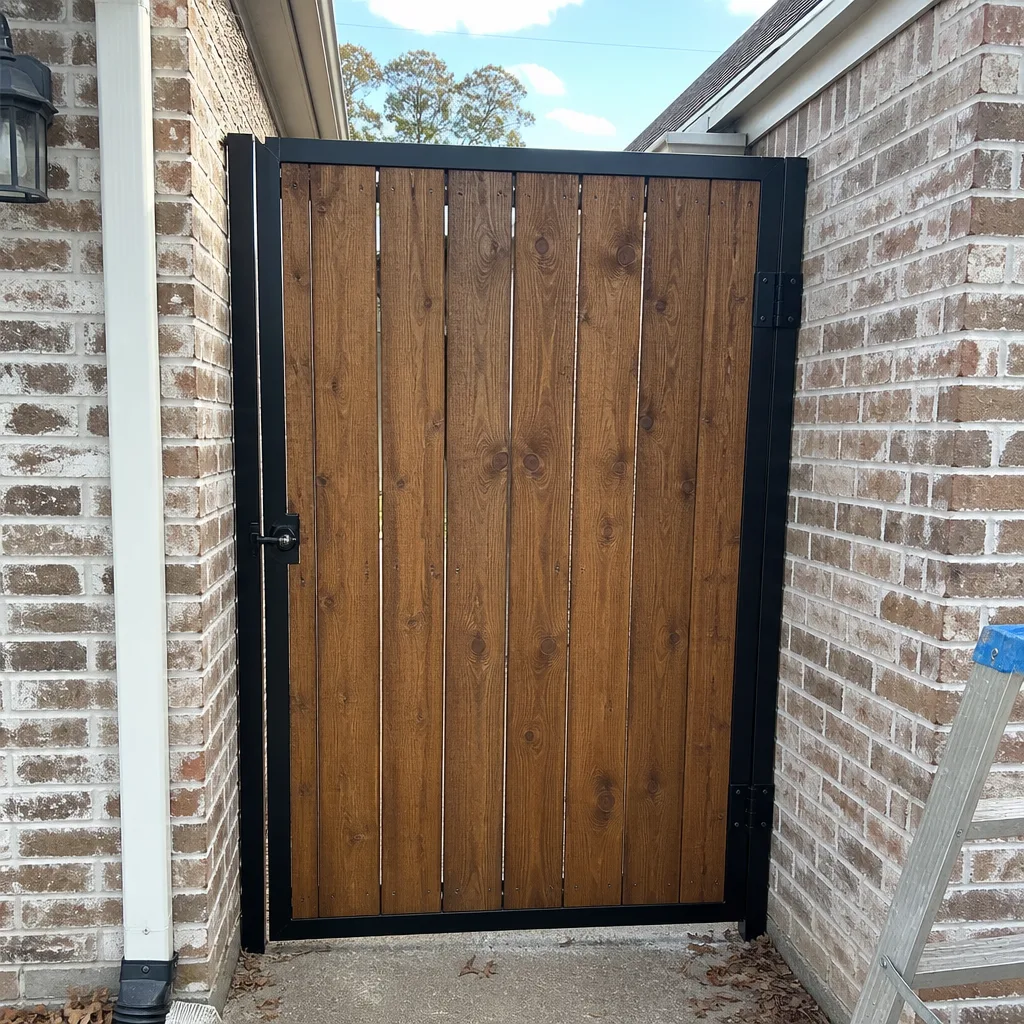 After
After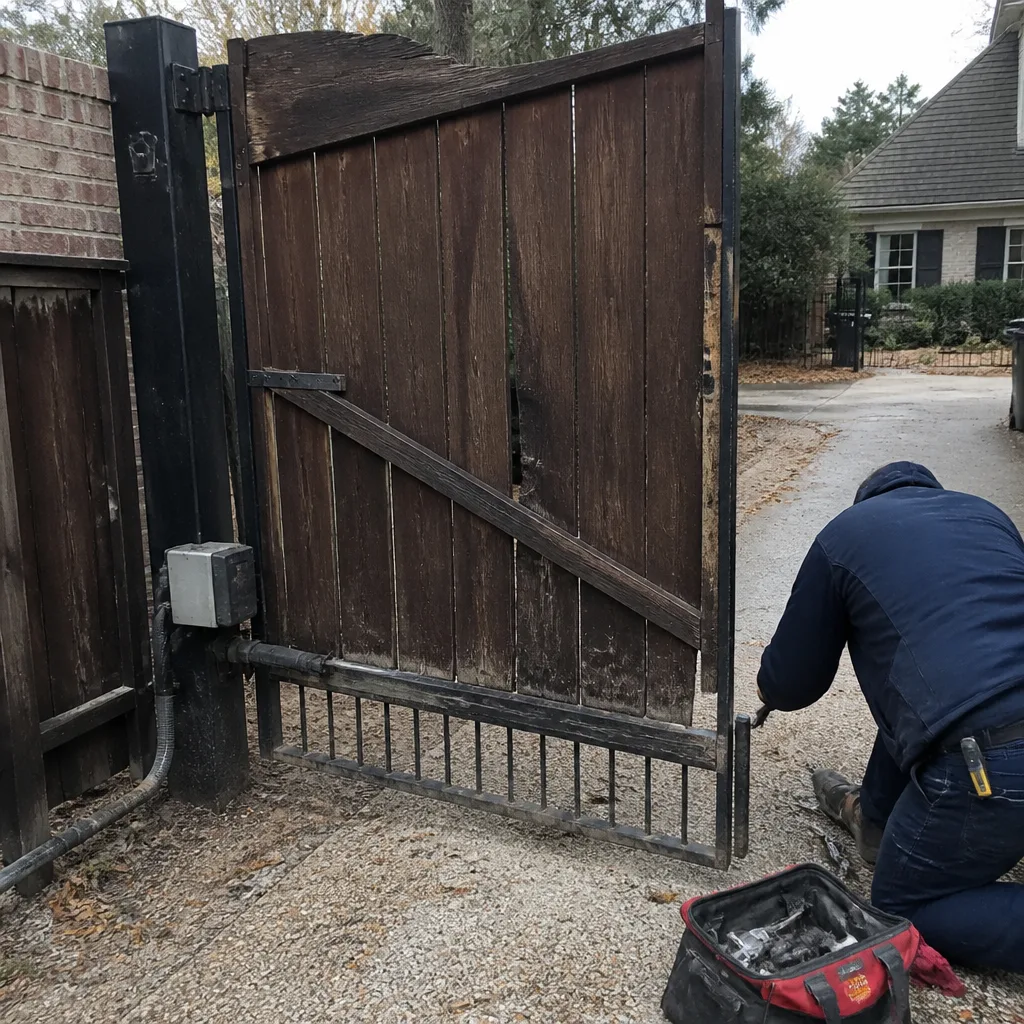 Before
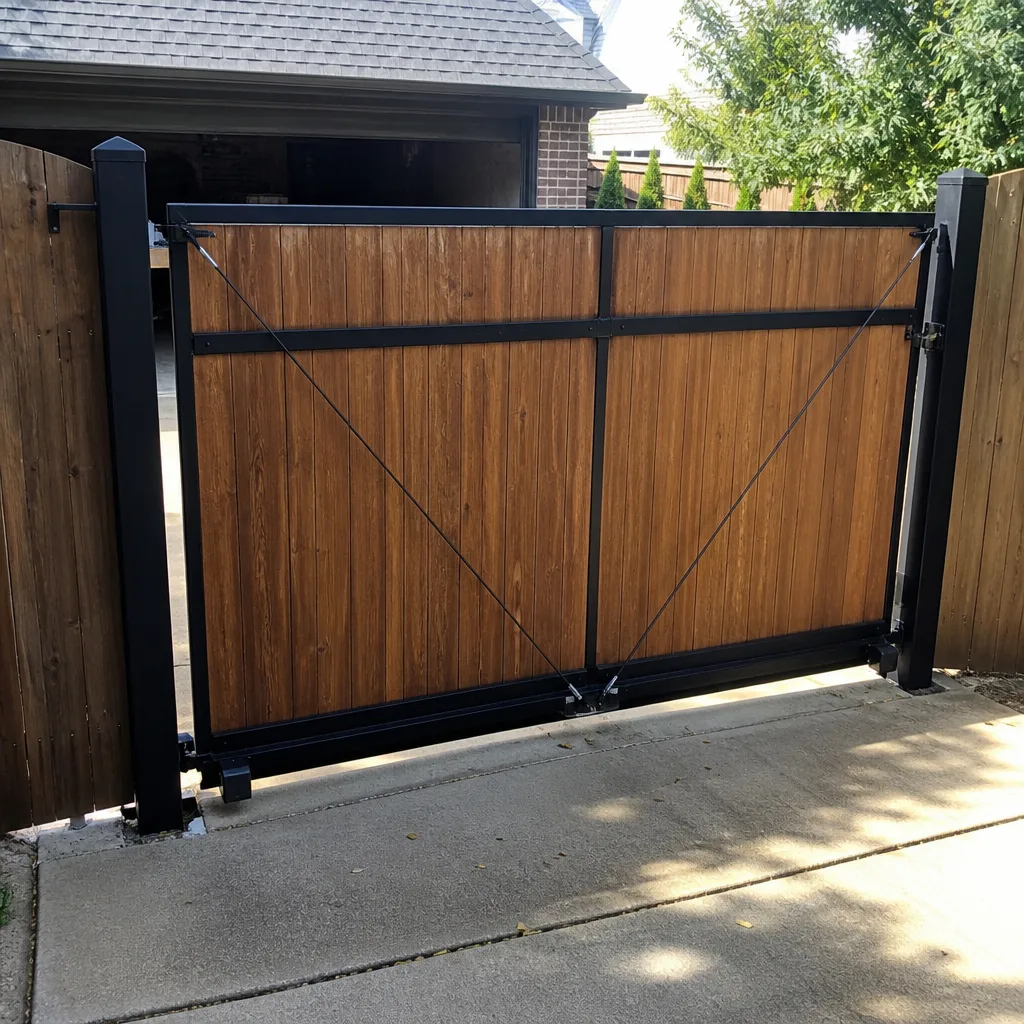 After
After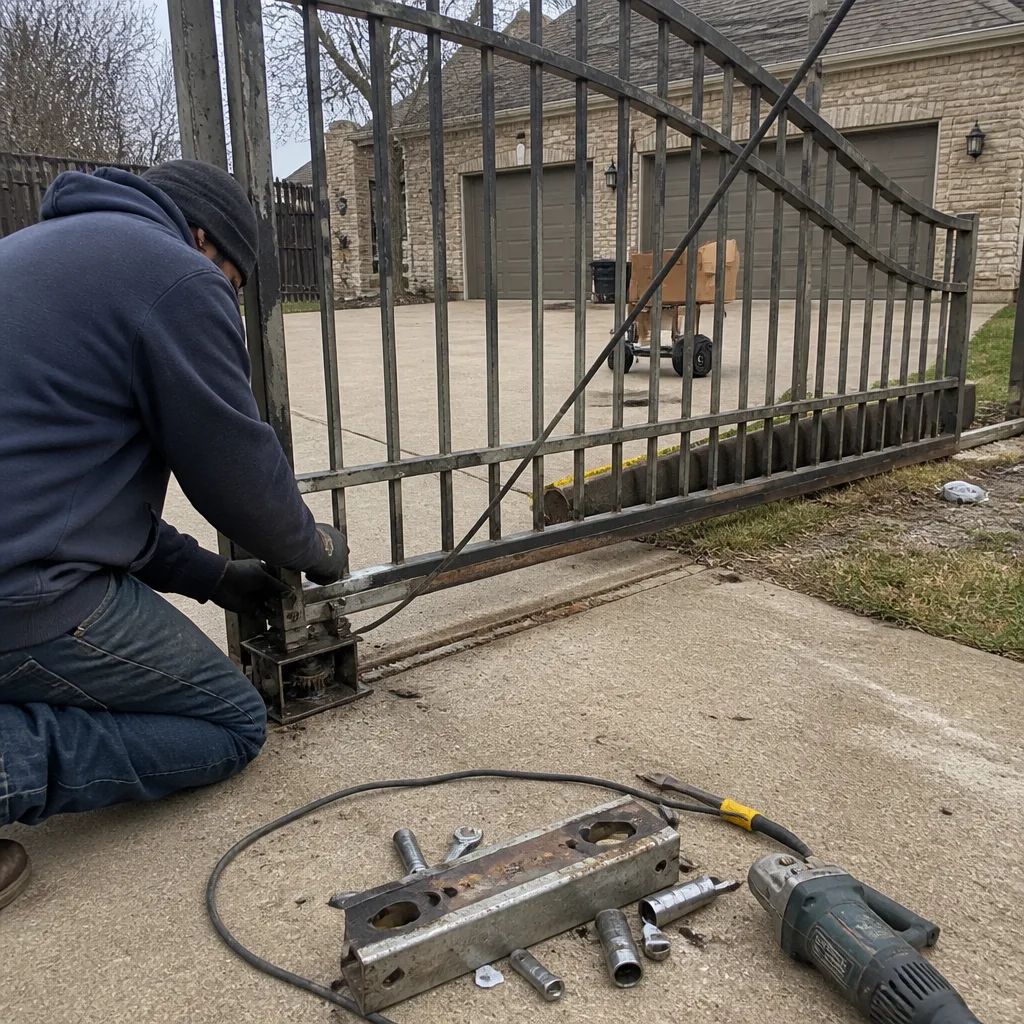 Before
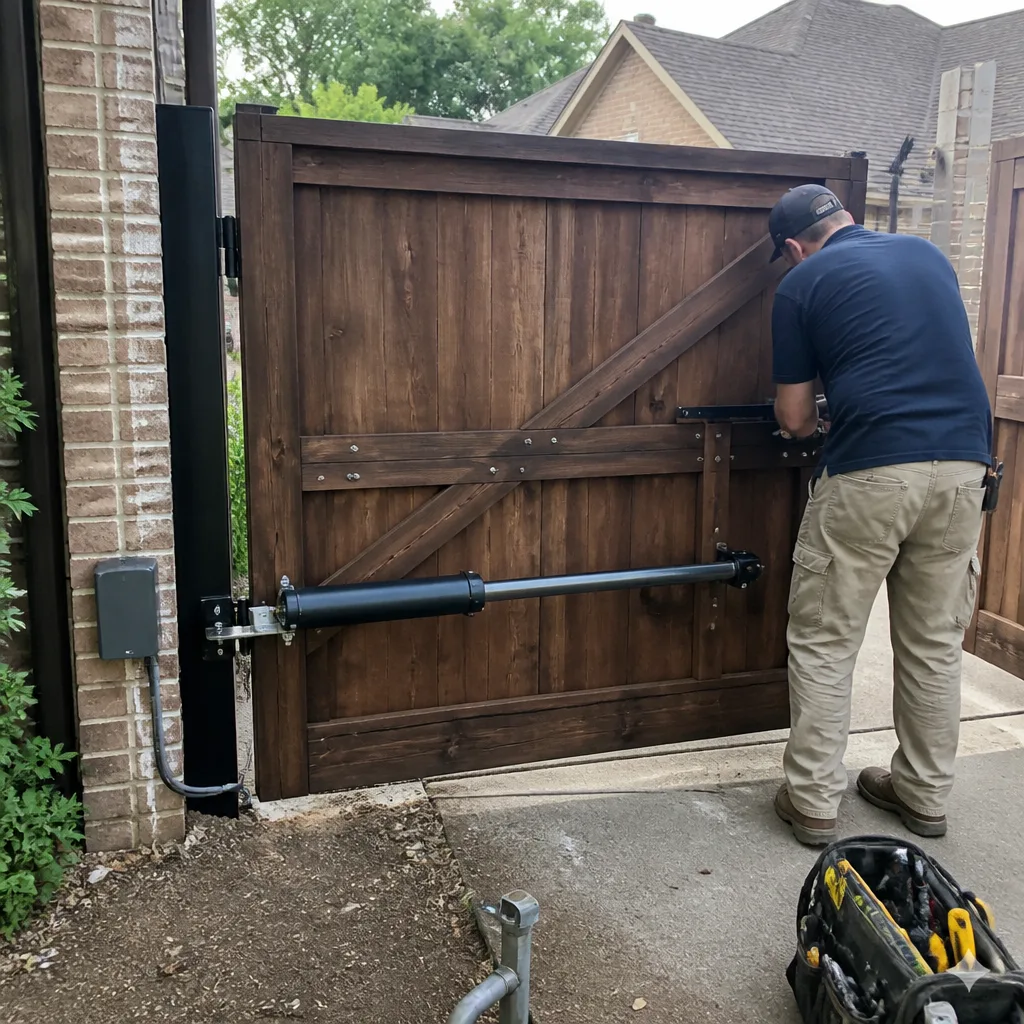 After
AfterGate Repair Maintenance Checklist for McKinney Homeowners
Most McKinney gate failures don’t start with a dramatic collapse. They start quietly: a hinge that binds, a motor that hums a half-second longer than it should, a wheel that drags through a quarter-inch of settled clay. We’ve been called to thousands of driveway gates across Collin County, and the pattern is consistent. The gates that last twenty years are not the ones that never break. They’re the ones whose owners noticed the small things early. This guide gives you the exact checklist we use to keep a McKinney gate running like new, season after season, without surprises.
Quick Answer
The short version: a McKinney gate needs about 20 minutes of attention every month and one thorough tune-up each spring and fall. Focus on hinges, wheels, the opener’s force settings, safety eyes, and the condition of the metal. Most serious failures are preventable if you catch them at the squeak-and-drag stage rather than the stopped-dead stage.
Table of Contents
- The Monthly Visual Walkaround
- Seasonal Maintenance for McKinney’s Climate
- Hinges and Wheels: The Wear Points
- Gate Opener and Motor Maintenance
- Safety Systems: Auto-Reverse and Photo Eyes
- Metal, Finish, and the Texas Elements
- Keypads, Remotes, and Access Control
- Common Mistakes to Avoid
- When to Call a Professional
- Frequently Asked Questions
The Monthly Visual Walkaround
Walk around your gate once a month with your eyes and ears open. You don’t need tools for this. You need ten minutes and a habit. Look at the gate from both sides, open and closed, and ask yourself a few questions: Does it stop in the same place it stopped last month? Does it shudder when it starts? Does it sound the same at 7 a.m. as it does at 7 p.m.? A gate that changes its behavior, even slightly, is telling you something. Listen to it.
What to Look For Every Month
- Gate travel path is clear. Sticks, landscaping debris, or wind-blown branches lying across the track or in the gate’s swing arc will force the opener to work harder. In McKinney, spring storms drop a lot of small branches. Clear them before the opener pushes through them.
- No new rust blooms. Orange streaks or bubbling under the powder coat are the first sign of corrosion. Small spots are manageable. Ignored spots become holes.
- Hinge pins sit flush. If a hinge pin has walked upward or looks cocked, the gate’s weight distribution has changed. That’s not cosmetic. It’s geometry.
- Wheels roll, they don’t skid. A sliding gate’s wheels should roll smoothly. If one wheel is flat-spotted or dragging, the gate will eventually rack and bind.
- Opener housing is dry. Water intrusion kills gate motors faster than any other cause in North Texas. Look for water staining, condensation inside the cover, or a swollen or cracked housing.
- Fasteners are present. Bolts do not usually fall out all at once. They loosen first, then disappear. A missing bolt anywhere on a gate is a job for this week, not this season.
In our experience, McKinney homeowners who do this walkaround every month rarely need emergency repairs. The ones who don’t usually call us after a hard rain or a cold snap, when the gate refuses to move at the worst possible time.
Seasonal Maintenance for McKinney’s Climate
McKinney’s climate does two things to a driveway gate: it bakes it in summer and swells its soil in spring. Neither is optional. Your maintenance schedule should follow the weather, not the calendar. Here is the seasonal rhythm that works in this part of Texas.
Spring (March through May)
Spring in McKinney means rain and soil movement. The blackland prairie clay under the Dallas-Fort Worth area expands and contracts dramatically with moisture. Your gate posts, the concrete pad, and the track may not sit in exactly the same relationship to each other in April as they did in December. That stress shows up at the hinges and the opener’s force settings first.
- Check both gate posts with a level, especially after heavy rain. A post that has moved even a quarter-inch changes the gate’s swing or slide geometry.
- Re-test the auto-reverse and safety eyes. If the force settings have drifted from the winter setting, adjust them or call us to calibrate them properly.
- Inspect the track or hinge mortises for mud and sediment. Spring runoff carries grit into every moving part.
- Lubricate hinges, rollers, and the opener’s drive chain or screw with a dry lubricant appropriate for outdoor metal. Avoid grease in dusty conditions; it captures grit and becomes grinding paste.
- Trim any vegetation that has grown into the gate’s travel path over the winter. Vines, especially, will wrap a gate in a season.
Summer (June through September)
McKinney summers push 100 degrees on a regular basis. Heat does not usually break a gate directly, but it accelerates every existing problem. Grease thins. Electronics overheat. Metal expands, which tightens clearances that were already tight. Your summer checks should be brief and early. Do them before 10 a.m. when the gate is still cool.
- Feel the motor housing. If it’s too hot to keep your hand on it after a cycle, the motor is working harder than it should. That’s usually a mechanical bind showing up as heat, not an electrical problem.
- Listen for a slower start. Heat makes bearings and bushings swell. A gate that starts sluggishly on a 98-degree afternoon but moves fine in the morning needs attention.
- Check the safety eyes for sun exposure. Direct Texas sun can warp the small plastic housings on photo eyes over time, tilting them out of alignment.
Fall (October and November)
Fall is the best season for the deeper maintenance work in McKinney: rebalancing, adjusting the opener limits, and touching up any paint or powder-coat damage. The weather is cool enough to work outside comfortably, and the gate is about to face its hardest season.
- Do a complete fastener check with a wrench. Tighten every bolt you can reach. Use a torque wrench if you have one; a loose gate is a rattling gate, and rattling loosens more bolts.
- Touch up any chips or scratches in the finish with a matching industrial enamel.
- Have the opener’s limits and force settings tested and adjusted. This is the number one item on our Ironworks Gate Co. home seasonal tune-up list, and it prevents most winter failures.
- Clean the track, the rollers, and the hinges with a degreaser, then re-lubricate everything with fresh product.
- Test the battery backup on the opener, if it has one. Power outages are more common in fall and winter than most McKinney homeowners expect.
Winter (December through February)
McKinney winters are short but sharp. A few nights below freezing, the occasional ice storm, and enough wind to drive moisture into the smallest openings. Metal contracts in the cold. Grease stiffens. A gate that worked perfectly in September can refuse to move on a 19-degree January morning, not because it broke, but because everything got tight and stiff at once.
- Use a cold-weather lubricant on hinges and wheels. Standard sprays thicken in freezing temperatures and make the opener work harder.
- Watch for frost on the track. A sliding gate on an icy track is like a car on ice: it will slip, grind, or stall. Clear the track and let the sun do its work before cycling the gate.
- Do not force a frozen gate. If the gate will not move, wait for the thaw or call us. Forcing it with the opener motor is how gearboxes get stripped.
- Check the opener cover for cracks after a freeze-thaw cycle, especially on older units like the original Mighty Mule or FAAC models that have been outdoors for ten or more years.
Hinges and Wheels: The Wear Points
Every gate hangs on its hinges or rolls on its wheels. That’s the whole mechanical truth. If the hinges or wheels are right, the gate moves easily and the opener lasts for years. If they’re wrong, every other part of the system wears out faster. We replace and repair more hinges and wheels than any other component, and we’ve been doing it in McKinney for over 42 years.
The Hinge Check
- Look at the gap. The space between the gate leaf and the post should be even top to bottom. If the top gap is wider, the hinge is wearing or the post is leaning.
- Lift test. With the opener disengaged, lift the gate leaf at the latch end. A quarter-inch of play is normal. Half an inch or more means the hinge pins or bushings are worn.
- Listen for the creak. A creaking hinge is a dry hinge, and a dry hinge is a wearing hinge. Lubricate it now, before the metal galls.
- Check the welds. On steel gates, look closely at each hinge weld for hairline cracks. North Texas wind loads stress these welds constantly. A cracked hinge weld is not a tune-up issue; it’s a structural repair.
The Wheel and Track Check for Sliding Gates
- Spin each wheel by hand with the gate stationary. It should spin freely with no wobble. A wheel that wobbles on its axle is about to fail.
- Check the track for wear grooves. A worn wheel will cut a groove into the track. If the track has a visible channel, both the track and the wheel need replacing.
- Clean the track, then look again. Dirt hides a lot. Sweep or hose the track clear and inspect it bare. You’ll often find cracks or wear you missed when it was dusty.
- Verify the gate sits level. Place a level on the top rail. A sliding gate that has dropped on one side has a wheel, a bearing, or a foundation problem.
Here’s the thing most McKinney homeowners learn the hard way: a single bad wheel does not just fail on its own. It makes the opener work harder, which makes the opener wear faster, which eventually causes a failure that costs far more than the wheel would have. The $40 wheel you replace this month is the $700 opener repair you avoid in six months.
Gate Opener and Motor Maintenance
Gate openers are simple machines doing a hard job. They start and stop several tons of steel hundreds of times a month, in every weather condition McKinney can throw at them. The maintenance is mostly about keeping the load reasonable and the electronics dry.
The Basic Opener Checklist
- Read the force setting. Most openers have a force adjustment dial or a digital setting. If the setting is maxed out and the gate still struggles, the problem is mechanical, not electrical. Do not keep increasing the force. That’s how gates break arms and how people get hurt.
- Check the limits. The opener should stop the gate exactly where it’s supposed to, every time. If the gate over-travels or slams into the stops, adjust the limits or call us. Limit switches fail silently until the gate crashes.
- Inspect the drive mechanism. Chain drives need tension and lubrication. Screw drives need clean threads. Belt drives need proper tension and no cracks. Each type has its own failure pattern, and all of them are visible to an eye that’s looking.
- Look for moisture inside the housing. Dust is fine. Rust is not. If you see rust streaks on the control board, water has been getting in. Fix the seal or find the leak before the board fails.
- Test battery backup. If your opener has backup batteries, unplug the opener and cycle the gate on battery power. Batteries that never get tested are batteries that are dead when the power goes out.
One note on brands. We service nine gate-automation brands, including LiftMaster, FAAC, BFT, and Mighty Mule. The maintenance basics are the same across all of them: keep the load light, keep the water out, keep the force settings honest. But the specific adjustments, the limit programming, and the diagnostic codes are brand-specific. If you’re not sure what you’re looking at, a session with someone who works on that exact opener every day is cheaper than guessing wrong.
Safety Systems: Auto-Reverse and Photo Eyes
This section matters more than any other. A gate is not like a garage door. A garage door has a federal standard and a mandatory auto-reverse test that most homeowners have seen. A driveway gate is typically private, unregulated, and powerful. That combination has caused serious injuries, and it’s worth treating the safety systems with the same seriousness you’d give a gas line or a high-tension spring.
The Monthly Safety Test
- Test the auto-reverse. With the gate opening or closing, place a solid object, like a 2×4 or a traffic cone, in the gate’s path. The gate should stop and reverse immediately upon contact. If it keeps pushing, do not use the gate. The force setting is too high or the reversing mechanism has failed.
- Test the photo eyes. Wave your hand across the beam while the gate is closing. The gate should stop and reverse. If it doesn’t, the eyes may be misaligned, dirty, or dead.
- Clean the photo eye lenses. A soft dry cloth is all you need. Photo eyes get dusty fast in McKinney, especially in summer.
- Check the warning lights. If your opener has a flashing warning light that activates when the gate moves, make sure it works. It’s not a decoration. It warns people, especially children and delivery drivers, that the gate is about to move.
- Never bypass a safety device. If the gate keeps tripping, the answer is to find and fix the underlying problem, not to jump the sensor out. A gate that has been wired around its own safety devices is a liability and a hazard.
If your gate is more than ten years old and has never had its safety systems tested, schedule a full inspection. Older openers, especially early Mighty Mule and FAAC models, often lack the reversing force features that are standard today. An upgrade can bring an old gate up to a properly safe standard without replacing the whole system.
Metal, Finish, and the Texas Elements
McKinney sits in a climate that is harder on outdoor metal than most homeowners realize. Summer heat cycles, winter freezes, high humidity, and strong sun combine to test every weld, every joint, and every painted surface on a driveway gate. Most of the damage is preventable with a consistent routine.
The Rust and Corrosion Checklist
- Catch rust early. A small rust bloom is a twenty-minute fix with sandpaper and touch-up paint. Full rust-through is a panel replacement. The earlier you catch it, the smaller the job.
- Look at weld joints first. Welds are where rust starts on a steel gate. The heat of welding changes the metal’s grain structure and leaves it more vulnerable to corrosion. Inspect every weld joint monthly.
- Check the bottom rail. The bottom rail of a gate is the first thing to rust out. It sits closest to the ground, catches splashback from rain, and collects standing water if the gate sits in a low spot.
- Watch for powder-coat failure. Powder coat is tough, but it’s not immortal. When it starts to chalk, peel, or bubble, the metal underneath is exposed. Re-coat before the metal develops pits.
- Inspect the posts at ground level. The most common structural failure on a McKinney gate is post rust right at the soil line, where moisture sits against the steel. If the post feels rough or scaly at ground level, investigate.
- Test every remote. All of them, not just the one you use. The remote in the second car may have a dead battery without you knowing it. Replace all remote batteries once a year, on the same date, so they’re never a variable.
- Test the keypad in daylight and darkness. Backlit keypads fail in two ways: the buttons stop registering, or the backlight burns out. In either case, you’ll discover it at night, in the rain, with an armful of groceries.
- Check the keypad seal. Outdoor keypads in McKinney take direct sun and driving rain. If the gasket behind the faceplate is cracked or missing, water gets into the circuit board and the keypad dies permanently.
- Verify the loop detector. If your gate opens automatically for exiting vehicles, test that function every month. Loop detectors buried under the driveway can be damaged by soil movement or construction. A dead loop means the gate won’t open automatically for you to leave.
- Update access codes when needed. Change keypad codes whenever a contractor, cleaner, or house sitter stops needing access. It’s the cheapest security upgrade you can make.
- Keep a spare keyed bypass. Every automated gate should have a manual release or a keyed bypass that works without power. Test it monthly. You don’t want to discover that the only manual release is seized on the morning of a power outage.
- Ignoring the squeak. A squeak is not a personality trait. It’s metal rubbing on metal without enough lubrication. Every squeak is wearing away material that may take hundreds of dollars to replace once it’s gone.
- Turning up the force instead of fixing the binding. Crank the opener’s force setting to shove a gate through a sticky spot and you shorten the life of the motor, the gearbox, and the hinges at the same time. Fix the binding. Leave the force setting alone.
- Using the wrong lubricant. WD-40 is not a lubricant for gate hinges. It’s a water displacer that cleans and then evaporates. Use a proper outdoor penetrating oil or a dry graphite lube. Grease in McKinney’s dust turns into abrasive paste in about a month.
- Painting over rust without treating it. Paint does not kill rust. It hides it while the rust keeps eating the metal underneath. Sand, treat, prime, then paint. Or the rust comes back, this time under the new paint.
- Forgetting to test the safety systems. If the only time the auto-reverse gets tested is after an accident, it has already failed. Test it monthly. It takes two minutes.
- Letting vegetation grow into the gate. Vines, shrubs, and tree limbs will lean on a gate, pull on its hinges, and block its travel path. In McKinney’s growing season, a vine can wrap a gate post in a month. Trim it back before it becomes a structural problem.
- Skipping the manual release test. If the power goes out and you can’t get the gate open to leave your own driveway, the gate has failed you in the worst possible way. Test the manual release now, not during the next ice storm.
Wrought iron and steel gates in the historic districts around downtown McKinney need particular attention. Many of them are original to houses built in the last century, and the metal has been through decades of Texas weather. A proper restoration, including sandblasting, primer, and a modern industrial coating, can give those old gates another forty years.
Keypads, Remotes, and Access Control
Half the calls we get about a “broken gate” turn out to be a gate that works fine mechanically but has stopped responding to its controls. The opener is fine. The keypad is dead. The remote needs a battery. The receiver has lost its programming. The access control system has tripped itself offline after a power surge. Before you assume the worst, check the simple things.
The Monthly Access Control Check
For McKinney homeowners with more advanced setups, intercoms, vehicle detection, smartphone-controlled entry, the same rule applies: test everything at least once a month. An access system that no one has tested since it was installed is a system that will fail the day you have a house full of company.
Common Mistakes to Avoid
When to Call a Professional
Some gate work is a straightforward homeowner job: cleaning, lubricating, tightening, testing. Some is not. If you see a cracked weld, a bent gate leaf, a post that has shifted out of plumb, or an opener that makes grinding noises, stop and call someone who does this work every day. High-tension springs, heavy steel leaves, and high-voltage opener components can cause serious injury when handled incorrectly. A gate’s counterbalance spring is under enough tension to break bones or worse if it lets go. We never recommend a homeowner attempt a spring replacement or a structural weld repair. Ironworks Gate Co. offers free estimates in McKinney, call (430) 226-4507. We’ll look at the gate, tell you exactly what it needs, and quote a firm price before any work begins.
Frequently Asked Questions
Do a quick visual walkaround once a month, a more thorough check in spring and fall, and a full tune-up once a year. That rhythm catches most problems at the cheap stage. McKinney’s specific climate, hot summers, spring soil movement, and occasional hard freezes, makes the seasonal checks non-negotiable. The monthly walkaround takes ten minutes. Call (430) 226-4507 if you’d rather have someone else do the deep work.
A proper seasonal tune-up includes checking and adjusting the opener’s force and limit settings, lubricating all moving parts, checking every fastener, testing the safety systems, inspecting the hinges and wheels for wear, and cleaning the track or hinge mortises. We offer an $89 Seasonal Tune-Up for McKinney homeowners, and it includes everything on that list. It’s the single best money you can spend on gate longevity.
Most McKinney gate repairs fall between $150 and $600, depending on what has failed. A hinge replacement or limit adjustment is on the lower end. A motor replacement or a structural repair is on the higher end. The only way to know is to look at the gate. We quote every job before we start, and you’ll know the price before a single bolt is turned. Estimates are free.
That pattern is usually heat-related. As the day warms up, metal expands, clearances shrink, and a gate that was marginal at 7 a.m. binds at 4 p.m. The most common culprits are a hinge that’s slightly out of alignment or a wheel that’s dragging on the track. It’s a fixable problem, but it won’t fix itself. Call us and we’ll find the binding point before it becomes a full stop.
In most cases, yes. If the gate itself is structurally sound, the hinges and wheels are good, and the swing or slide motion is smooth, a new opener can be retrofitted onto the existing gate. We install and service nine opener brands, including LiftMaster, FAAC, BFT, and Mighty Mule. The right opener depends on the gate’s weight, length, and how often it cycles. We’ll match it properly rather than just selling you the biggest motor on the shelf.
We do, and we’ve worked on many of the older wrought-iron gates around the historic neighborhoods near downtown. Older gates need a different eye. The metal is often hand-worked, the posts may have settled, and the original hardware isn’t always interchangeable with modern parts. We approach those jobs with respect for the original work and a focus on structural integrity. The goal is an old gate that works like a new one, not an old gate torn out and replaced with something that doesn’t match the house.
The Bottom Line
A well-maintained gate in McKinney should run for twenty years or more without a major failure. The formula is not complicated: look at it monthly, service it twice a year, keep it lubricated, keep the safety systems tested, and don’t ignore the small stuff. The gates that fail are the ones that get forgotten. The gates that last are the ones that get looked at. The Ironworks Gate Co. home approach is the same one we’ve used for over 40 years: do the work right, catch problems early, and stand behind it in writing. If you’d rather have a professional handle the tune-up or you’ve got a problem that needs a trained eye, call us at (430) 226-4507. We’ll be there when we say.
Written by Victor Salinas, Owner at Ironworks Gate Co., serving McKinney since 2013.