
Last updated August 25, 2026
Free on-site gate assessment - hinges, posts, and your LiftMaster or Nice gate operator checked before anything is quoted
The assessment is free and the quote is the invoice.
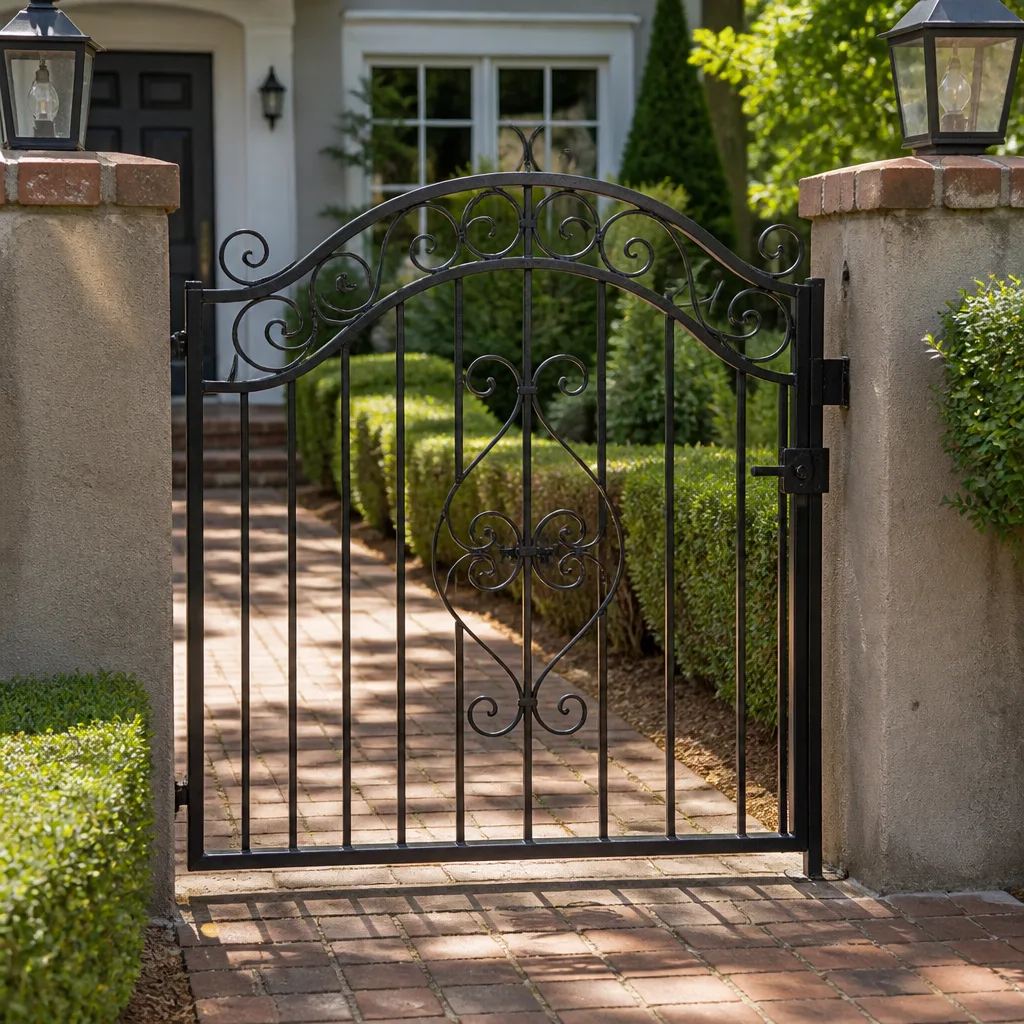
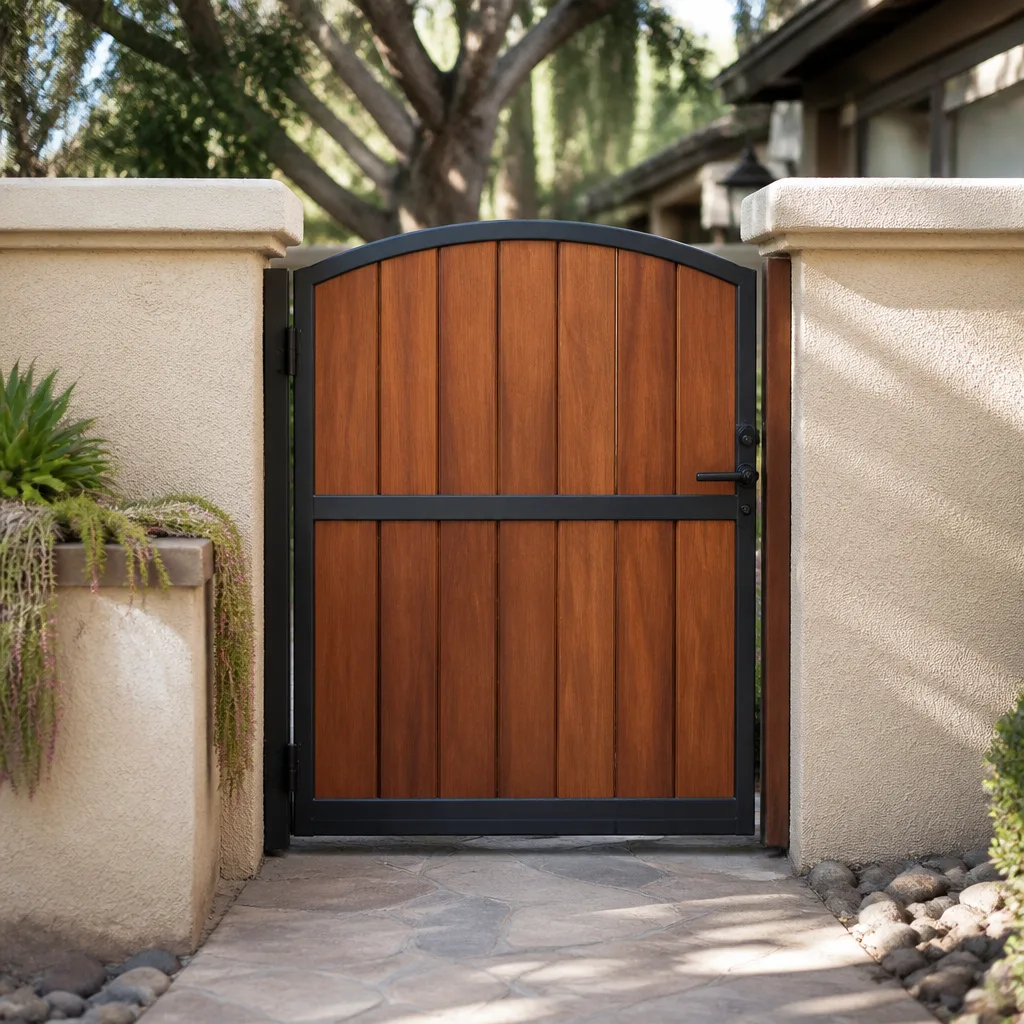
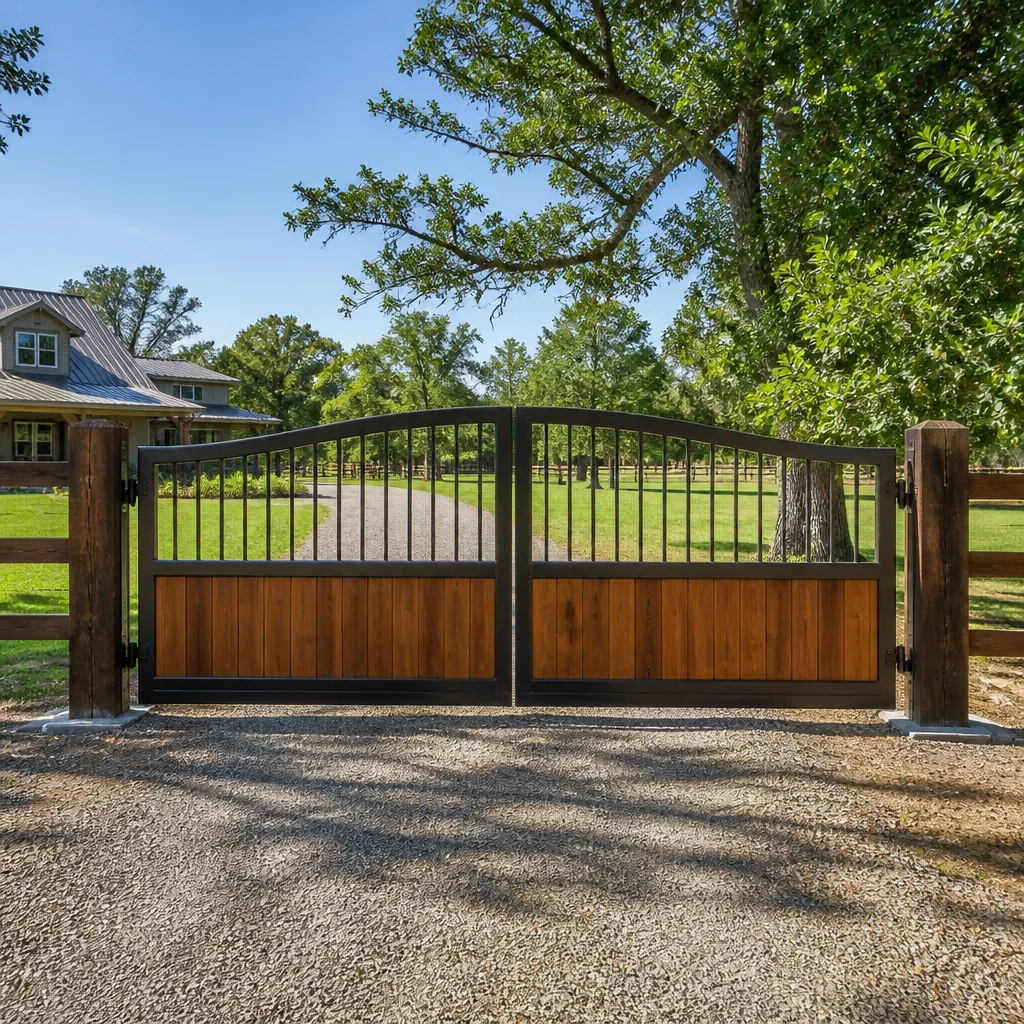
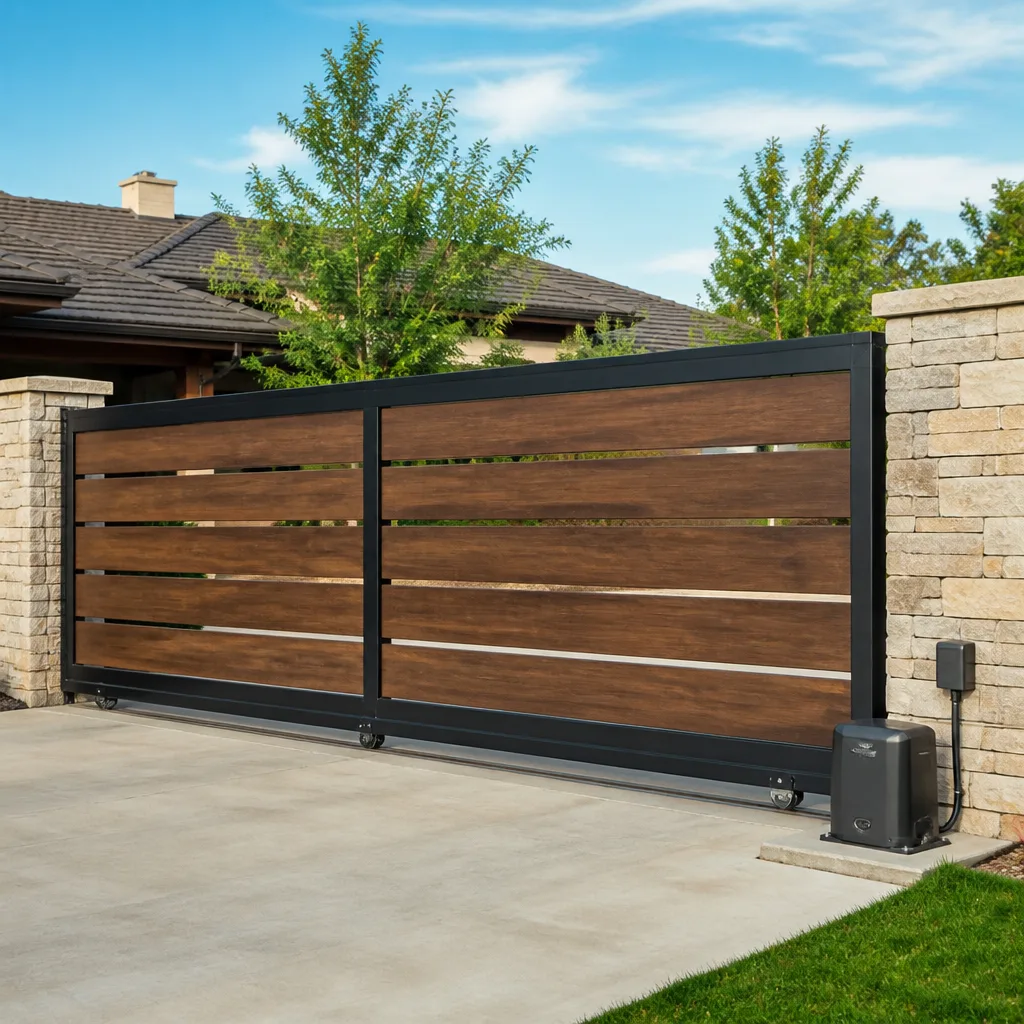
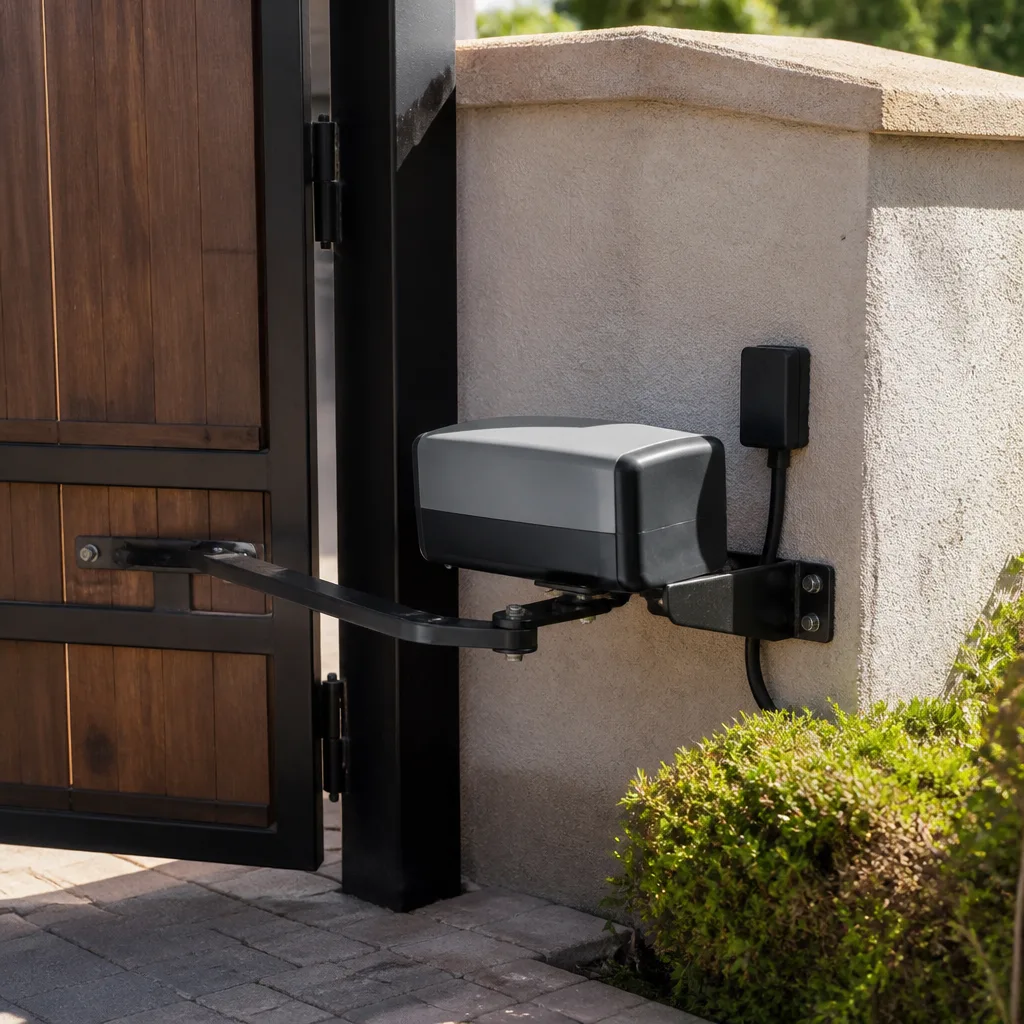
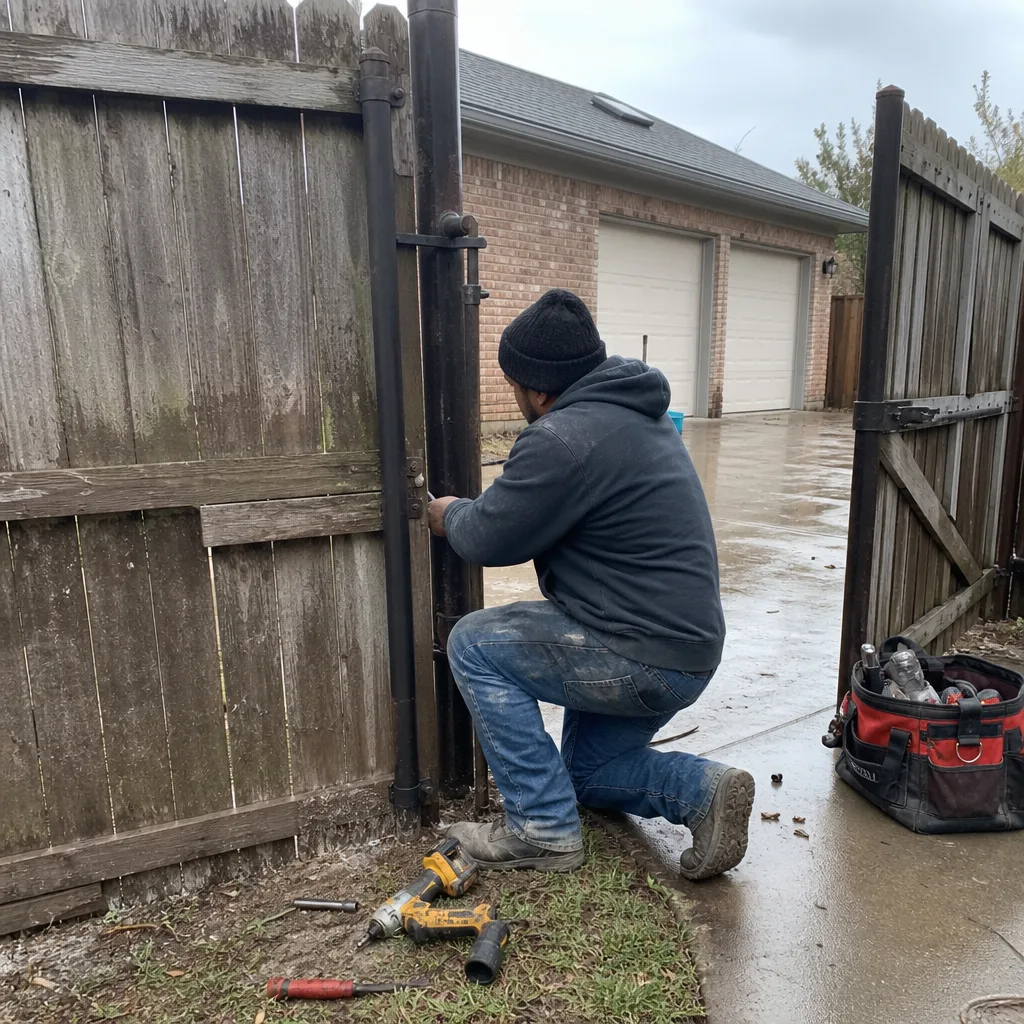 Before
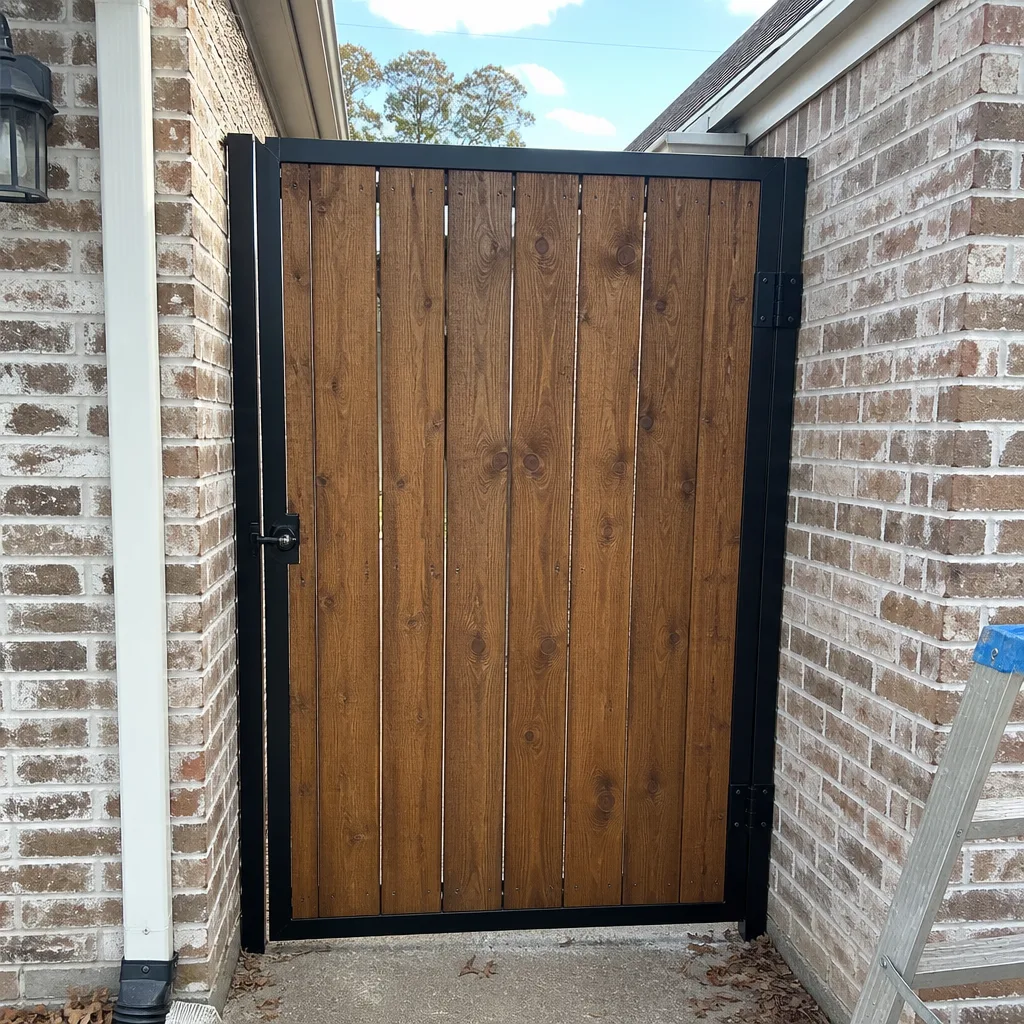 After
After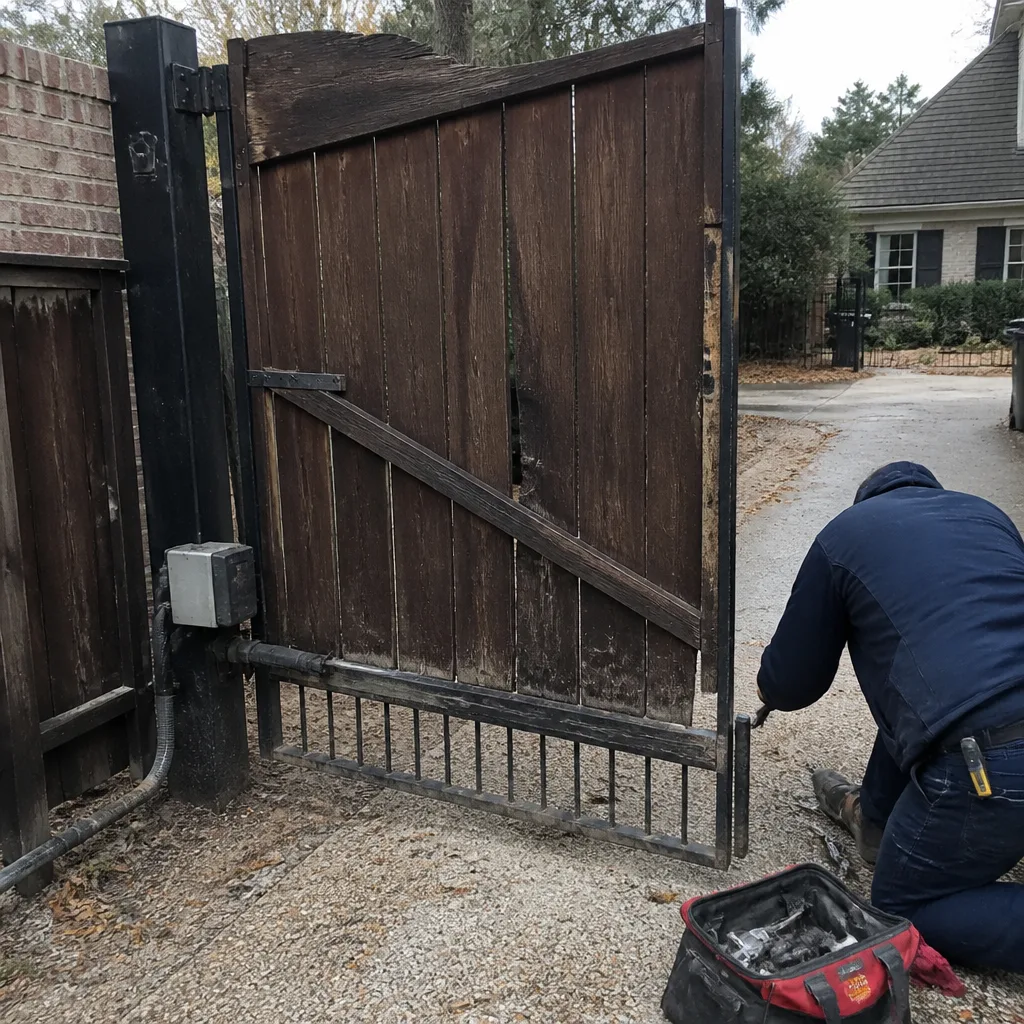 Before
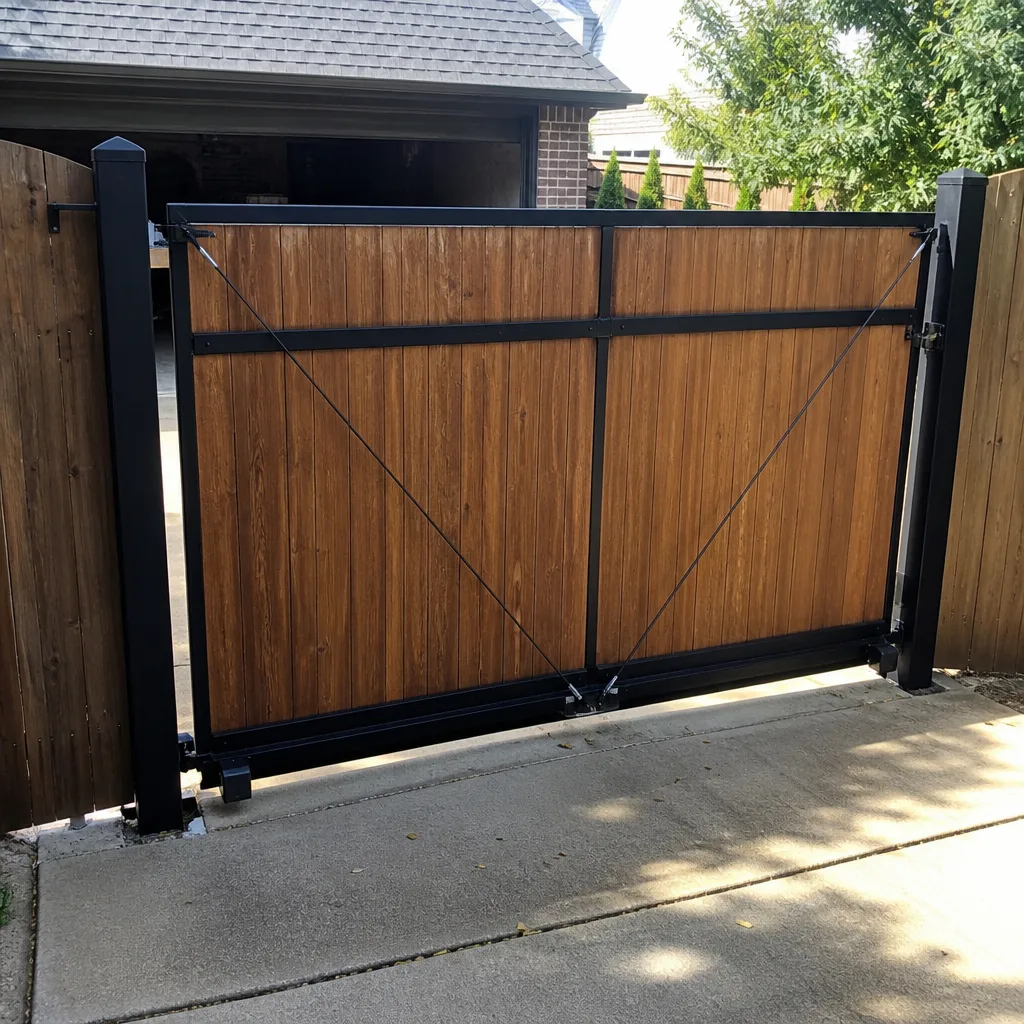 After
After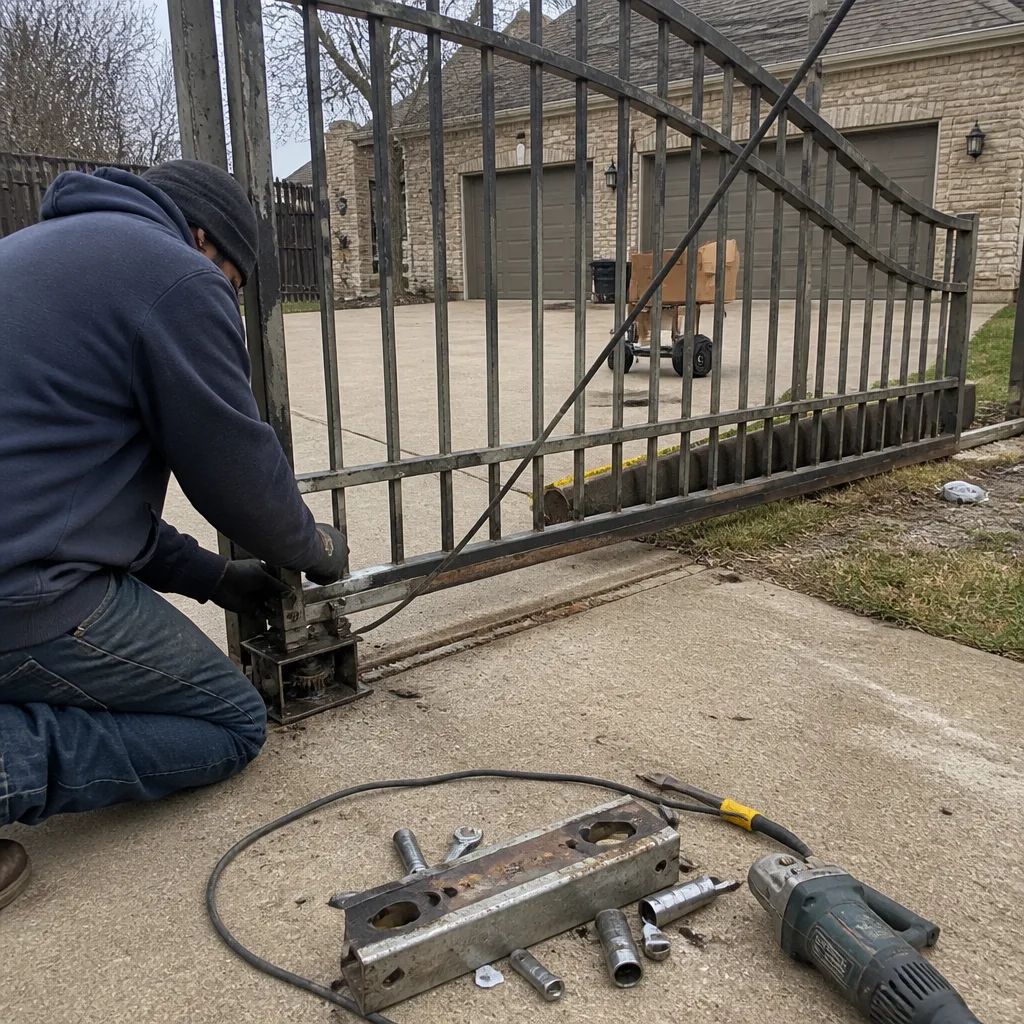 Before
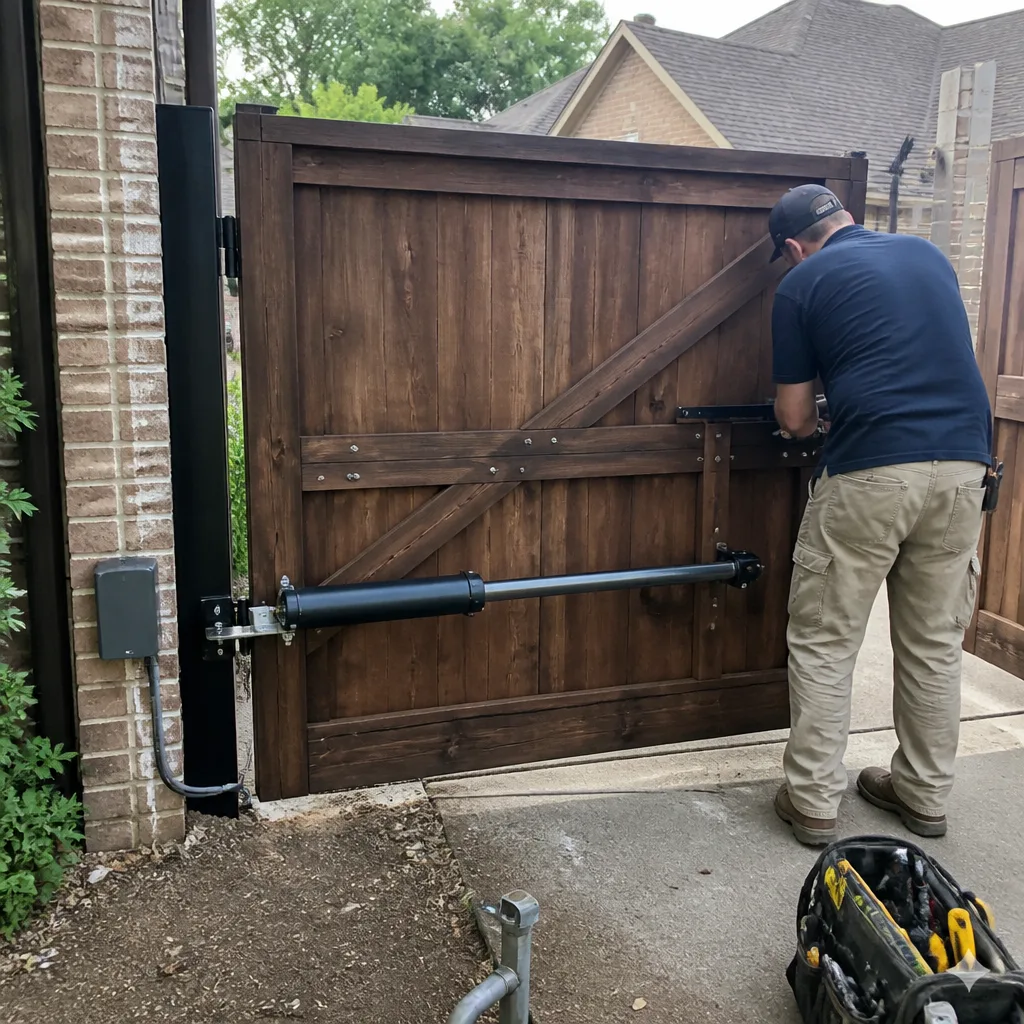 After
AfterThe Complete Guide to Gate Repair in McKinney
Driveway gates fail in patterns, not randomly. After four decades of working on gates across North Texas, we can tell you that the overwhelming majority of repairs in McKinney trace back to three things: weather-driven metal fatigue, motor boards cooked by power surges, and hinges that were undersized from day one. This guide walks you through how gates actually break, what repairs cost in the McKinney market, which problems you can spot early, and when a repair will last versus when it’s a band-aid on a gate that needs more. By the end, you’ll know what your gate is telling you.
Quick Answer
Gate repair in McKinney typically costs between $185 and $650 for common fixes like hinge replacement, sensor realignment, or opener board swaps, while a full operator replacement usually lands between $1,200 and $3,800 depending on the brand and gate weight. Most hinge, sensor, and smaller motor issues can be repaired in a single visit, and a reputable shop will quote the price before any work begins.
Table of Contents
- How Gates Break in McKinney
- What Common Gate Repairs Cost in McKinney
- What You Can Check Yourself vs. What Needs a Pro
- How Gate Openers Fail and What Fixes Actually Work
- Welding and Steel Repair on McKinney Gates
- Signs Your Gate Needs More Than a Repair
- How to Choose a Gate Repair Company in McKinney
- Common Mistakes to Avoid
- When to Call a Professional
- Frequently Asked Questions
How Gates Break in McKinney
McKinney’s climate does specific things to metal and electronics. The freeze-thaw cycle we get each winter, the brutal July heat, and the clay soil that shifts under footings all work together against your gate. We’ve worked on gates in Stonebridge Ranch that have been through 25 summers, and we can usually predict what’s wrong before we get out of the truck.
Here’s the most common failure pattern we see across McKinney neighborhoods, from Historic Downtown to Craig Ranch:
- Soil movement shifts the posts. Collin County clay expands when wet and contracts when dry. Over time, gate posts lean, which throws the gate leaf out of alignment. A gate that drags on the ground or no longer meets the latch is usually a post problem, not a hinge problem.
- Hinges wear unevenly. Heavy steel gates put enormous load on a few square inches of hinge pin. Once a hinge wears, the gate sags, which accelerates wear on every other component.
- Operator boards fail from power surges. McKinney gets thunderstorms in spring and fall. A surge that doesn’t trip a breaker can still fry the logic board on a gate opener. We replace a lot of boards after storm season.
- Limit switches drift. Every opener uses limits to know when to stop. Over time these drift, which is why a gate might stop six inches short or slam against the post.
- Sensor loops and photocells misalign. Safety edges and photo eyes get bumped by mowers, knocked by tree branches, or simply corrode in humidity and stop sending signals.
Understanding the failure pattern gets you halfway to the right fix. A sagging gate that gets a new opener without addressing the hinges will burn through the new opener in a year. That’s the kind of thing we see when someone hires a generalist who doesn’t work on gates every day.
What Common Gate Repairs Cost in McKinney
Gate repair prices in McKinney run a little higher than national averages because we’re in a growing metro area with higher labor rates, but the range is predictable. Here’s what we quote most often, based on our work across Collin County:
| Repair Type | Typical Cost Range | Notes |
|---|---|---|
| Hinge replacement (pair of heavy-duty greasable hinges) | $185 - $340 | Includes cutting off old hinges, welding new ones, and setting the gate level. |
| Sensor or photo-eye realignment | $95 - $150 | Usually one visit. Sometimes just a bracket adjustment. |
| Opener logic board replacement | $275 - $520 | Depends on brand. LiftMaster and FAAC boards are the most common in McKinney. |
| Full opener/motor replacement | $1,200 - $3,800 | Varies by gate weight, brand, and whether the arm or underground operator is being replaced. |
| Limiter switch adjustment | $95 - $180 | Common after storms knock settings loose. |
| Weld repair (cracked frame or picket) | $150 - $400 | Price depends on how much grinding and prep work is involved. |
| Keypad or intercom replacement | $220 - $650 | Depends on wired vs. wireless and brand compatibility. |
Every quote we give in McKinney is agreed upon before we start turning bolts. You’ll know the number, the scope, and what’s included before any work happens. No surprises on the invoice. That’s the way we’ve done it for 42 years, and we don’t see a reason to change now.
We also run standing offers worth knowing about if you’re pricing a repair: $50 off any repair over $250, and a free second opinion on any written estimate you’ve received from another company. If a neighbor tells you their repair was $900 and you’ve heard $400 from someone else, bring us the estimate and we’ll tell you what’s actually needed and what isn’t.
What You Can Check Yourself vs. What Needs a Pro
Some gate maintenance is genuinely within a homeowner’s reach. Other work will hurt you if you try it. The line between the two matters more than most people realize.
Here’s a step-by-step for what you can safely inspect on a McKinney afternoon:
- Look at the gate from the street. Stand 20 feet back. Is the gate leaning? Does the gap at the top of the post differ from the gap at the bottom? If the top gap is wider, the post is moving in the clay soil.
- Open and close the gate by hand (pull the manual release first on an automated gate). Does it move freely, or does it drag at one point? A gate that binds is working against the motor every cycle.
- Check the hinge bolts. Grab the gate near the hinges and lift. Any vertical play means hinge wear. A quarter inch of play at the hinge translates to inches of sag at the latch end.
- Inspect the photocells. Two plastic eyes near the base of the gate. Wipe them with a dry cloth. If the gate refuses to close, dirty sensors are the fix about a third of the time.
- Listen to the motor. Does it hum but not move? Does it grind? Does it run slower than it used to? These sounds tell a technician what’s failing before we get the cover off.
Do not touch the gate opener motor itself, the capacitor, or the high-tension springs on some older gate designs. A charged capacitor can deliver a serious shock even with the power off. Gate springs under load can break fingers. This is the line. Inspection is fine. Disassembly of operator internals is not.
If your inspection turns up something wrong, you’ll know what to tell the company on the phone. That saves everyone a trip and gets your gate fixed faster.
How Gate Openers Fail and What Fixes Actually Work
Gate openers in McKinney take a beating. The heat alone pushes solder joints and capacitors past their comfort zone in July and August. Add in power fluctuations and occasional storm surge, and the average opener has a working life of 8 to 12 years before a major component fails.
The most common opener brands we service in McKinney are LiftMaster and FAAC, with BFT and Mighty Mule showing up regularly on smaller swing gates. We’re trained and equipped on all of them, which matters because each brand fails differently:
- LiftMaster openers are workhorses, but the logic boards are sensitive to surge damage. A board swap is usually the right fix, not a band-aid.
- FAAC operators are heavily used on estate gates. Their hydraulic and electromechanical arms are robust, but the limit sensing can drift and need recalibration as the gate’s hinges wear.
- BFT units often fail due to capacitor aging after 8-plus years. A humming motor that won’t start is the classic symptom.
- Mighty Mule is common on lighter residential gates. These openers are more DIY-oriented, and we commonly find them installed without a proper power run or with undersized wire, which trashes the board over time.
The question we hear most from McKinney homeowners is whether to repair an opener or replace it. Our honest answer: if the unit is under 8 years old and the failure is a board, limit switch, or capacitor, repair it. If it’s over 12 years old and the motor itself is tired, replacement is the better use of your money. A new opener also comes with a fresh warranty, which matters on something that runs multiple cycles a day.
One more thing worth knowing: a new opener does not solve a gate that was dragging before the old one failed. We install the opener only after the gate swings true and level. Anything else condemns the new motor to early failure. That’s the difference between replacing a part and fixing the job.
Welding and Steel Repair on McKinney Gates
Most gate companies in McKinney don’t weld. That’s not a criticism, just a fact. Gate repair has split into two trades over the years: automation people who work on motors and keypads, and steel people who cut, weld, and fabricate. We do both under one roof, and it changes how repairs get done.
Steel gates fail in predictable places. The bottom rail is first to rust out, especially on gates that sit close to grass where irrigation spray keeps the steel damp. The hinge-side stile cracks at the weld points where the load concentrates. Picket welds pop where the gate gets pushed on. And any gate that’s been hit by a car (which happens more often than people admit, especially on the wide curved streets in newer McKinney subdivisions) shows cracks radiating from the impact point.
Here’s the step-by-step on how we approach a typical steel repair:
- Assess the full load path. A crack in the bottom rail usually means the top hinge has been carrying too much weight. We fix the crack and the cause.
- Grind back to clean steel. Rust, paint, and old weld material all come off before new metal goes on. Anything less is stacking new weld on top of a failing joint.
- Cut out the bad section and weld in a replacement piece of the same gauge steel. Patching over rot doesn’t last.
- Reinforce the hinge points if the original design was underbuilt for the gate’s weight. We see this often on custom gates that a builder installed to look good rather than to carry load.
- Prime and paint the repaired area, matched to your gate’s existing finish where possible.
Welding repairs run $150 to $400 depending on how much prep and material is involved. It’s almost always less than a replacement gate, and done right, it buys another decade or more of service from the gate you already own.
Signs Your Gate Needs More Than a Repair
We’re in the business of repairing gates, and we’ll tell you when a repair is the wrong call. Here’s what tips a gate from “fix it” to “replace it” in our book:
- Posts that are visibly leaning more than a degree or two. You can shim and re-set posts, but if the footing itself is undersized for the soil, the lean will come back. That’s a re-set job at minimum, often a replacement.
- Frame rust that’s structural, not cosmetic. Rust speckles on the surface are repairable. Rust that flakes off in sheets and leaves holes means the steel’s lost too much thickness to safely weld.
- Repeated hinge failures. If you’ve replaced hinges twice in three years, the gate is too heavy for its design. Repairing the same hinge every 18 months costs more than a properly engineered replacement.
- A gate that’s been hit hard. After a vehicle impact, the frame can be bent in ways that aren’t visible. A gate that wobbles after a hit has internal stress fractures that will keep popping welds.
- The opener is dead and the hinges are shot and the post has moved. Three failures at once means the whole system is past its design life. Applying three separate repairs often approaches the cost of a new gate and opener package.
We price replacement honestly. If the numbers say repair, we’ll say repair. If they point toward replacement, we’ll show you the math and let you decide. We’ve talked ourselves out of jobs before because it was the right thing for the homeowner, and we’ll do it again. It’s a small market. Word travels.
How to Choose a Gate Repair Company in McKinney
McKinney has no shortage of handymen, fence companies, and generalist garage door shops that will take a gate call. Here’s what separates the shop you want from the one you’ll regret calling:
- Ask what brands they service. If the person on the phone can’t name the opener brands they’re trained on, you’re talking to a generalist. Gates have their own quirks. Ask specifically if they service LiftMaster and FAAC. If they hesitate, keep looking.
- Ask if they weld. A gate company that doesn’t do its own steel work is limited in what it can actually fix. They’ll sub out the welding or, worse, try to convince you a broken weld needs a whole new gate.
- Ask about the warranty in writing. Every gate repair should be guaranteed. We put ours in writing: the 90-Day Done Right Promise. If it’s not right, we come back and make it right. No claim forms, no arguing. It’s the Keystone Standard on every job, and we’ve worked this way for over 42 years.
- Ask about pricing before the visit. You should know what you’re getting into before the truck shows up. We quote the price before work begins, every time. A square deal: upfront price, no surprises on the invoice.
- Call the number and see who answers. When you call us at (430) 226-4507, a live person picks up. Not a voicemail tree, not an answering service, not “someone will call you back within 48 hours.” We have a real human on the line 24 hours a day, 7 days a week. That matters when your gate is stuck open at 7 a.m. on a Saturday.
Our technicians are background-checked and uniformed, and they treat your driveway like their own mother’s. The K.E.Y.S. code is how we run every job: Krafted right, Every time, Your home first, Standing behind it. The 400th job gets the same care as the first one, which is why so many of our McKinney customers are people we’ve worked with for a decade or more.
We also run an $89 seasonal tune-up that catches small issues before they become gate-stuck-open-on-a-Monday-morning problems. It’s the cheapest insurance you’ll buy for your gate.
Common Mistakes to Avoid
- Ignoring a gate that’s getting slower. A gate that takes 20 seconds instead of 12 isn’t being lazy. It’s warning you that the motor is laboring against resistance. Fixing the resistance now costs a few hundred dollars. Ignoring it until the motor dies costs fifteen hundred.
- Lubricating hinges with WD-40. WD-40 is a solvent, not a lubricant. It washes out whatever grease was in the hinge and leaves the metal dry. Use a proper penetrating oil for freeing up stuck pins, then pack the hinge with bearing grease.
- Replacing the opener without fixing the gate. This is the most expensive mistake we see in McKinney. A new opener on a sagging, binding gate is a donation to the opener manufacturer. The gate has to swing clean first.
- Buying the cheapest operator online and hoping it fits. We see a lot of Mighty Mule and generic Chinese operators on gates they were never rated for. The model number might say “up to 1,000 lbs,” but that’s in ideal conditions, not a 16-foot steel gate in McKinney wind.
- Waiting until the gate won’t open to schedule a tune-up. By the time a gate is fully down, multiple components have failed in sequence. The seasonal tune-up exists to catch the first failure, not the fourth.
- Hiring a company that doesn’t have a written warranty. A handshake is not a guarantee. If a company won’t put their promise in writing, that tells you everything you need to know about how they’ll handle a callback.
- Accepting an estimate that seems inflated without a second opinion. Gate repair prices in McKinney have a real range. If someone quotes you double the high end, get a second opinion. We offer free second opinions on any written estimate, and we’ll tell you honestly if the number is fair or not.
When to Call a Professional
Call a gate professional in McKinney when the gate is stuck open (security issue), stuck closed (access issue), making a grinding noise, moving erratically, or when the opener hums but doesn’t move. Also call if you see fresh cracks in the steel, if a post is leaning, or if the gate was hit by a vehicle and now wobbles. These are not situations where more time improves the outcome. Ironworks Gate Co. offers free estimates across McKinney, and we’ll show up when we say we will. Call (430) 226-4507 and a live person will answer, day or night. Ironworks Gate Co. home is the best place to see the full scope of what we handle.
Frequently Asked Questions
Most gate repairs in McKinney run between $185 and $650, with full opener replacements landing between $1,200 and $3,800. The cost depends on whether it’s a hinge job, a board replacement, a weld repair, or a full operator swap. We quote the price before any work starts, so you’ll know the number going in. Call (430) 226-4507 for a free estimate, and ask about our $50 off any repair over $250.
For most hinge, sensor, and smaller mechanical repairs, yes, we complete the work in a single visit. Larger repairs like full operator replacements sometimes require a second trip if a part needs to be ordered, but we’ll tell you that before we leave. We also answer the phone 24/7, so if your gate is stuck open right now, call (430) 226-4507 and a live person will take your call.
A full gate installation includes the steel gate assembly, posts set in proper footings, hinges sized to the gate’s weight, the opener of your choice, safety sensors, and the power run to the operator. We handle it all: welding, automation, access control, and the electrical work. Every installation is protected by our 90-Day Done Right Promise. Call (430) 226-4507 and we’ll come measure and give you a written price.
Yes. Power runs to the opener and the safety edges (the sensors that stop the gate if something is in the way) are both part of what we install and repair. Many gate companies only handle the mechanical side, but a gate with bad power wiring will eat through boards, so we do the electrical right, not just the metal. If your gate opens fine but won’t close, a failed safety edge is one of the first things we check.
Yes. Our $89 seasonal tune-up catches loose hinges, drifting limits, dying capacitors, and post movement before they turn into a $1,500 repair. In McKinney’s climate, the freeze-thaw cycle and summer heat put particular stress on gates, and an annual check is the cheapest way to avoid emergency repairs. It’s the same reason you change your AC filter: cheap now, expensive later if you skip it.
Yes. We offer a permanent 5% discount for seniors and veterans on every job, full stop. No special forms, no expiration date. Just tell the technician on the phone. Combine that with our $50 off any repair over $250 or our free second opinion offer, and gate repair in McKinney gets more reasonable than most people expect. Call (430) 226-4507 and we’ll run the numbers with you.
The Bottom Line
Gate repair in McKinney doesn’t have to be a guessing game. Gates fail in known patterns, and those patterns have known fixes. The key is catching problems early, hiring someone who works on gates every day, and getting the price in writing before the work starts. Whether you need a hinge replaced, a welding job done, or a full opener installed on an estate gate, the right company will tell you what’s actually needed, do it once, and stand behind it. That’s how we’ve run Ironworks Gate Co. for 42 years, and it’s how we plan to run it for 42 more. Call (430) 226-4507 for a free estimate, any time. A real person will answer.
Written by Victor Salinas, Owner at Ironworks Gate Co., serving McKinney since 2013.