
Last updated August 25, 2026
Free on-site gate assessment - hinges, posts, and your LiftMaster or Nice gate operator checked before anything is quoted
The assessment is free and the quote is the invoice.

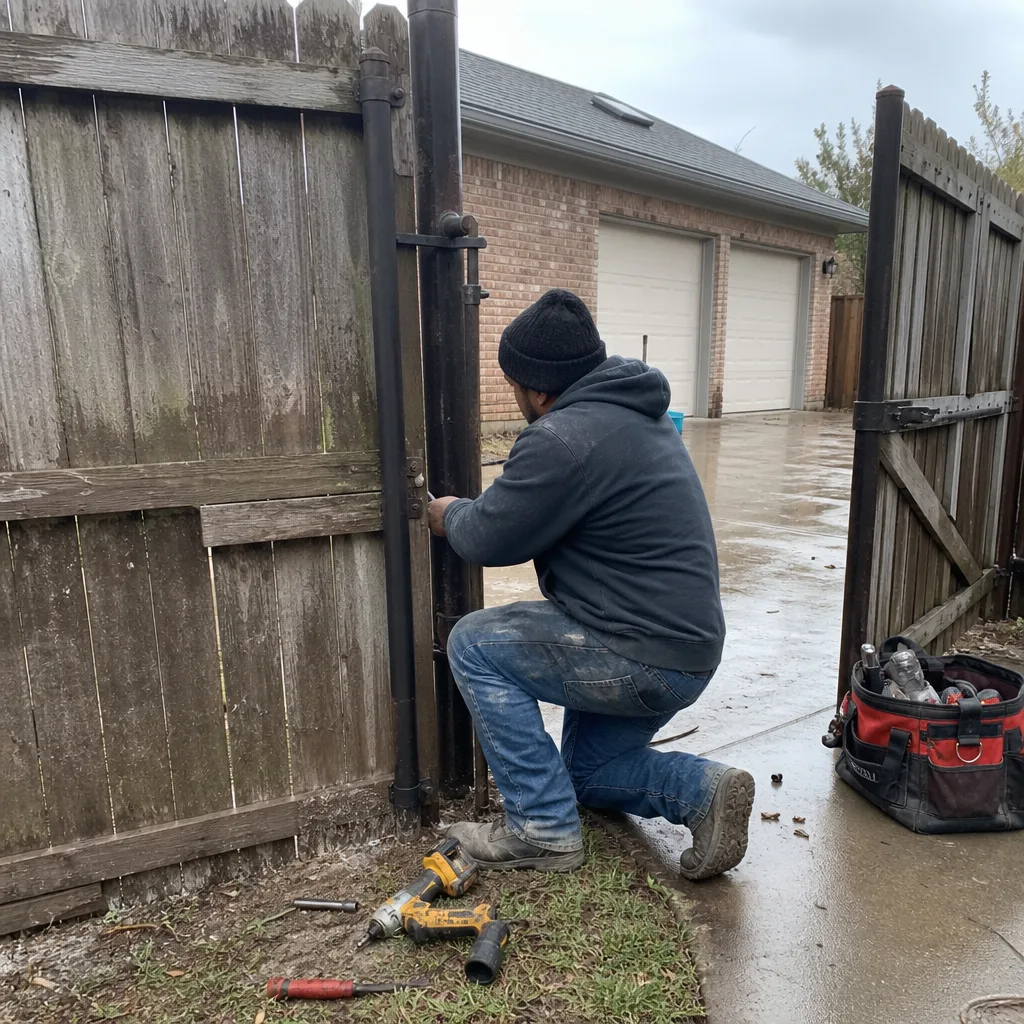 Before
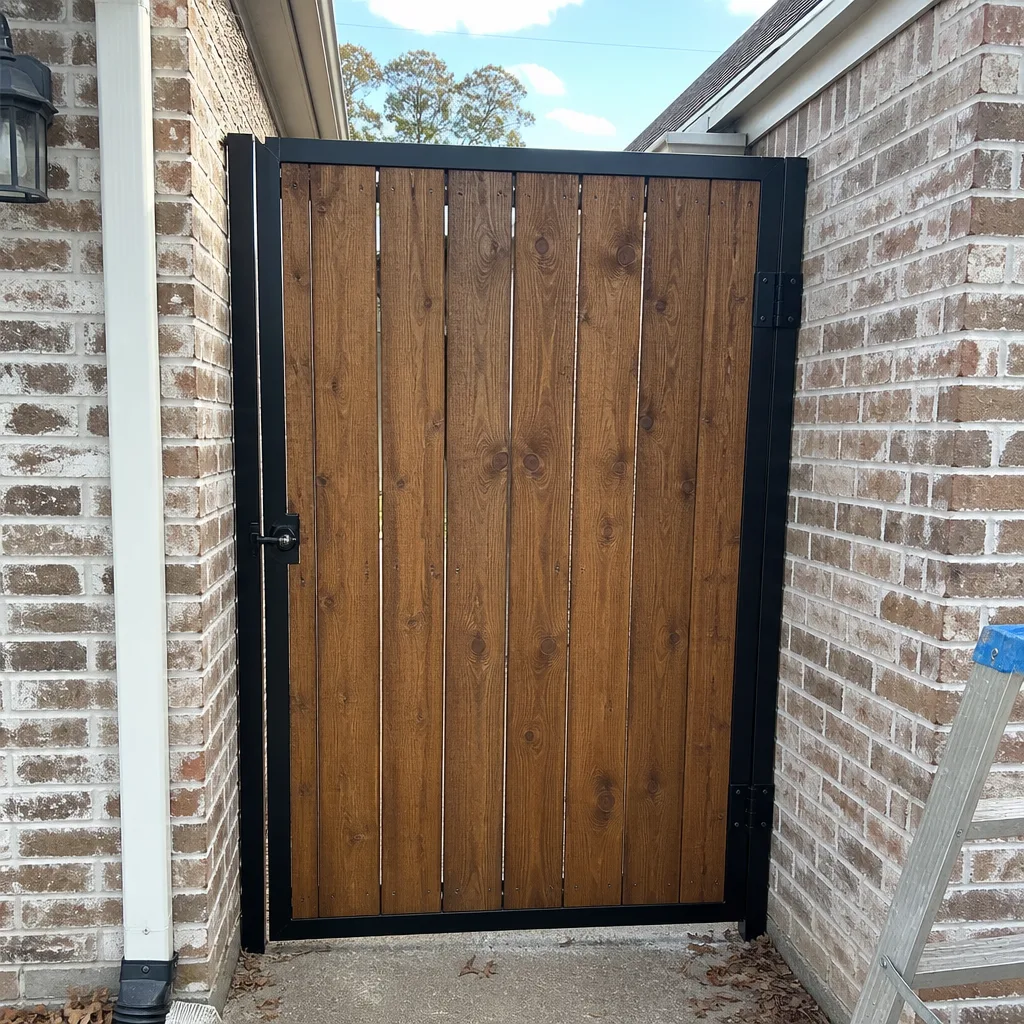 After
After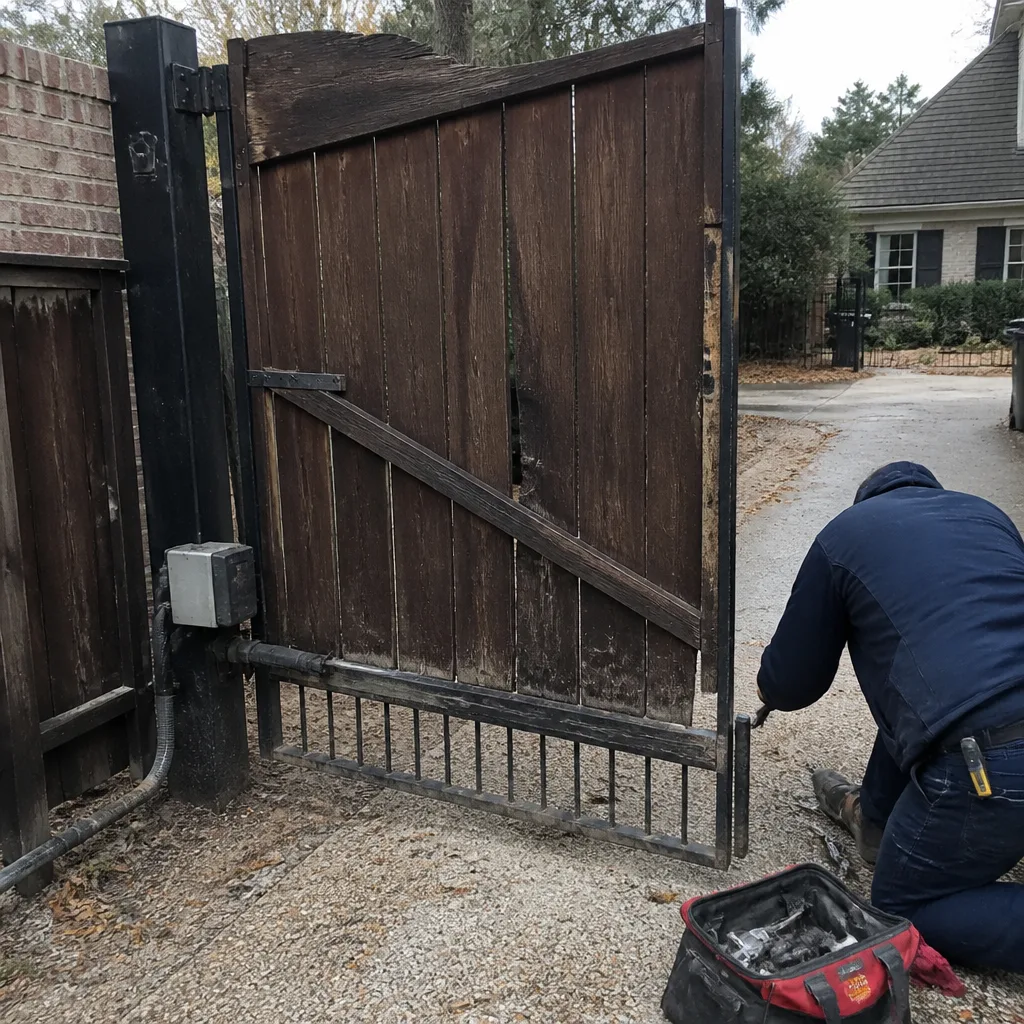 Before
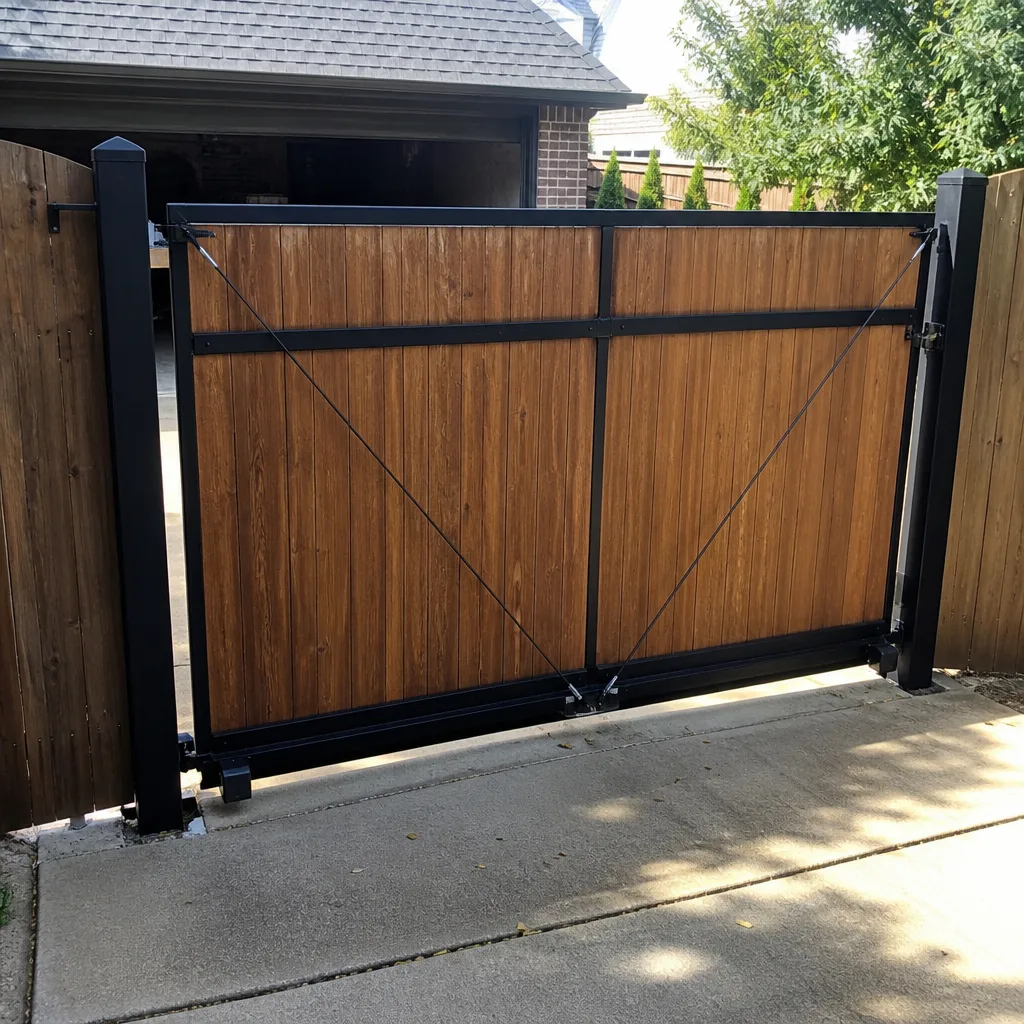 After
After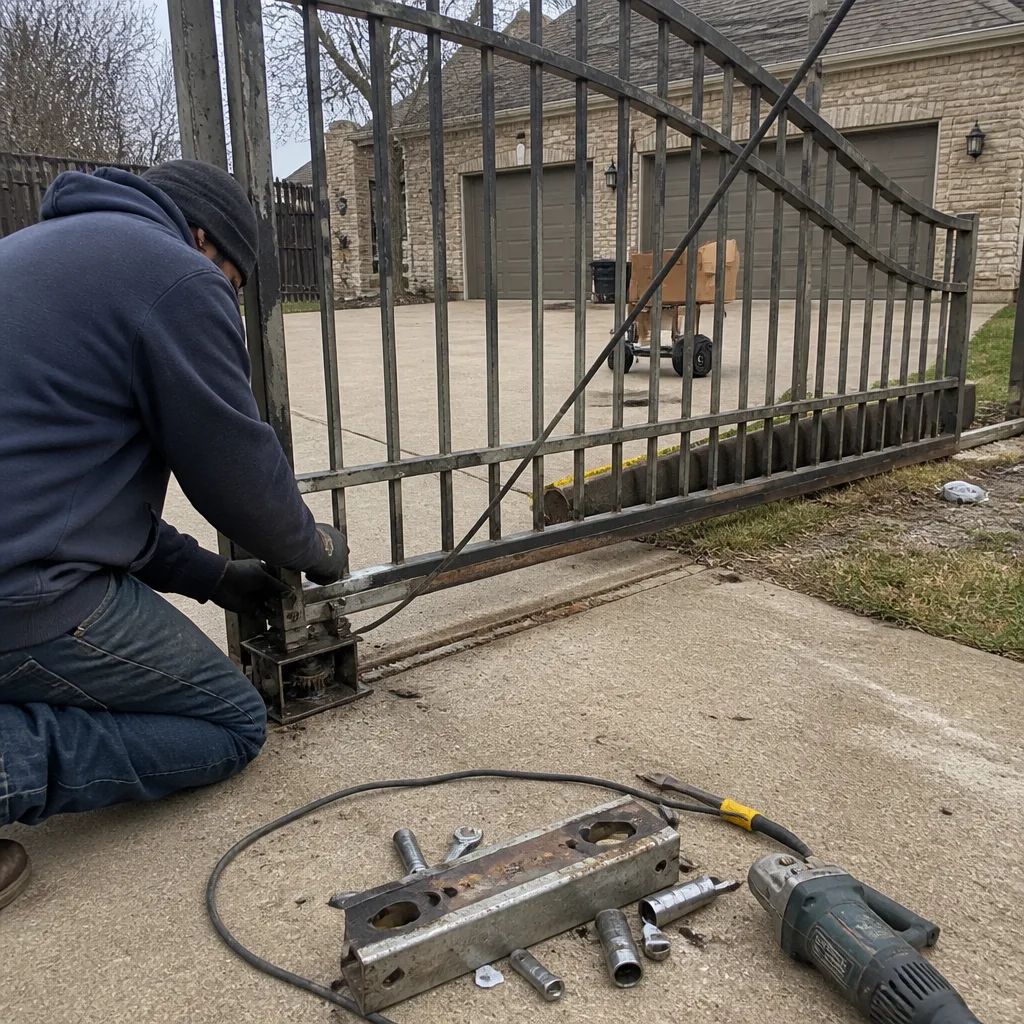 Before
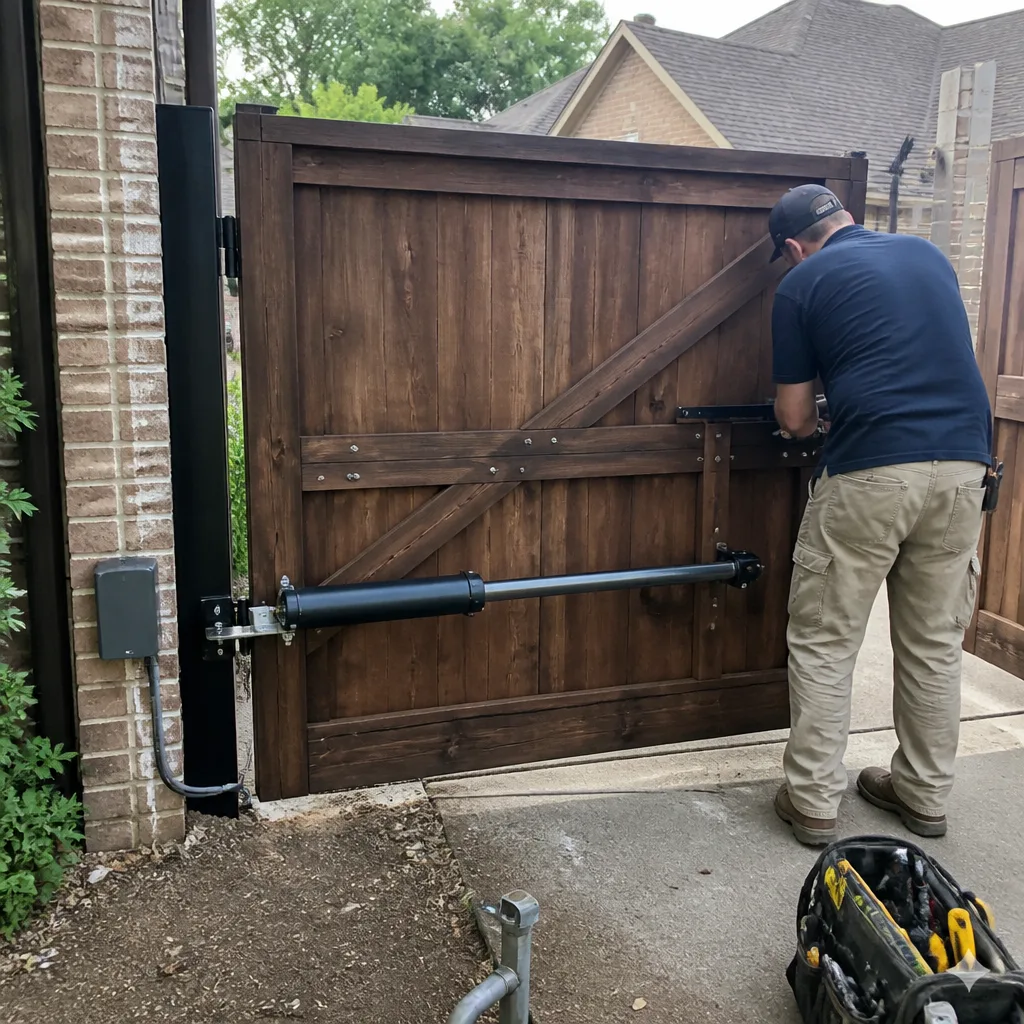 After
AfterDIY vs Professional Gate Repair: The McKinney Homeowner’s Decision Guide
A gate that won’t close is more than an annoyance in McKinney. It’s an open invitation to every coyote, stray dog, and curious set of eyes that wanders up from the greenbelt. Here’s the counterintuitive part: most gate failures we see are not catastrophic. They’re small, quiet failures, a worn hinge bushing, a misaligned photo eye, a capacitor that gave out after a decade of Texas heat. The homeowner who calls us after trying to fix it themselves usually spends twice what the original repair would have cost. This guide walks through when a Saturday-morning fix makes sense, when it will cost you dearly, and what McKinney’s climate and code mean for your gate. You’ll learn what you can safely handle, what you should never touch, and exactly what a professional repair in McKinney actually costs.
Quick Answer
DIY gate repair in McKinney makes sense only for cosmetic and low-risk tasks: tightening fasteners, lubricating hinges, cleaning photo eye lenses, and adjusting limit switches within the manufacturer’s manual. Anything involving high-tension springs, welded joints, embedded posts, electrical wiring over low voltage, or the opener’s control board should be handled by a licensed professional. In McKinney’s clay soil and summer heat, a misdiagnosed DIY repair typically costs $450 to $1,200 to undo, more than the original repair would have cost, and leaves the gate unreliable in the meantime.
Table of Contents
- What Makes McKinney Gates Fail: The Three Local Enemies
- What a McKinney Homeowner Can Safely Do Themselves
- What No Homeowner Should Ever Attempt
- DIY vs Professional Cost Comparison in McKinney
- The Hidden Costs of a Botched DIY Gate Repair
- Tools vs Training: Where DIY Enthusiasm Meets Gate Reality
- How to Tell If Your Gate Needs More Than a Tune-Up
- McKinney Code and Permit Basics for Gate Work
What Makes McKinney Gates Fail: The Three Local Enemies
Every region has its own way of wearing out a gate. In McKinney, we deal with three specific forces that a generic YouTube tutorial never accounts for. First is the clay soil. Collin County sits on expansive clay that swells when wet and shrinks when dry. We get a wet spring, then a baking summer, and the ground under your gate posts moves, sometimes a half-inch or more. A gate that swung freely in April starts dragging on the latch post by August. The hinges aren’t bad. The ground moved. A homeowner who welds a shim onto the hinge or bends the post to compensate has now created a second problem that has to be undone when the soil shifts back in October.
Second is the heat. McKinney regularly sees 100-degree days from June through September, and that brutal sun doesn’t just fade the powder coat. It cooks the electrolytic capacitors inside gate opener control boards. Capacitors are rated for operating temperature ranges, and a control box mounted on a west-facing steel column can hit 140 degrees inside on an August afternoon. The capacitor dries out, the board fails, and the gate stops responding. The motor itself is usually fine. The fix is a $25 capacitor and twenty minutes of bench work, but only if you know which of the two dozen components on that board failed.
Third is wind. North Texas gets sustained winds that push a big estate gate hard against its stops. Over a decade, that repeated slamming fatigues the steel at the hinge weld, and the gate begins to sag. Not dramatically. A quarter-inch at the latch. An eighth-inch at the top hinge. Homeowners don’t notice it until the gate won’t close and the opener is straining. By then the hinge bracket is cracked and needs a certified welder, not a hardware-store brace kit. We’ve pulled more Home Depot strap hinges off McKinney gates than we can count. They last six months. Then the crack is worse than it was before because the strap concentrated every stress point right where the metal was already failing.
Understanding which of these three forces is attacking your gate matters because each requires a different repair strategy. A chain mechanism can fail from heat, an actuator can fail from wind, and a post can fail from soil movement. The wrong repair wastes your time and your money.
What a McKinney Homeowner Can Safely Do Themselves
We’re the first to tell you that not every gate repair needs a service call. There are maintenance tasks and simple adjustments that any careful McKinney homeowner can handle with basic tools. These tasks do not require welding, do not involve stored energy, and do not risk damaging the opener. If you’re comfortable using a socket set and reading the manual that came with your opener, the following tasks are appropriate for DIY.
1. Cleaning the photo eye lenses
The photo eye is the small sensor on each side of the gate opening, usually mounted on the posts. When dust clouds from Collin County construction or pollen from live oaks coats the lens, the opener thinks something is in the way and refuses to close. Wipe both lenses with a damp cloth, then a dry one. Test the gate. If it still won’t close, it’s a wiring or alignment issue, not a dirty lens, and that’s the point where we’d recommend a professional’s multimeter rather than your best guess.
2. Lubricating hinges and rollers
A gate hinge is a bearing surface, and bearing surfaces need grease. Use a white lithium grease or a purpose-made gate lubricant. Do not use WD-40. WD-40 is a solvent and water displacer, not a lubricant, and it will strip whatever grease is left in the hinge pin. Apply grease to the top of the hinge pin and work the gate back and forth a few times. Do this every spring and fall.
3. Tightening loose hardware
Walk your gate with a socket set every few months and check every bolt, screw, and bracket you can see. Vibration from the opener and wind shakes hardware loose over time. Snug them down. Do not overtighten. If a bolt keeps coming loose even after tightening, the hole is wallowed out or the bracket is cracked, and that’s a welding job, not a bolt problem.
4. Checking the gate’s balance
Disconnect the opener using the manual release handle, then swing the gate by hand. It should move smoothly and stay where you put it. If it swings open on its own, or takes real effort to move, the gate is out of balance, and continuing to run the opener against that resistance will burn out the motor. Note the symptoms and call a professional. This test saves you a $700 motor replacement down the road.
What No Homeowner Should Ever Attempt
There is a line between maintenance and repair, and it’s drawn at stored energy. High-tension springs, torsion bars, and charged capacitors hold enough force to remove fingers, break bones, or stop a heart. Every year, emergency rooms treat homeowners who decided those warnings were for other people. Here are the specific repairs we tell McKinney homeowners to never attempt on their own.
High-tension springs. If your gate uses a counterbalance spring, it is under enormous load. When it lets go, it doesn’t just snap. It launches. The forces involved are similar to those in residential garage door springs, and those send thousands of people to the ER annually. A professional gate technician uses specific tools and a specific sequence to release, measure, and replace a spring under tension. There is no safe shortcut.
Low-voltage wiring diagnosis. Gate openers run on 12 or 24 volt DC power, but the control wire runs through conduit to keypads, photo eyes, and safety loops. Diagnosing a wiring fault requires a multimeter, a wiring diagram, and the patience to trace every connection. The wrong splice creates a short that can fry the control board. We’ve replaced boards because a homeowner crossed the red and black wires and sent 24 volts back into a 12-volt circuit. That’s a $350 mistake on a $40 fix.
In-ground loop detector repair. Some McKinney estate gates use an induction loop buried in the driveway to sense when a car is present. When that loop fails, the gate doesn’t open for vehicles. Repairing it requires saw-cutting the concrete, laying new loop wire, sealing it, and tuning the detector. This is not a homeowner task.
Post replacement or re-setting. A leaning gate post is a structural repair. The post is set in concrete, and the concrete is sitting in McKinney clay. Digging it out, re-pouring, and re-hanging a 400-pound gate so it’s square and plumb is a two-man job with specific equipment. It’s also one of the most common repairs where we see a homeowner’s best effort fall short, because the post looked straight when they set it but the gate still sagged six months later when the clay expanded again.
Any repair involving welding. Gate welding is not like patching a barbecue pit. A hinge weld on a moving gate sees cyclic loading thousands of times a month. The weld has to be clean, full-penetration, and correctly shaped or it will crack from fatigue. Mig welders at Northern Tool will not produce a proper gate weld. This work needs a certified welder who understands load paths and stress risers.
DIY vs Professional Cost Comparison in McKinney
The honest answer on cost is that DIY is always cheaper on the front end and usually more expensive on the back end. Here’s a line-item look at what common gate repairs actually cost in McKinney, both ways.
| Repair Type | Typical DIY Cost | Typical Professional Cost in McKinney | Risk of Getting It Wrong |
|---|---|---|---|
| Photo eye cleaning | $0 (damp cloth) | $89 (seasonal tune-up includes this) | None |
| Hinge lubrication | $8-12 (lithium grease) | $89 (seasonal tune-up) | Low |
| Limit switch adjustment | $0 (following manual) | $89-130 | Moderate |
| Capacitor replacement on control board | $25-40 (if you can solder) | $130-220 | High (wrong diagnosis is common) |
| Broken hinge weld | $75-150 (bolt-on strap kit) | $180-340 (welded repair) | Very high (strap kits fail and worsen the crack) |
| Post re-setting | $60-120 (concrete and labor) | $400-750 | High (incomplete compaction, gate still sags) |
| Full opener replacement | $350-800 (if you can wire and program) | $850-1,400 installed and programmed | High (incorrect wiring fries board) |
These are the prices we see across McKinney, from Stonebridge to Craig Ranch to Tucker Hill. The pattern is consistent: the cheapest professional fix costs about what a DIY attempt costs by the time you factor in the tools you bought, the parts you replaced that weren’t actually bad, and the eventual service call to undo the damage. The exception is the maintenance items, which are genuinely free or nearly free. Do those yourself. Let a professional handle the rest.
The Hidden Costs of a Botched DIY Gate Repair
The parts receipt never tells the whole story. When a DIY repair goes wrong on a McKinney gate, the costs stack up in ways homeowners don’t see coming. Here’s what we actually encounter when we get called to un-do a weekend gate project.
- The misdiagnosis cost. A gate that won’t open gets diagnosed as a bad motor. The homeowner buys a $300 motor, spends an afternoon installing it, and the gate still won’t open. The problem was a $18 micro switch in the limit assembly. Now they own a motor they didn’t need and still have the original problem.
- The collateral damage cost. A homeowner adjusts the force setting on the opener to “fix” a gate that’s dragging. The opener now pushes harder, which finishes off the failing hinge and bends the gate frame. The original repair would have been a $130 hinge replacement. Now it’s a $500 gate straightening plus the hinge.
- The time cost. Professional gate technicians diagnose in minutes because we’ve seen the same failure a hundred times. A homeowner spends Saturday troubleshooting, Sunday replacing parts, and Monday still has a broken gate. Your weekend has value, and a gate that won’t close means an unsecured property every night you wait.
- The safety cost. A gate that closes when it shouldn’t can pin a child, a pet, or a car. The UL 325 safety standards exist because gates have killed people. When a DIY repair bypasses or miscalibrates the safety edges and photo eye, the gate becomes a hazard, and the homeowner may not discover it until the worst moment.
- The voided warranty cost. McAllen opener manufacturers, and every major brand we service, explicitly void warranties when a non-certified person performs a repair. That $900 Mighty Mule opener you installed last year is now your financial problem, not the manufacturer’s.
Tools vs Training: Where DIY Enthusiasm Meets Gate Reality
The tools aren’t the barrier. Anyone can buy a multimeter, a socket set, and a soldering iron at Harbor Freight for under a hundred bucks. The gap in gate repair is not tools. It’s pattern recognition. A good gate technician has seen hundreds of failures on dozens of opener brands, and they know that a Mighty Mule that clicks but doesn’t turn is usually the capacitor, while a LiftMaster that runs but doesn’t move is usually the drive belt, and a FAAC that trips the breaker is usually a shorted solenoid. Without that pattern library, a DIYer is guessing, and guessing is expensive.
We’ve served McKinney gates for over 42 years, and we carry that entire library in our heads. Victor Salinas has personally diagnosed gate failures on LiftMaster, FAAC, BFT, and every other major opener brand in service today. That’s not a flex. It’s a simple statement of fact: the person who sees a hundred failures a year makes the correct diagnosis in the first five minutes, and that speed is worth the service call.
One more thing the tool aisle won’t give you: a second set of hands. A large estate gate is heavy. A standard 16-foot steel driveway gate weighs 400 pounds or more. Removing it, re-hanging it, or even holding it square while you shim a hinge is a two-person job. The homeowners who try it solo get hurt or get creative, and creative is how you drop a gate on your truck.
How to Tell If Your Gate Needs More Than a Tune-Up
Some gate problems announce themselves early, and paying attention to the early signs keeps a $60 maintenance item from becoming a $600 repair. Here are the warning signs we tell every McKinney homeowner to watch for, and what each one actually means.
- Scraping or grinding at the latch. If you hear metal-on-metal contact when the gate closes, the gate has sagged or the post has moved. Continuing to cycle the opener will wear the latch and eventually crack the hinge.
- The opener hums but the gate doesn’t move. The motor is running but the drive mechanism isn’t engaging. That’s a stripped gear, a broken chain tensioner, or a failed belt. Each is a specific repair, not an adjustment.
- The gate reverses for no reason. This usually means the force sensor is detecting resistance that shouldn’t be there. The gate is binding, the rollers are shot, or the track is misaligned. Turning up the force setting to “fix” it will destroy the opener.
- The gate moves slower than it used to. A gate that gradually slows down is usually telling you about a failing capacitor, low hydraulic fluid, or a motor that’s nearing the end. None of these improve on their own.
- Visible rust at the welds. McKinney’s humidity and occasional ice storms accelerate corrosion. Rust at a hinge weld is the first stage of a fatigue crack. Clean it and coat it now, or weld and reinforce it later.
If you’re seeing any of these signs, call for a professional assessment before the repair becomes an emergency. Ironworks Gate Co. offers free estimates in McKinney. We’ll tell you what’s actually wrong, what it costs to fix, and what can wait. Call (430) 226-4507. The estimate is free and the diagnosis is honest, even if the honest answer is “this can wait six months.”
McKinney Code and Permit Basics for Gate Work
McKinney city code regulates driveway gate installation through the building permitting process, and there are specific rules homeowners should know before any gate project, DIY or professional. Gates that swing outward over a public right-of-way, for example, require specific setbacks and may need approval through the city’s permitting office. Automatic gates also fall under federal UL 325 safety standards, which require working photo eye sensors, safety edges, and audible alarms on specific configurations.
The city requires a permit for any new gate installation where posts are set in concrete or electrical is run. Repair work that replaces existing components in kind, like a new opener on the same post, does not typically require a permit. We handle permitting on the installations we do, and we know the McKinney inspectors. They care about two things: proper setbacks and working safety sensors. Meet those two requirements and the inspection goes smoothly.
Common Mistakes to Avoid
- Replacing the most expensive part first. Gate failures are rarely the motor. Start with the cheapest, most likely causes and work up. Replacing a $400 motor to fix a $18 micro switch is the most common expensive mistake we see.
- Using WD-40 on hinges. It strips the existing grease and compounds the problem. Use white lithium grease or a purpose-made gate lubricant.
- Ignoring a gate that’s slowly getting worse. Gates don’t heal. A dragging gate, a loud opener, a sagging hinge, they all get more expensive with time. The $89 seasonal tune-up exists to catch these problems before they become $600 repairs.
- Buying the cheapest opener on Amazon. A $300 off-brand opener with no local support and no warranty service will cost you $300 again in eighteen months when it fails. Stick with established brands that have parts availability.
- Concrete bag mix too weak in McKinney clay. Gate posts in expanive soil need concrete with proper mix strength and depth. Using a weak mix means the post moves with the first wet spring.
- Ignoring the safety sensors. Disabling or misrigging a photo eye because the gate “works fine without it” is a serious liability. If the gate injures someone, the homeowner carries that responsibility, not the manufacturer.
When to Call a Professional
Call a professional when the repair involves stored energy, welded connections, buried conduit, or a control board. Call when the gate has been getting worse for months and you’re tired of waiting. Call when you’ve already tried the DIY fix and it didn’t work, because the second attempt rarely goes better than the first. And call when the gate simply won’t close and you need your property secure tonight. Ironworks Gate Co. offers free estimates in McKinney. Call (430) 226-4507 and a real person answers, 24 hours a day. We’ll give you an honest diagnosis, a written price before any work begins, and a 90-Day Done Right Promise that says if it’s not right, we come back and make it right. No paperwork, no arguing.
Frequently Asked Questions
You can perform basic maintenance like cleaning photo eyes, tightening hardware, and lubricating hinges yourself. Internal opener repairs, including capacitor replacement, limit switch adjustment, or control board work, should be handled by a professional who has the diagnostic tools and brand-specific experience to avoid damaging the unit.
Gate repairs in McKinney typically range from $89 for a seasonal tune-up to $750 for a post re-set. The most common repairs, hinge welds, limit adjustments, and capacitor replacements, fall in the $130 to $340 range. Ironworks Gate Co. offers $50 off any repair over $250 and free estimates on all work. Call (430) 226-4507 for a written quote.
In McKinney’s heat, a quality gate opener lasts 8 to 12 years with proper maintenance. Cheaper openers and units mounted on west-facing, unshaded posts fail earlier because the control board capacitors cook in the summer heat. An $89 annual tune-up extends opener life by catching electrical problems before they cascade.
In our experience serving McKinney, the most common repairs are hinge welds and post movement caused by Collin County’s expansive clay soil. The ground shifts seasonally, the post moves, and the gate drags or the weld cracks. These problems are structural and cannot be fixed with hardware-store brackets.
Repairs that replace existing components in kind, like a new opener or rebuilt hinge, generally do not require a city permit. New installations with concrete post footings or electrical runs do require a permit. Ironworks Gate Co. handles permitting for all new installations we complete.
Intermittent gate operation is usually caused by a loose wire connection, a failing capacitor, or a misaligned photo eye. The first step is cleaning both photo eye lenses and checking that the sensors are aligned. If the problem persists, the issue is likely electrical and needs professional diagnosis.
The Bottom Line
DIY gate repair in McKinney has a narrow safe lane: maintenance tasks like cleaning, lubricating, and tightening. Everything beyond that, hinges, springs, wiring, boards, posts, and welds, gets expensive fast when the diagnosis is wrong. McKinney’s clay soil, summer heat, and wind load create a specific set of failure modes that a generic tutorial doesn’t address. A professional gate technician brings pattern recognition, proper tools, brand-specific knowledge, and a written guarantee that DIY simply can’t match. The Ironworks Gate Co. home page has more on our full range of gate services. If your gate isn’t doing what it should, call us at (430) 226-4507. A real person answers, we’ll give you an honest diagnosis, and the estimate is free.
Written by Victor Salinas, Owner at Ironworks Gate Co., serving McKinney since 2013.