
Free on-site gate assessment - hinges, posts, and your LiftMaster or Nice gate operator checked before anything is quoted
The assessment is free and the quote is the invoice.
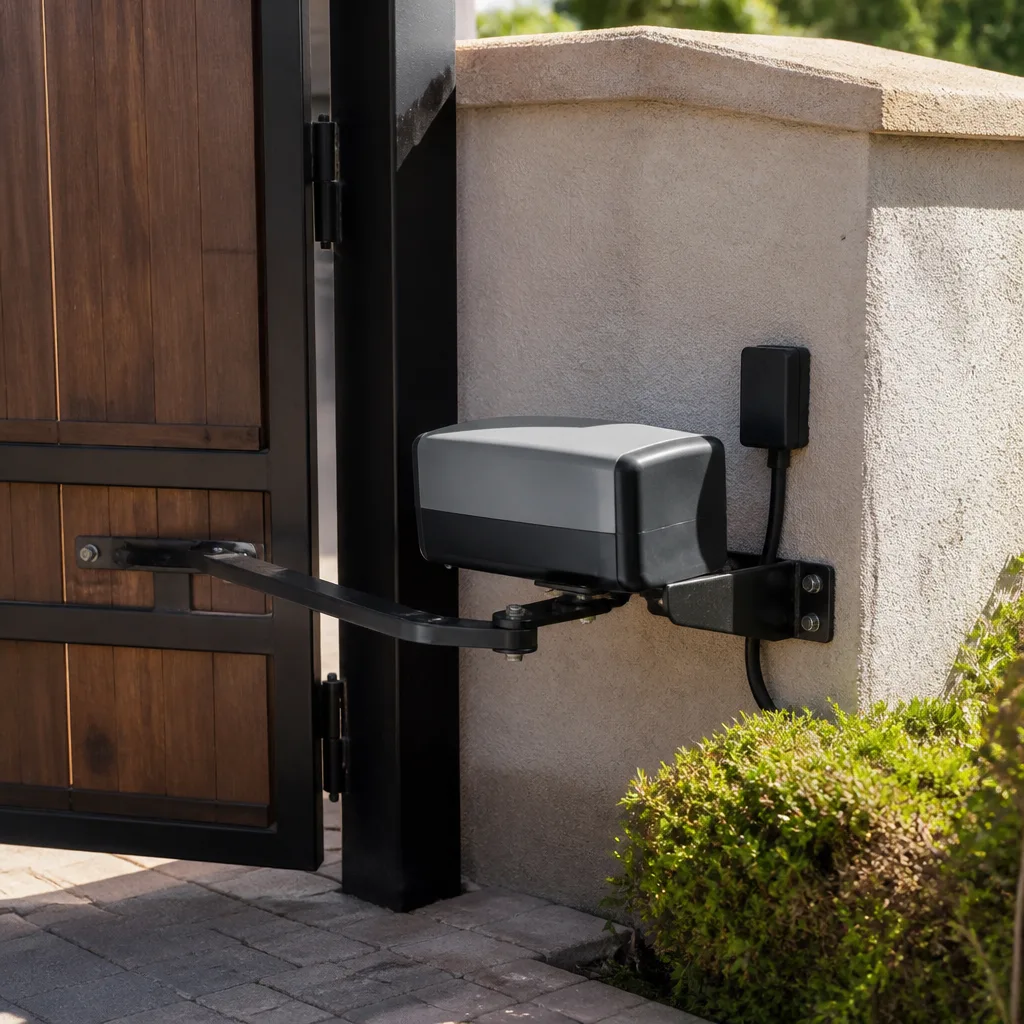
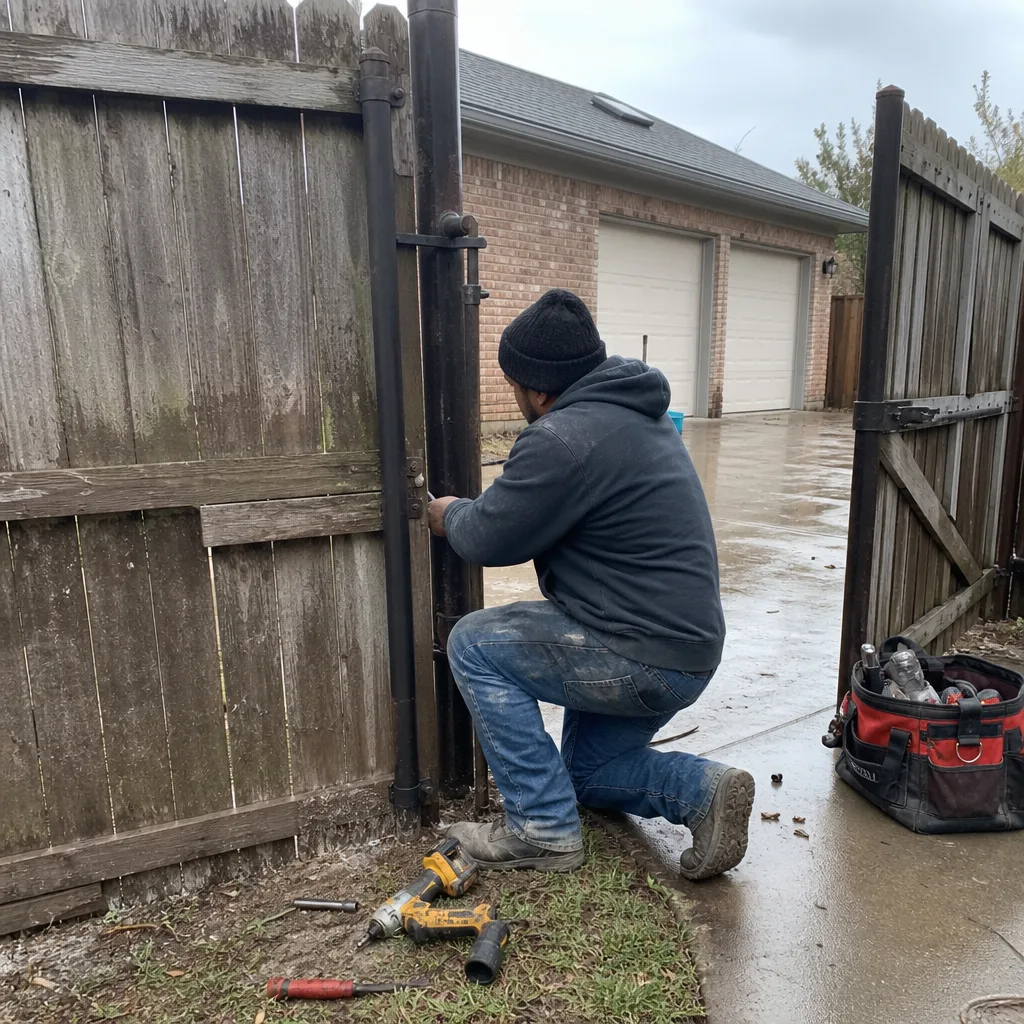 Before
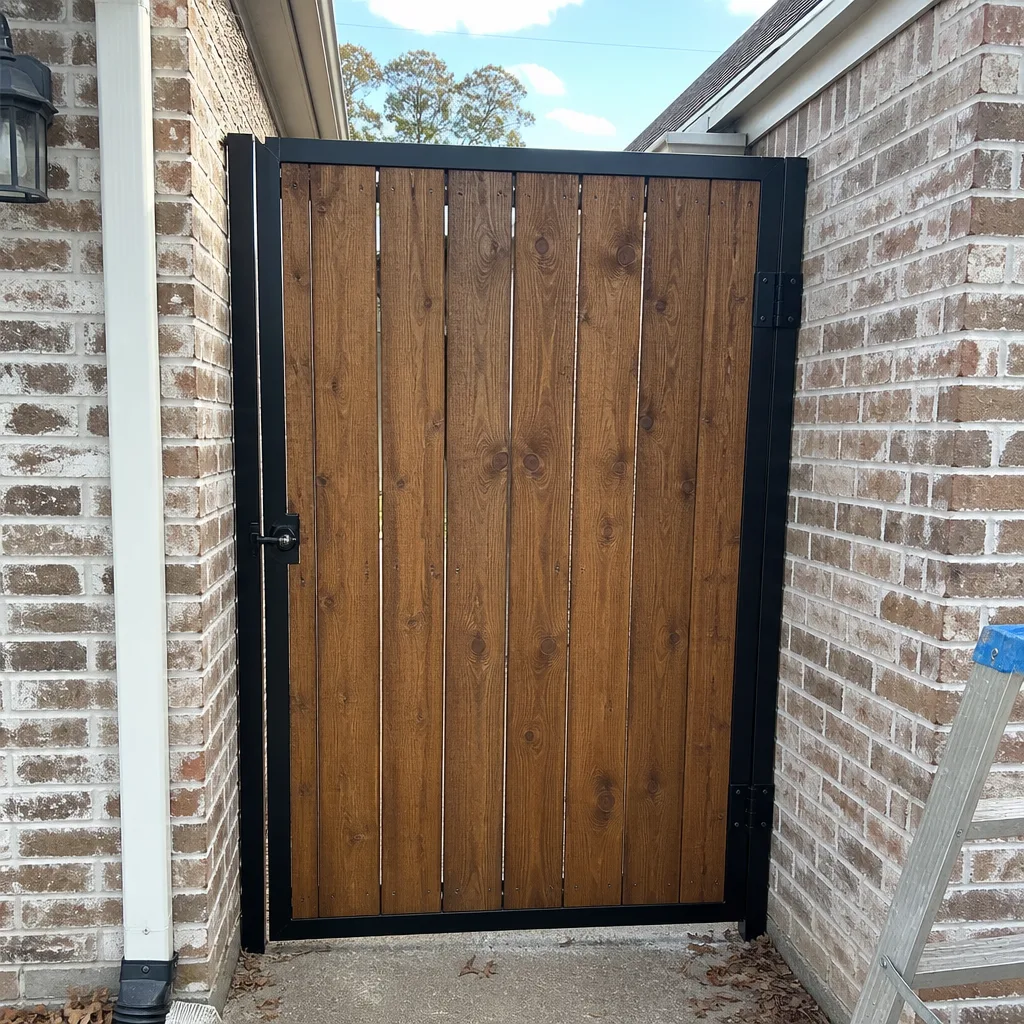 After
After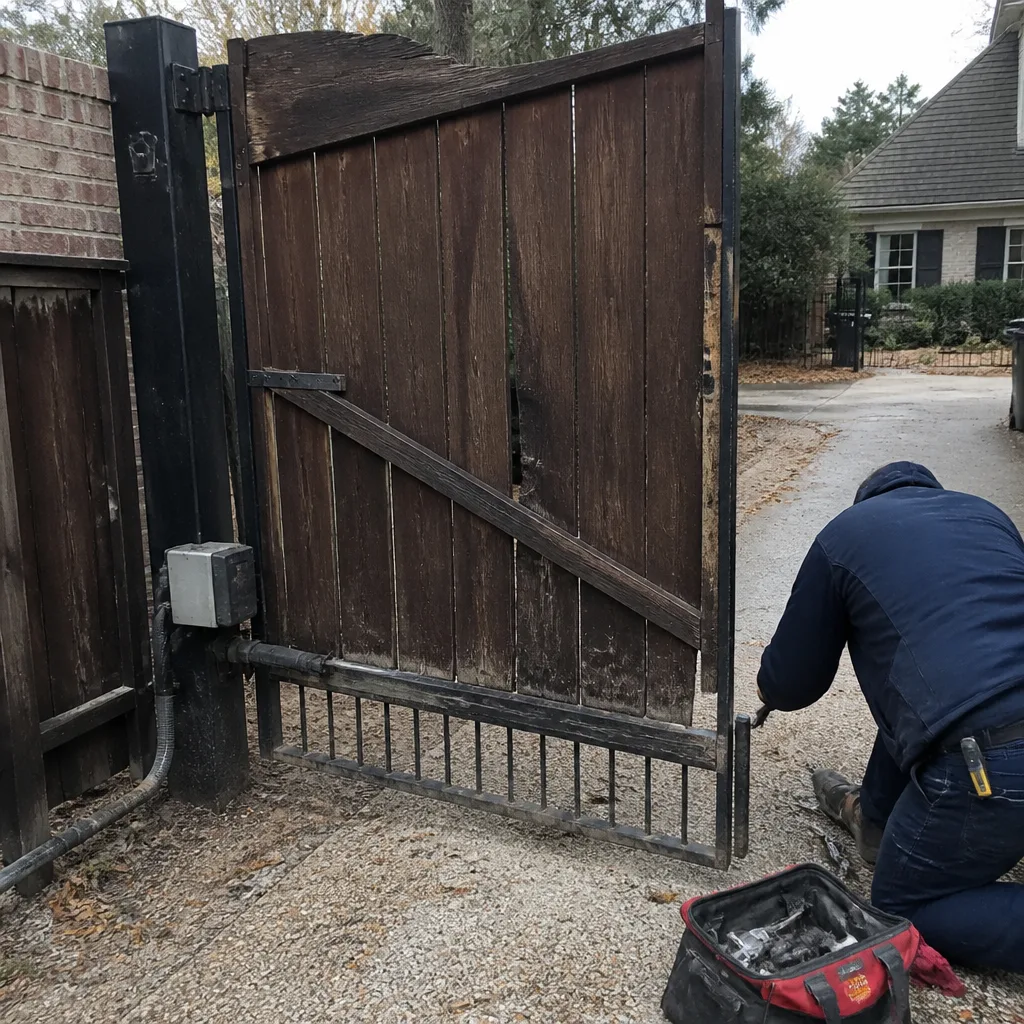 Before
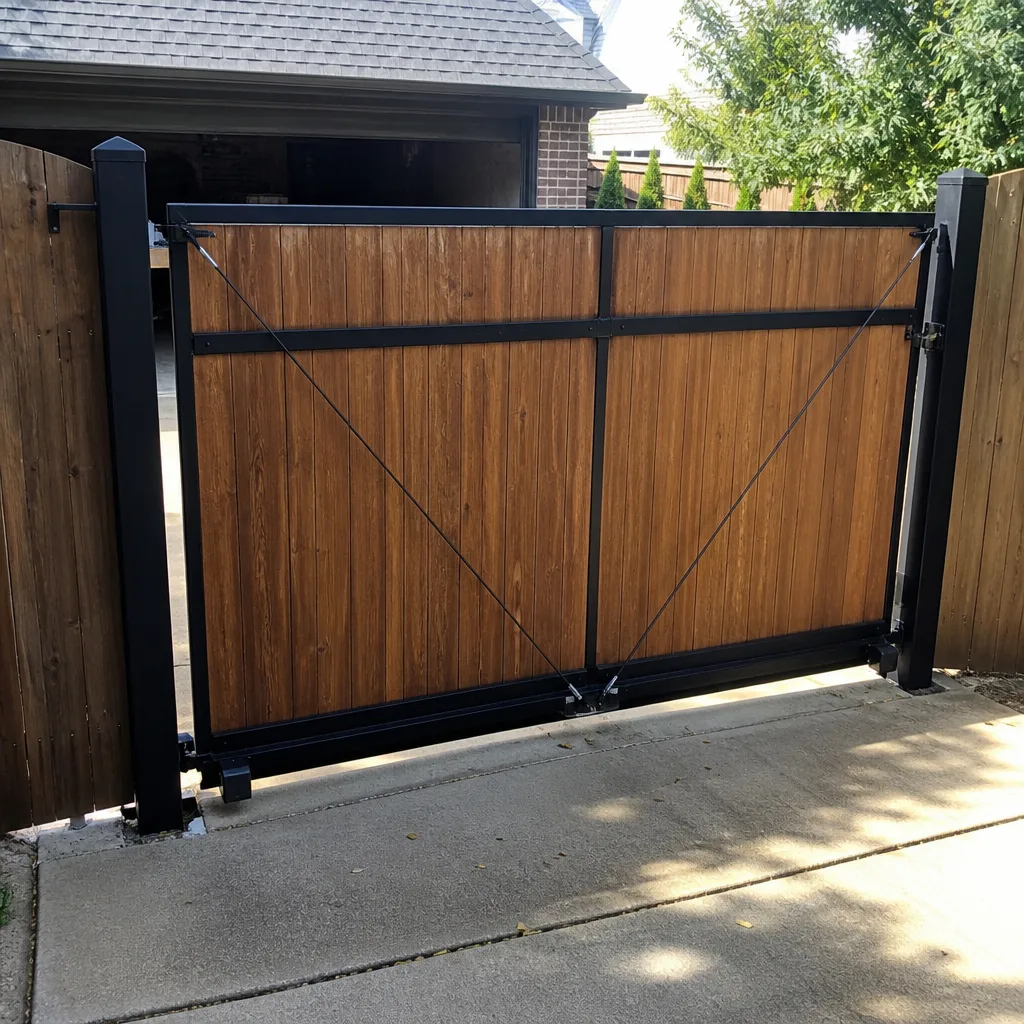 After
After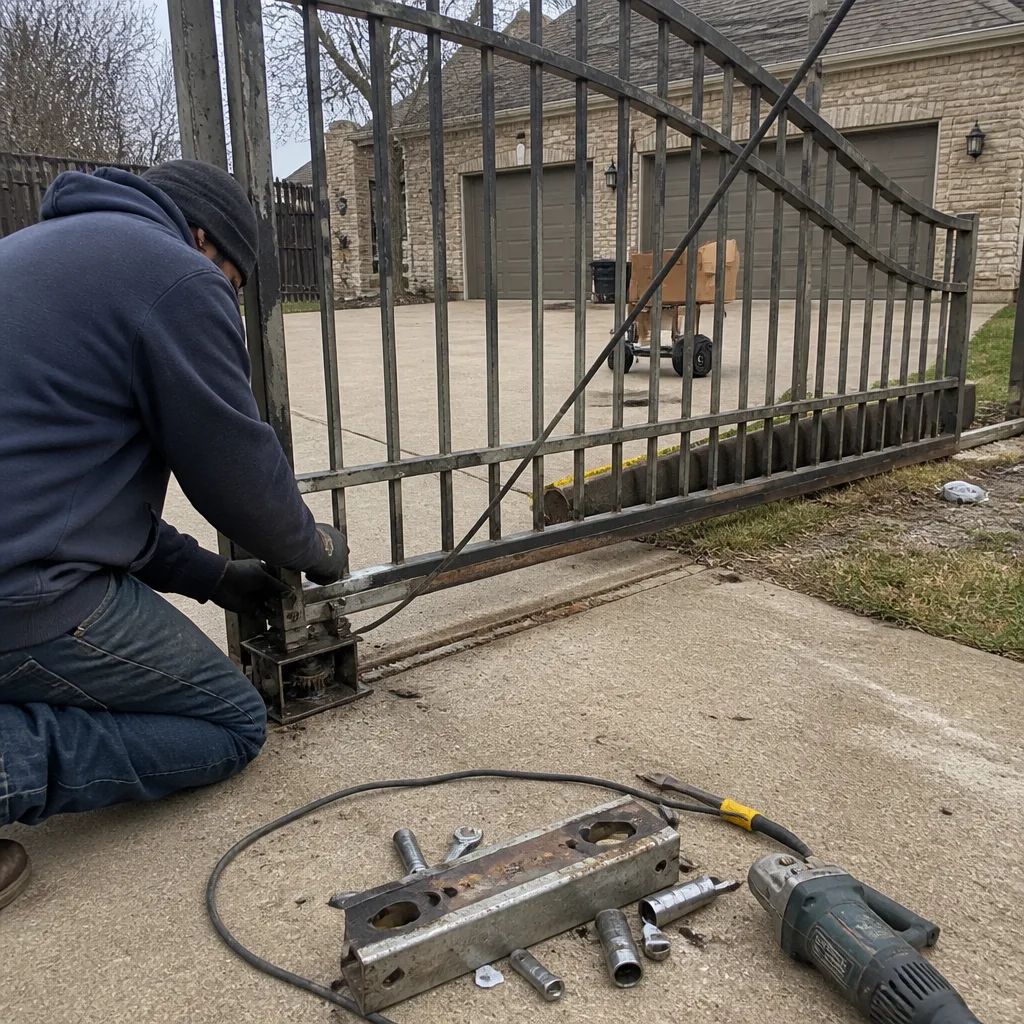 Before
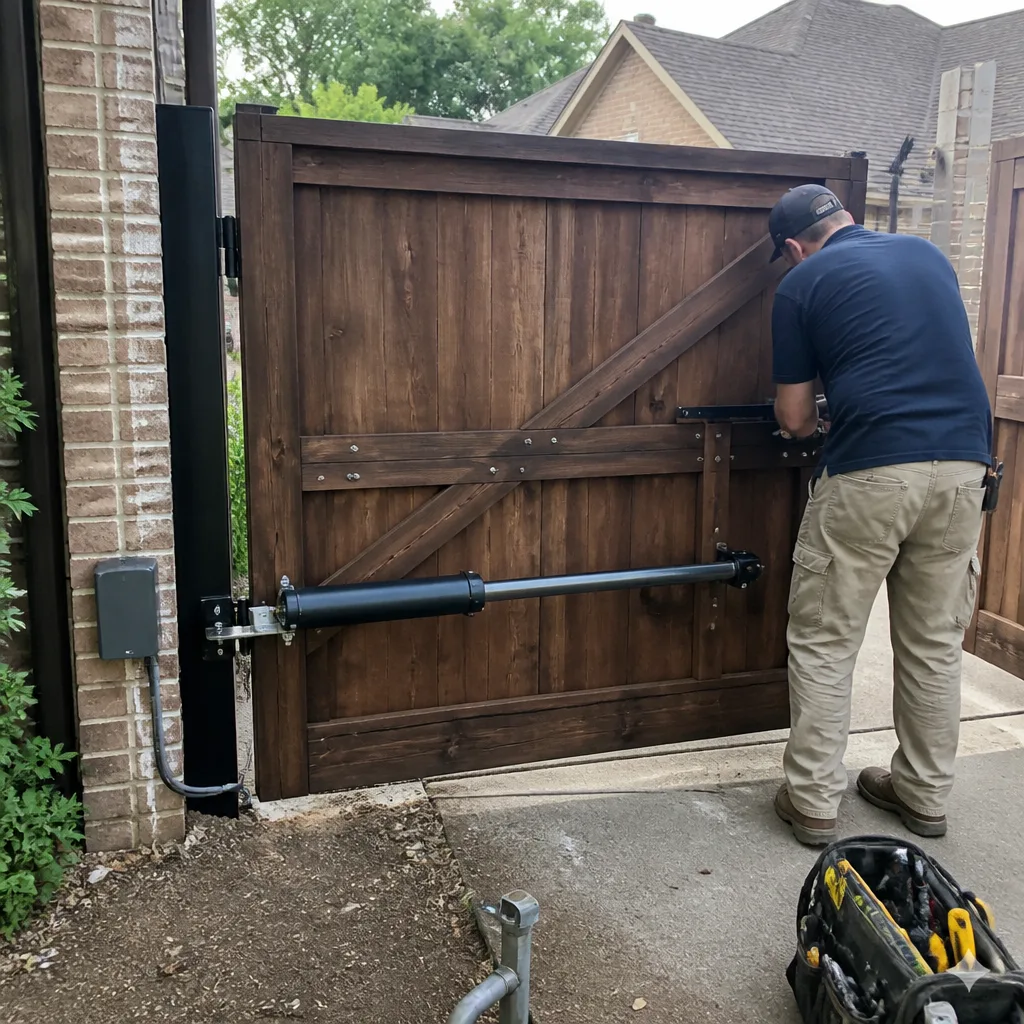 After
AfterLiftMaster Access Control Installation: The McKinney Owner’s Guide
We install and program LiftMaster access control systems across McKinney, and most complete installations run between $450 and $1,100 depending on the keypad model, wiring path, and whether you’re tying into an existing operator or starting fresh. We stock the most common LiftMaster keypads and receivers on the truck, so in many cases we can have your system installed and tested the same day we arrive. The usual way a McKinney homeowner discovers this part has failed is simple: the keypad stops responding at the worst possible time, or a garage door that used to open from the street now ignores every code you punch in.
Access control is the brain of your gate or garage entry. When it fails, the equipment is still physically fine, but nobody gets in without you walking out there. That’s the frustrating part. And in Texas summer heat, keypads that have baked on a west-facing brick column for six or seven years tend to give up quietly. We see it all the time.
Here’s what you need to know before you replace anything: not every LiftMaster access control part fits every LiftMaster operator, and the match matters more than the brand name on the box. We’ll walk you through it.
Which LiftMaster Models This Applies To
LiftMaster splits its access control line into two families: the older 315 MHz and 390 MHz systems, and the newer Security+ 2.0 protocol that runs on most equipment made since 2013 or so. This matters because a keypad from the wrong generation will communicate with your operator about as well as two people shouting through a closed storm shelter door.
The keypads we install most often are the LiftMaster 878MAX and the 877MAX, which pair with Security+ 2.0 operators including the LA400, LA500, and the residential gate operator lines. But if you have an older SL3000 or a mid-2000s gate opener, you may need a 976LM or an 811LM receiver instead. That’s the compatibility gotcha: LiftMaster changed its encryption and frequency over the years, and the age of your operator determines which access control parts will even respond. If you tell us the model number off the side of the operator box, we’ll bring the right part the first time.
On the OEM-versus-aftermarket question: LiftMaster’s branded keypads are built for their own protocol, and they generally last longer in direct Texas sun than generic universal keypads. There are quality aftermarket equivalents for common part numbers, but we recommend staying with LiftMaster or a proven alternative like Linear when the keypad must survive heat, rain, and sun on an unshaded McKinney driveway. The savings on a knockoff part disappear quickly if it fails in eighteen months.
We’re an independent service provider, not a LiftMaster dealer. That means we work for you, not for a parts quota. We stock LiftMaster parts because they’re the right fix for LiftMaster equipment, and we stock several other brands too: Mighty Mule, Ghost Controls, and DoorKing among them, because Collin County driveways have a little of everything.
Signs Your LiftMaster Access Control Installation Is Failing
- The keypad works intermittently, especially after rain. Water has gotten past the seal or the membrane buttons are degrading. McKinney gets its share of storms, and a keypad that’s even slightly unsealed will corrode internally over a season or two. The failure usually starts as “it only works sometimes” and ends as “it never works.”
- Every code is rejected, even ones that worked yesterday. On older LiftMaster systems, the receiver can lose its programmed codes when the battery or backup power drops. It’s not that the keypad is dead, it’s that the memory has cleared. Sometimes it can be reprogrammed; other times the receiver board needs replacing.
- The keypad beeps and lights up, but the gate doesn’t move. This points to a signal problem or a wiring interruption between the access control module and the operator. It’s the classic “the brain is alive but the arm won’t move” scenario.
- Some buttons work and others don’t. This is almost always physical keypad wear from years of sun and finger oils. The individual tactile switches under the membrane lose their spring. You can replace the whole keypad, which usually makes more sense than trying to fix individual buttons.
- You hear a relay click but nothing happens. The access control unit is sending the command, but the operator isn’t acting on it. This is often a low-voltage wiring issue or a failing relay contact inside the receiver board. It’s repairable, but it needs someone with a multimeter and the patience to trace the line.
Replacement Cost & What’s Included
In McKinney, a complete LiftMaster access control installation on an existing gate operator typically lands between $450 and $850 for a single keypad, receiver, and standard wiring run. Add a second entry point or a hardwired keypad on a long driveway, and you’re looking at $700 to $1,100. The range comes down to three things: which keypad and receiver your operator requires, how far the wire has to run, and whether the existing mounting location is salvageable or needs to be rebuilt.
Every quote includes the parts, the labor, the programming, and the testing. We settle the price before we turn a single screw, and that price is what you pay. No surprise line items, no “while we were out there we found” additions unless you approve them first. Victor Salinas built this company on the idea that the bill should look exactly like the quote, and after 42 years serving Collin County, that’s still how we operate.
Every access control installation we complete is covered by our 90-Day Done Right Promise, in writing. If the system misbehaves within 90 days because of our workmanship or the parts we installed, we come back and fix it. No paperwork on your end, no arguing. That’s the Keystone Standard, and it applies to every job we do.
DIY or Call Us?
There are a few things you can check safely: make sure the keypad isn’t simply covered in mud or spider webs, check that the operator has power, and try fresh batteries if you have a wireless keypad. That’s about where a safe DIY stop is. The rest of this work involves low-voltage wiring and programming a receiver that’s tied to your gate’s motor controller. One crossed wire or one wrong programming sequence can leave your gate dead in the open position, which is the last thing you want on a McKinney evening.
Access control is not high-voltage electrical work and it’s not like rebuilding a spring, but it is precise. We’ve been called out to more than a few driveways where a homeowner tried to save a few dollars, got a keypad that wouldn’t pair, and ended up paying for the replacement anyway. If your LiftMaster keypad or receiver is acting up, call us at (430) 226-4507 and describe what it’s doing. We’ll tell you honestly whether it sounds like a simple fix or a full replacement, and what it’ll cost before you commit to anything.
FAQs
A LiftMaster keypad installed in full sun on a McKinney driveway typically lasts five to eight years before the membrane buttons or internal seals start to degrade. Shaded installations can go ten years or more, but the Texas heat and UV exposure are hard on plastics and electronics.
Sometimes, but not often. If the problem is a corroded wire connection or a receiver that just needs reprogramming, we can fix that on the spot. If the keypad membrane is cracked or the internal board has water damage, replacement is the honest answer. We won’t charge you for a repair that won’t hold. Call (430) 226-4507 and we’ll walk you through what we’re seeing.
Most single-keypad installations are done in two to three hours, including programming and testing. Adding a second keypad or running a long wire underground can add time, but we’ll give you a realistic window before we start.
We keep the most common LiftMaster keypads and receivers on our trucks, so we can usually complete a standard installation in a single visit. If your system needs a less common part, we’ll tell you the expected arrival time before you pay anything. A live person answers our phone 24 hours a day, 7 days a week, so you’ll never get a voicemail when you call about your gate.
Written by Victor Salinas, Owner, Ironworks Gate Co. at Ironworks Gate Co., serving McKinney and nearby areas.